
In the rapidly evolving landscape of artificial intelligence and computational neuroscience, the line between biological architecture and digital execution continues to blur in increasingly unexpected ways. Less than a month ago, the scientific community celebrated a monumental achievement when Google, in collaboration with the FlyWire consortium and researchers at Princeton University, released the first complete mapping of an adult male fruit fly’s brain and central nervous system. This "connectome," a comprehensive wiring diagram of the approximately 139,000 to 166,000 neurons and tens of millions of synapses within the Drosophila melanogaster, was intended to provide neuroscientists with a roadmap for understanding how complex behaviors emerge from biological circuitry. However, in the hands of the global software engineering community and creative enthusiasts, this biological blueprint has quickly become the foundation for a series of bizarre and fascinating digital experiments.
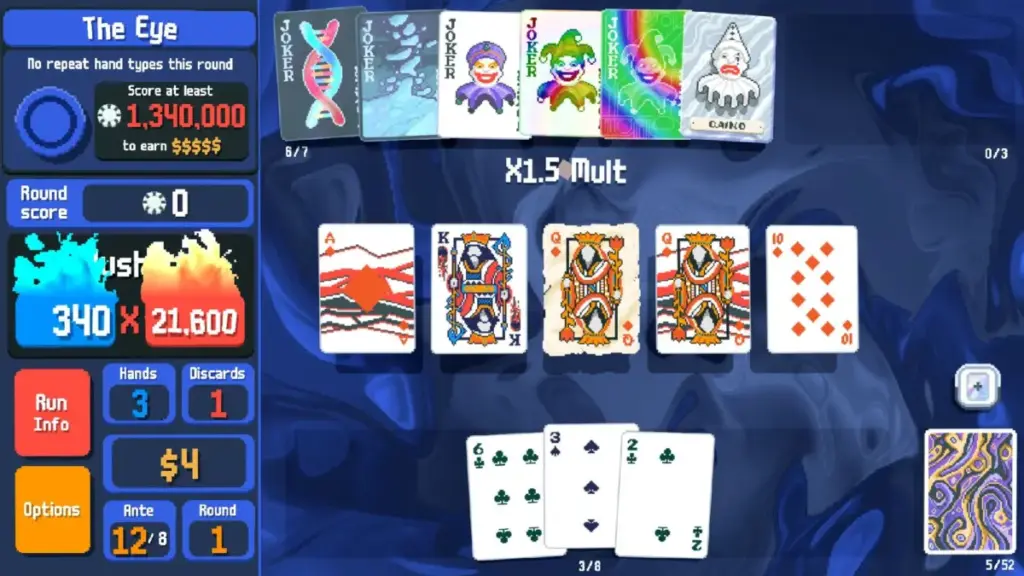
The latest and perhaps most complex of these endeavors involves the critically acclaimed poker-themed roguelike game, Balatro. A dedicated fan of the game recently announced that they had successfully trained a simulation of the fruit fly’s neural structure to play the title, utilizing an algorithm that translates the game’s mechanics into stimuli the virtual brain can process. According to the developer’s report shared on social media, the simulated insect brain is not merely clicking buttons at random; it has achieved a respectable 20 percent win rate. In the context of Balatro—a game notorious for its steep difficulty curve and the requirement for deep strategic planning—a one-in-five success rate for a virtualized insect brain represents a startling intersection of biology and game theory.
This development follows a whirlwind of activity that began almost immediately after the fruit fly’s neural data was made public. Because the data was released in a format that could be interpreted by computational models, software engineers were quick to port the structure into various simulation environments. We have already witnessed the virtual fly brain being tasked with a variety of human-centric challenges. Some engineers took the classic route of testing the model’s versatility by making it run the 1993 classic Doom, while others pushed the boundaries of navigation by teaching the digital fly to parallel park a virtual vehicle. Perhaps most infamously, one engineer transformed the simulated brain into a cryptocurrency day trader, creating a feedback loop where the virtual neurons were fed "dopamine hits" based on the success of candlestick chart readings.
The transition to Balatro, however, marks a significant step up in terms of the cognitive load being simulated. Unlike Doom, which relies on spatial awareness and reaction times, or parallel parking, which is a matter of geometric precision, Balatro requires an understanding of probability, resource management, and long-term synergy. The game tasks players with building a deck of cards and utilizing various "Joker" cards that provide unique multipliers and bonuses. To succeed, a player—or in this case, a simulated brain—must decide which cards to discard, which hands to play, and how to spend limited currency on upgrades that will only pay off several rounds later.
The process of training a fruit fly brain to play such a game involves a sophisticated application of reinforcement learning. In a biological fruit fly, neurons fire in response to sensory inputs like smell, light, or touch, and behaviors are reinforced by the release of chemicals like dopamine when the fly finds food or a mate. In the digital simulation, the engineer maps the game’s state—such as the cards in hand or the current score—to neural inputs. When the simulation makes a "correct" move that leads to a higher score or a round victory, the algorithm simulates a reward response within the neural network, strengthening the synaptic connections that led to that decision. Over thousands of iterations, the digital fly begins to "learn" which card combinations lead to the survival of the run.
The 20 percent win rate is particularly noteworthy when compared to the average human player’s early experiences with the game. While seasoned Balatro players can achieve much higher consistency, the game is designed to be punishing, with "boss blinds" that introduce specific handicaps to thwart the player’s strategy. That a model based on the brain of an insect, which in nature is primarily concerned with finding rotting fruit and avoiding predators, can navigate the complexities of a mathematical card game suggests that the fundamental principles of neural connectivity are incredibly robust. It raises profound questions about the nature of intelligence and whether the "logic" of a brain is universal enough to be applied to tasks completely alien to its evolutionary origin.
The underlying data provided by Google and the FlyWire project is what makes these experiments possible. The mapping of the fruit fly brain was a decade-long project that involved slicing a fly’s brain into thousands of ultra-thin sections, imaging them with electron microscopes, and then using AI to stitch those images back together into a 3D model. The result is a high-resolution map that shows not just where the neurons are, but how they are connected to one another. For researchers, this is a tool to study how a brain processes motion or controls its wings. For the tech community, it is a ready-made, pre-optimized neural network that is far more complex and efficient than many artificial networks of a similar scale.
Critics and skeptics might argue that these experiments are more a testament to the power of the training algorithms than the biological accuracy of the fly brain simulation. While the model uses the "wiring" of a fly, it does not perfectly replicate the chemical and hormonal soup that a living brain sits in. However, the engineers involved in these projects maintain that using a biological structure as the "hardware" for the AI provides a level of emergent behavior that traditional, top-down AI programming often lacks. The fruit fly brain has been optimized by millions of years of evolution to be incredibly efficient at processing information with minimal energy expenditure. By tapping into that architecture, developers are finding that they can achieve complex task solving with a relatively small number of "parameters" compared to the billions used by modern Large Language Models.
The "fruit fly as a day trader" and "fruit fly as a poker player" memes have captured the public imagination, but they also highlight a serious trend in the field of neuromorphic computing. This field seeks to design computer hardware and software that mimics the structure of the human nervous system. The fruit fly connectome serves as a perfect "middle ground" for this research—it is complex enough to perform non-trivial tasks, yet small enough to be fully simulated on modern high-end consumer hardware.
As the Balatro-playing fly continues to refine its strategy, the creator of the project has hinted at further refinements. The goal is to see if the win rate can be pushed higher by more accurately simulating the specific clusters of neurons responsible for "risk versus reward" behavior in the actual insect. If the model can be tuned to better recognize the "long-tail" benefits of certain Joker card combinations, it could potentially rival the performance of specialized game-playing AIs.
The speed at which these developments have occurred is a testament to the open-source nature of the modern scientific and tech communities. By making the connectome data available to the public, Google and its partners have turned a specialized piece of neuroscientific research into a playground for global innovation. While the original researchers may not have envisioned their work being used to beat a roguelike card game, these "stress tests" of the virtual fly brain provide valuable data on how neural structures handle information processing outside of their biological comfort zones.
For now, the fruit fly remains a fascinating outlier in the world of gaming and finance. Whether it is navigating the hellscapes of Doom, trying to turn a profit on Bitcoin, or chasing a "Straight Flush" in Balatro, the digital Drosophila is proving to be one of the most versatile "players" in the current tech landscape. As more developers get their hands on the neural map, it is likely only a matter of time before the virtual fly is tasked with even more complex simulations, further narrowing the gap between the biological world and the digital frontier. The 20 percent win rate in Balatro is not just a quirky milestone; it is a signpost indicating that we are only beginning to understand the latent potential of the architectures of life when they are translated into the language of silicon.
 Hardware Reviews & PC Building
Unofficial Grand Theft Auto V Browser Port Faces Swift Takedown Following Viral Technical Demonstration
The landscape of modern gaming is often defined by the boundaries of...
 Hardware Reviews & PC Building
GlobalFoundries to produce silicon interposers for TSMC’s CoWoS in the US — Five-year agreement valued at $2…
The deal establishes a robust, U.S.-based manufacturing source for essential advanced packaging...
 Hardware Reviews & PC Building
Save $250 on this award-winning Elegoo resin 3D printer with an integrated heater and 16K resolution — 39%…
The Saturn 4 Ultra is currently positioned as a flagship offering within...







