
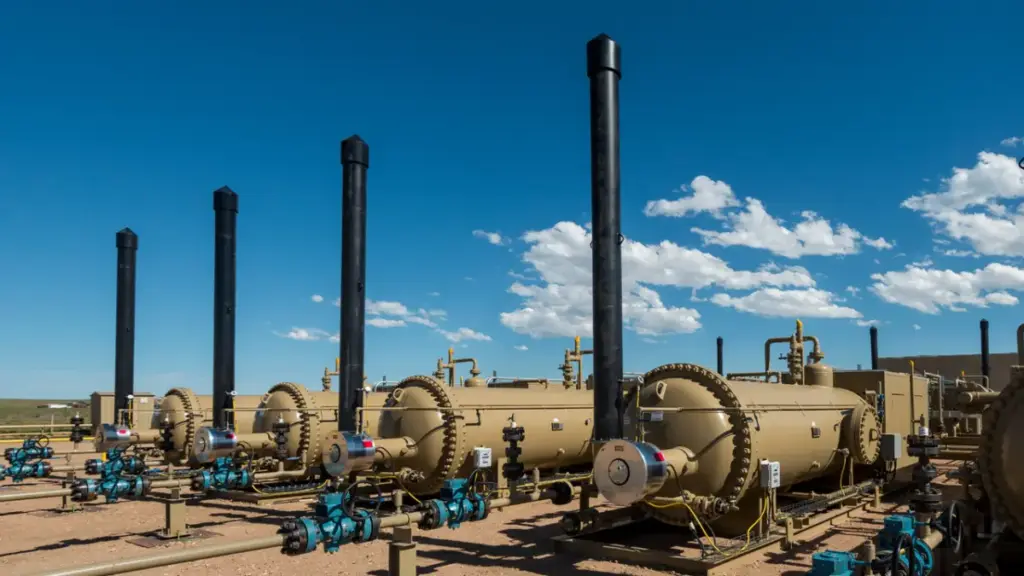
The reliance on natural gas as the fuel of choice for this expansion is a result of several economic and technical factors. Natural gas is currently abundant in the United States, and the infrastructure for its transport, while also facing its own capacity limits, is often more adaptable in the short term than the construction of new long-distance high-voltage transmission lines. Furthermore, modern gas turbines are highly efficient and can be deployed in modular configurations that match the phased build-out of a data center campus. For a hyperscale operator—such as Amazon, Google, or Microsoft—the ability to control their own power generation on-site provides a level of operational security that is essential when managing billions of dollars in sensitive server hardware. The risk of a brownout or a power surge from a stressed public grid is a liability that many of these firms are no longer willing to accept.
However, the projection of 15 billion cubic feet per day carries significant implications for the U.S. energy market and environmental policy. If these forecasts hold true, the data center industry will become one of the single largest drivers of natural gas demand growth in the country. This could lead to a tightening of the domestic gas market, potentially driving up prices for other sectors, including home heating and manufacturing. It also presents a stark challenge to the decarbonization timelines set by both the federal government and the technology companies themselves. While natural gas is often marketed as a "cleaner" fossil fuel compared to coal, its increased use at this scale still represents a substantial source of greenhouse gas emissions. The industry’s pivot toward gas turbines highlights the growing tension between the immediate, insatiable demand for AI-driven compute power and the long-term goals of a green energy transition.
The geographic concentration of these facilities further complicates the energy outlook. Data centers are not evenly distributed across the United States; they tend to cluster in areas with favorable tax incentives, existing fiber optic infrastructure, and proximity to major population centers. As these clusters grow, the localized demand for natural gas will skyrocket. In states like Texas, which already boasts a robust natural gas industry, the integration of data center power plants may be more seamless. In contrast, regions with more stringent environmental regulations or limited pipeline capacity may face intense legal and logistical battles over the construction of the very turbines and pipelines required to meet the 2035 projections. This regional disparity could lead to a "balkanization" of the data center industry, where growth is dictated more by energy availability than by any other factor.
Beyond the immediate fuel consumption, the shift toward 194 gigawatts of demand by 2035 necessitates a massive reinvestment in the physical hardware of the energy sector. This includes not only the turbines themselves but also the cooling systems required to manage the heat generated by both the servers and the power plants. Many modern data centers are exploring advanced liquid cooling and closed-loop systems to minimize water usage, but the sheer scale of the projected growth means that the environmental footprint will expand in multiple dimensions simultaneously. The 117% increase in the gas consumption forecast is, in many ways, a proxy for the overall intensification of the industry’s resource requirements.
 Hardware Reviews & PC Building
Russian Military Targets Ukrainian Data Centers in Widening Campaign Against Digital Infrastructure
The Russian military has initiated a series of targeted strikes against critical...
 Hardware Reviews & PC Building
US Video Game Hardware Sales Experience Historic Decline as PlayStation and Xbox Reach Multi-Year Lows
The United States video game industry is currently grappling with a significant...
 Hardware Reviews & PC Building
Intel Shifts Strategic Focus to Trust Domain Extensions as Software Guard Extensions Era Nears its Conclusion
In a significant realignment of its long-term data center security roadmap, Intel...







