
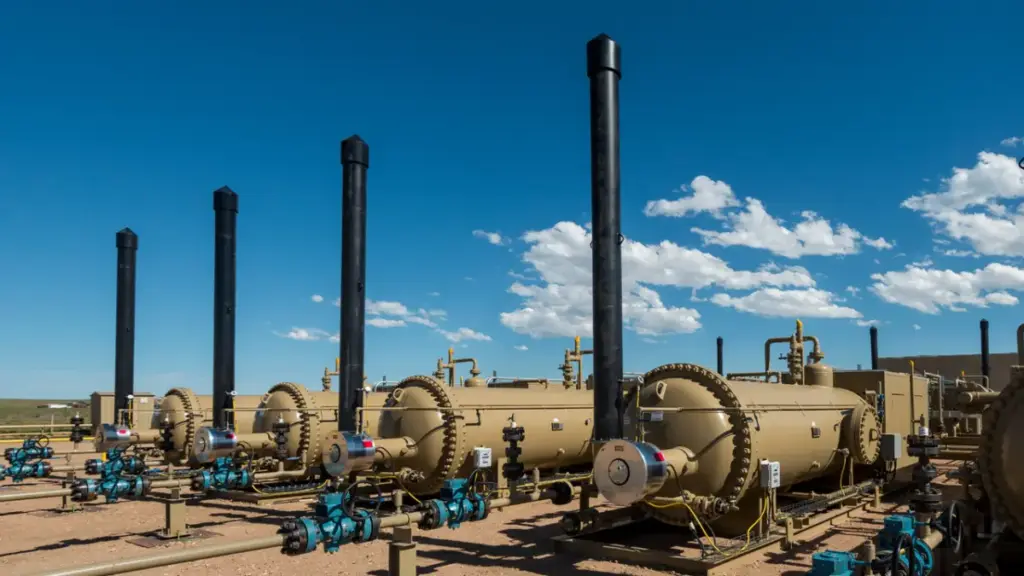
The rapidly evolving landscape of the American technology sector is poised to fundamentally reshape the nation’s energy profile over the next decade. As the proliferation of artificial intelligence and high-performance computing necessitates a massive expansion of physical infrastructure, the estimated natural gas consumption of data centers in the United States is expected to experience a massive increase. This shift comes as these facilities increasingly move away from a total reliance on the traditional electrical grid, opting instead to utilize on-site gas turbine generators to ensure the reliability and scale of their power supply. According to a recent analysis by Bloomberg, the trajectory for this energy demand has been revised upward at a staggering rate, reflecting a tech industry that is growing far faster than the existing power infrastructure can accommodate.
Current projections indicate that data centers are now expected to consume up to 15 billion cubic feet of natural gas per day by the year 2035. To put this figure into perspective, it represents a 117% increase from the previous industry forecast, which had pegged the demand at approximately 6.9 billion cubic feet per day. This dramatic revision underscores the sheer velocity of the data center boom, driven primarily by the global race to develop and deploy generative artificial intelligence models. These models require significantly more computational power than traditional cloud storage or internet services, leading to a direct and immediate impact on the fuel sources required to keep these "digital factories" operational around the clock.
The surge in natural gas demand is inextricably linked to the broader challenges facing the United States electrical grid. While many technology giants have publicly committed to ambitious carbon-neutral goals, the reality of the current energy market has forced a pragmatic, if controversial, pivot toward fossil fuels. The primary issue is one of timing and reliability. As data center developers seek to bring new facilities online in record time, they are encountering significant bottlenecks in grid interconnection. In many high-demand regions, such as Northern Virginia or the Silicon Heartland of Ohio, the wait times for a high-voltage connection to the local utility can stretch into several years. Consequently, data center operators are increasingly turning to on-site natural gas turbines as a primary or "bridge" power source. These turbines allow facilities to bypass the queue for grid access while providing the consistent, "always-on" baseload power that intermittent renewable sources like wind and solar cannot yet guarantee without massive advancements in battery storage technology.
This revised consumption forecast aligns closely with other comprehensive data center energy reports that highlight the growing strain on the nation’s resources. Supporting data suggests that by 2035, data centers will account for approximately 20% of all U.S. power consumption. This amounts to a total power requirement of about 194 gigawatts, a figure that has also seen significant upward revisions in recent months. The Bloomberg New Energy Finance (BNEF) report, which nearly doubled its previous U.S. data center power forecast to reach that 194-gigawatt mark, serves as a harbinger of the logistical and environmental hurdles that lie ahead. The scale of this demand is difficult to overstate; a 20% share of the national power supply represents a monumental shift in how energy is distributed and prioritized across the country, potentially placing tech hubs in direct competition with residential and industrial consumers for available capacity.
The reliance on natural gas as the fuel of choice for this expansion is a result of several economic and technical factors. Natural gas is currently abundant in the United States, and the infrastructure for its transport, while also facing its own capacity limits, is often more adaptable in the short term than the construction of new long-distance high-voltage transmission lines. Furthermore, modern gas turbines are highly efficient and can be deployed in modular configurations that match the phased build-out of a data center campus. For a hyperscale operator—such as Amazon, Google, or Microsoft—the ability to control their own power generation on-site provides a level of operational security that is essential when managing billions of dollars in sensitive server hardware. The risk of a brownout or a power surge from a stressed public grid is a liability that many of these firms are no longer willing to accept.
However, the projection of 15 billion cubic feet per day carries significant implications for the U.S. energy market and environmental policy. If these forecasts hold true, the data center industry will become one of the single largest drivers of natural gas demand growth in the country. This could lead to a tightening of the domestic gas market, potentially driving up prices for other sectors, including home heating and manufacturing. It also presents a stark challenge to the decarbonization timelines set by both the federal government and the technology companies themselves. While natural gas is often marketed as a "cleaner" fossil fuel compared to coal, its increased use at this scale still represents a substantial source of greenhouse gas emissions. The industry’s pivot toward gas turbines highlights the growing tension between the immediate, insatiable demand for AI-driven compute power and the long-term goals of a green energy transition.
The geographic concentration of these facilities further complicates the energy outlook. Data centers are not evenly distributed across the United States; they tend to cluster in areas with favorable tax incentives, existing fiber optic infrastructure, and proximity to major population centers. As these clusters grow, the localized demand for natural gas will skyrocket. In states like Texas, which already boasts a robust natural gas industry, the integration of data center power plants may be more seamless. In contrast, regions with more stringent environmental regulations or limited pipeline capacity may face intense legal and logistical battles over the construction of the very turbines and pipelines required to meet the 2035 projections. This regional disparity could lead to a "balkanization" of the data center industry, where growth is dictated more by energy availability than by any other factor.
Beyond the immediate fuel consumption, the shift toward 194 gigawatts of demand by 2035 necessitates a massive reinvestment in the physical hardware of the energy sector. This includes not only the turbines themselves but also the cooling systems required to manage the heat generated by both the servers and the power plants. Many modern data centers are exploring advanced liquid cooling and closed-loop systems to minimize water usage, but the sheer scale of the projected growth means that the environmental footprint will expand in multiple dimensions simultaneously. The 117% increase in the gas consumption forecast is, in many ways, a proxy for the overall intensification of the industry’s resource requirements.
As the industry moves toward this 2035 horizon, the role of regulatory bodies and utility commissions will become increasingly pivotal. They will be tasked with balancing the economic benefits of hosting massive data center campuses—such as job creation and tax revenue—against the potential for increased utility rates and environmental degradation. Some experts suggest that the massive demand from the tech sector could eventually provide the capital necessary to accelerate the development of next-generation energy solutions, such as small modular nuclear reactors (SMRs) or advanced geothermal systems. However, in the interim, natural gas remains the only viable solution capable of scaling at the speed required by the current AI boom.
The Bloomberg report and the accompanying BNEF forecasts serve as a wake-up call for both the energy and technology sectors. The previous estimates, while substantial, failed to account for the exponential nature of AI infrastructure needs. The jump from 6.9 billion to 15 billion cubic feet of gas per day reflects a realization that the "cloud" is a very physical entity with a very traditional appetite for energy. As 2035 approaches, the success of the American digital economy will be increasingly dependent on its ability to secure and manage these vast quantities of power, making the relationship between the data center and the natural gas turbine one of the most critical industrial partnerships of the 21st century.
This evolution in energy strategy marks a departure from the early days of the internet, where data centers were seen as mere office-like buildings with high electricity bills. Today, they are evolving into industrial-scale power consumers that rival the largest manufacturing plants in history. The 20% national power consumption figure is a milestone that, if reached, will solidify the data center industry as a primary pillar of the American economy, but one that comes with a complex set of environmental and logistical trade-offs. The coming decade will likely see a frantic race to build the infrastructure necessary to support this 15 billion cubic foot daily habit, as the tech industry attempts to bridge the gap between its digital aspirations and the physical realities of the power grid.
 Hardware Reviews & PC Building
Custom Power Distribution Mod Surfaces to Tackle RTX 5090 Overheating Concerns
The launch of NVIDIA’s flagship GeForce RTX 5090 has been met with...
 Hardware Reviews & PC Building
Intel Shifts Strategic Focus to Trust Domain Extensions as Software Guard Extensions Era Nears its Conclusion
In a significant realignment of its long-term data center security roadmap, Intel...
 Hardware Reviews & PC Building
Acer Predator QD-OLED monitor now 36% off — 500 Hz refresh rate and True Black 500 certification slashed to…
The latest development in this space comes from a significant price adjustment...







