
The landscape of Apple device management is undergoing a profound transformation, driven by two converging forces: the steady rise of Mac adoption within the enterprise and the sudden, explosive integration of artificial intelligence into IT workflows. As the market for management solutions expands to accommodate a more diverse range of organizational needs, a new category of challenges is emerging. It is no longer enough to simply deploy software and manage security profiles; IT departments must now grapple with the "governance gap" created by autonomous AI agents capable of making changes at machine speed.
Smplify, a new entrant in the device management space, is positioning itself at the center of this transition. Having recently announced a $1 million pre-seed funding round, the company is introducing a "headless" management tool designed specifically for an era where automation is moving from suggestion to action. To understand how this shift is reshaping the industry, we spoke with Ben Greiner, co-founder and COO of Smplify, about the company’s vision for the future of IT administration and the critical need for a "last-mile control plane."
The Evolution of Device Management
For years, Apple device management followed a predictable trajectory. Solutions were built around the administrator—a human being who monitored dashboards, pushed updates, and manually intervened when things went wrong. However, as the enterprise market for Apple devices has grown—with Mac now capturing approximately 11% of the U.S. enterprise market share—the complexity of managing these fleets has outpaced traditional human-centric models.
Smplify’s approach reflects this shift. The company was co-founded by Greiner and Preetham Gurram, a figure well-known in device management circles for his extensive background at MobileIron, SOTI, Automox, Addigy, and Scalefusion. Crucially, Gurram also spent time at Apple, where he contributed to the development of the company’s core Mobile Device Management (MDM) platforms and the refinement of zero-touch enrollment at scale.
This pedigree has informed Smplify’s unique architecture. Unlike traditional MDM solutions that prioritize a proprietary user interface, Smplify is "headless." Everything the platform does is accessible through an API and a Command Line Interface (CLI). This allows IT teams to build management capabilities directly into the tools they already use, rather than forcing them to toggle between disparate dashboards. It is a philosophy built for a world where IT is increasingly treated as code.
The Rise of the Autonomous Agent
The core problem Smplify seeks to solve is the inherent speed of AI. "Device management still assumes a person is watching," Greiner noted during our discussion. "Admins already automate with scripts and pipelines, and now AI agents are showing up that can act on a fleet at machine speed."
In traditional IT environments, automation was "imperative"—the admin wrote a script, and the system executed it. Today, we are moving toward "agentic IT," where AI agents analyze data, identify problems, and determine the best course of action independently. The challenge is that these agents are beginning to take those actions directly, rather than merely suggesting them to a human supervisor.
This creates a dangerous oversight vacuum. If an AI agent detects a security vulnerability on five thousand laptops, it can theoretically push a configuration change or a script to fix that vulnerability in seconds. But what happens if the AI misinterprets the situation? What if the "fix" is actually a destructive action that renders the devices unusable?
"Enterprises that win won’t be the ones with the smartest agents," Greiner explained. "They’ll be the ones that can say exactly what each agent is allowed to do and prove what it did."
The Governance Gap: A Looming Crisis
The urgency of this issue is backed by recent industry data. A 2026 AI-ready governance report from OneTrust revealed a striking disparity in corporate readiness: while 87% of organizations are actively encouraging the use of AI agents to increase efficiency, only 47% have established clear governance and controls. This "act first, regulate later" mentality is creating significant risks.
The consequences of this gap are not merely theoretical. Gartner recently predicted that 40% of enterprises will eventually demote or decommission their autonomous AI agents by 2027. This isn’t because the AI failed to perform, but because governance gaps were only detected after high-profile incidents took place. In many cases, the lack of an audit trail or a "kill switch" for autonomous actions makes the risk of using AI agents higher than the potential productivity gains.
Patching these gaps is expected to become a massive business sector within IT management. As organizations realize they cannot simply "turn off" AI without falling behind, they will instead look for platforms that provide the necessary guardrails.
Who Watches the Watchmen?
The fundamental question facing modern IT is one of accountability: Once agents can submit changes at lightning speed, who is responsible for approving them?
"The risk is an agent with the right key can wipe thousands of laptops before anyone notices," Greiner warned. This is not just a concern for startups like Smplify; it is a topic dominating the strategy of industry giants like Jamf and Fleet.
Jamf, a leader in the Apple management space, has already begun addressing this through its own AI Governance suite. Jamf CEO Beth Tschida has previously noted that blocking AI is a futile exercise. "AI is happening whether organizations know it or not," she told Computerworld earlier this year. "It’s far better to build visibility and governance around it."
While Jamf focuses on tool discovery and policy enforcement, Smplify’s approach is to embed these decisions directly into the management workflow itself. Greiner refers to this as the "last-mile control plane"—a final, automated checkpoint that sits between the AI’s decision and the actual execution on the device.
Assessing the Risks of Unmanaged AI
Beyond the immediate threat of a fleet-wide "wipe," unmanaged AI introduces more subtle risks, such as a lack of accountability and the potential for "hallucinations" in code. If an AI agent interprets a complex IT problem incorrectly and pushes a destructive script across the network, identifying the root cause after the fact can be an expensive and time-consuming nightmare.
Mike McNeil, CEO of Fleet, points out that the severity of the risk is tied to two factors: privilege and recovery. "I’d frame risk by two things: how much privilege the code runs with and how hard recovery is," McNeil said. When scripts are allowed to run at the "root" level, they gain full control over the machine. If an AI-driven script at the root level makes a fundamental change to the operating system, a simple "rollback" may not be possible.
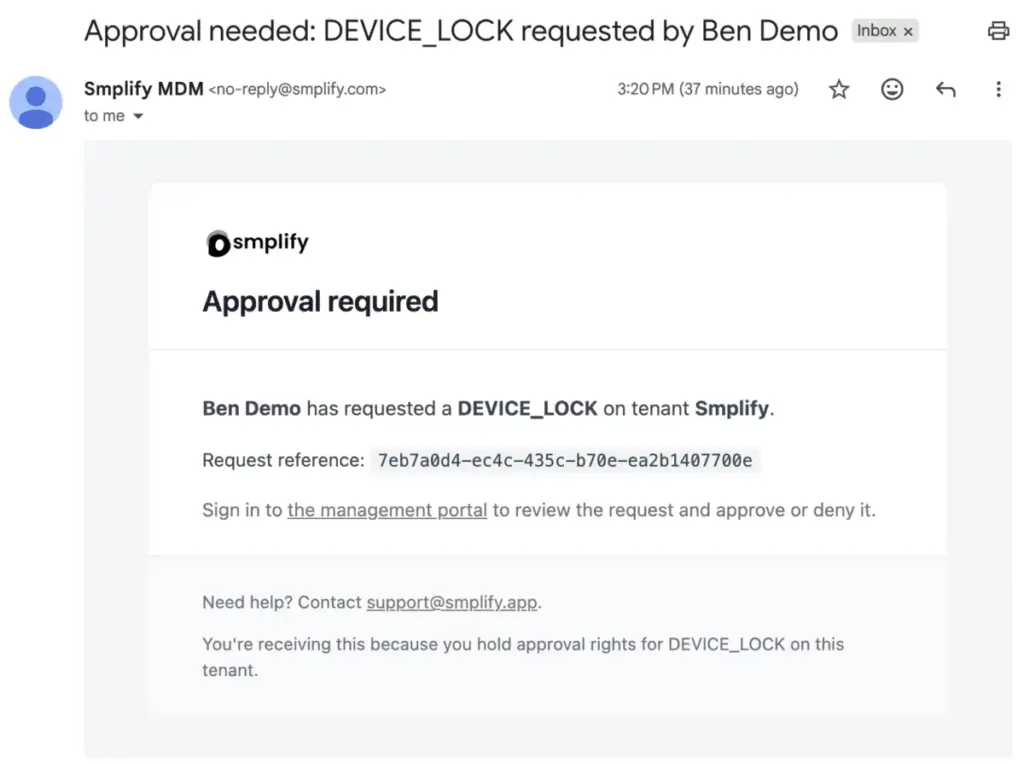
To mitigate this, Smplify advocates for a "human-in-the-loop" or "policy-in-the-loop" model. Under this system, an AI agent can identify a problem and generate a solution, but it cannot apply that solution until it meets specific, pre-defined criteria or receives a green light from an administrator. Every action is logged with three vital pieces of information: who (or what) requested the change, the intent behind the change, and who (or what) approved it.
GitOps and the Future of Intent-Based Management
To bring order to this chaotic new environment, Smplify is leaning into the concept of GitOps. In modern software development, GitOps involves keeping all configuration files in a version-controlled repository like GitHub. Any changes must go through a formal "pull request" process, providing a transparent history of what was changed and why.
Many advanced IT teams have tried to apply this discipline to device management, but it often requires stitching together multiple tools. Smplify claims to have this discipline—versioned intent, review, and approval—built directly into its platform.
This aligns closely with Apple’s own direction in device management: Declarative Device Management (DDM). Unlike older, reactive management styles, DDM allows IT to define a "state" for a device. The device itself then monitors its own status and ensures it remains in that state. If a device drifts from the intended configuration—perhaps because a user changed a setting or a security update failed—the device notices the drift and corrects itself.
"Admins describe what should be true of their devices, and Smplify keeps it true," Greiner said. By combining DDM with AI governance, Smplify allows AI to operate with agency, but only within the strict boundaries of the "intended state" defined by the IT department.
Expanding the Market Through Embedded MDM
While governance is Smplify’s primary focus, the company’s API-first, headless architecture opens up a secondary business opportunity: white-labeling. Because Smplify is a full MDM platform that can be controlled entirely via code, other software companies can integrate native device management directly into their own products.
This allows security vendors, HR software providers, or specialized enterprise tools to offer device management features under their own brand names, powered by Smplify’s backend. It is a move that reflects the broader trend of "embedded everything" in SaaS, and it further demonstrates how the Apple management market is diversifying beyond the traditional standalone dashboard.
As Apple continues to expand the controls available to administrators—particularly regarding new Apple Intelligence features—the need for governed, privacy-conscious AI management will only grow. For companies like Smplify, the goal is to ensure that as the "watchmen" of the enterprise fleet become increasingly autonomous, there is always a system in place to watch them back.
 Small Business IT & Cloud Computing
Precision Over Volume: Specialized AI Expertise Commands Premium Salaries in a Shifting Tech Job Market
The landscape of information technology recruitment is undergoing a fundamental transformation. For...
 Small Business IT & Cloud Computing
GhostCode: The Emerging Phishing Threat Exploiting Microsoft 365 Device Authorization Flows
In a significant escalation of identity-based cyberattacks, security researchers have uncovered a...
 Small Business IT & Cloud Computing
Microsoft Unveils Unified Copilot ‘Super App’ to Streamline Enterprise AI Orchestration and Governance
Microsoft has officially launched its highly anticipated Copilot “super app,” marking a...







