
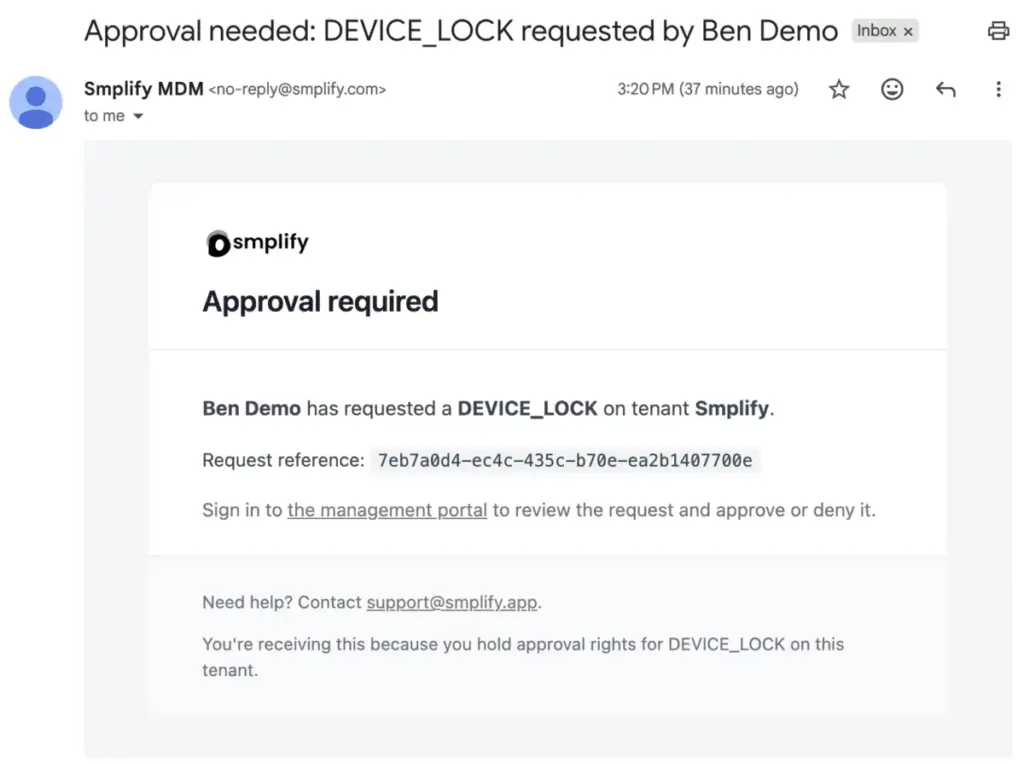
To mitigate this, Smplify advocates for a "human-in-the-loop" or "policy-in-the-loop" model. Under this system, an AI agent can identify a problem and generate a solution, but it cannot apply that solution until it meets specific, pre-defined criteria or receives a green light from an administrator. Every action is logged with three vital pieces of information: who (or what) requested the change, the intent behind the change, and who (or what) approved it.
GitOps and the Future of Intent-Based Management
To bring order to this chaotic new environment, Smplify is leaning into the concept of GitOps. In modern software development, GitOps involves keeping all configuration files in a version-controlled repository like GitHub. Any changes must go through a formal "pull request" process, providing a transparent history of what was changed and why.
Many advanced IT teams have tried to apply this discipline to device management, but it often requires stitching together multiple tools. Smplify claims to have this discipline—versioned intent, review, and approval—built directly into its platform.
This aligns closely with Apple’s own direction in device management: Declarative Device Management (DDM). Unlike older, reactive management styles, DDM allows IT to define a "state" for a device. The device itself then monitors its own status and ensures it remains in that state. If a device drifts from the intended configuration—perhaps because a user changed a setting or a security update failed—the device notices the drift and corrects itself.
"Admins describe what should be true of their devices, and Smplify keeps it true," Greiner said. By combining DDM with AI governance, Smplify allows AI to operate with agency, but only within the strict boundaries of the "intended state" defined by the IT department.
Expanding the Market Through Embedded MDM
While governance is Smplify’s primary focus, the company’s API-first, headless architecture opens up a secondary business opportunity: white-labeling. Because Smplify is a full MDM platform that can be controlled entirely via code, other software companies can integrate native device management directly into their own products.
This allows security vendors, HR software providers, or specialized enterprise tools to offer device management features under their own brand names, powered by Smplify’s backend. It is a move that reflects the broader trend of "embedded everything" in SaaS, and it further demonstrates how the Apple management market is diversifying beyond the traditional standalone dashboard.
As Apple continues to expand the controls available to administrators—particularly regarding new Apple Intelligence features—the need for governed, privacy-conscious AI management will only grow. For companies like Smplify, the goal is to ensure that as the "watchmen" of the enterprise fleet become increasingly autonomous, there is always a system in place to watch them back.
 Small Business IT & Cloud Computing
Bridging the AI Value Gap: Why Organizations Must Shift from Cost-Cutting to a ‘Return on Intelligence’
As the initial wave of artificial intelligence enthusiasm transitions into a period...
 Small Business IT & Cloud Computing
Google Positions Gemini as the Central Hub for Enterprise AI Orchestration with New Autonomous Agent Capabilities
At its high-profile Gemini at Work 2026 event this week, Google Cloud...
 Small Business IT & Cloud Computing
Stagnating PC Market and Rising Component Costs Leave Windows 10 with Significant Market Share as Windows 11 Adoption Grinds to a Halt
The transition from Windows 10 to Windows 11 has hit a significant...







