As artificial intelligence agents and large language models increasingly become the primary consumers of web content, a new frontier in technical search engine optimization and site architecture has emerged. Central to this shift is the "llms.txt" proposal, a machine-readable format designed to provide AI crawlers with a concise, structured map of a website’s most relevant information. However, recent data suggests that while the adoption of this standard is beginning to take root, the vast majority of implementations are technically flawed.
Atalaya AI, a firm specializing in AI auditing and web discovery, recently released a comprehensive report and a new suite of free validation tools aimed at addressing these widespread formatting issues. According to the firm’s latest audit, which scrutinized 751 popular websites across North America, the primary hurdle for webmasters is not the content itself, but rather a failure to adhere to the strict Markdown-based syntax required for AI tools to successfully parse the files.
The findings have led to the launch of a new browser-based validator and generator. This tool allows developers to either generate a compliant file by filling out specific fields or paste an existing file to check for structural errors. Notably, the utility operates entirely within the user’s browser, ensuring that no sensitive data or proprietary site structures are transmitted to external servers during the validation process.
The Rise of the llms.txt Standard
The llms.txt format is a proposal currently hosted at llmstxt.org. It functions similarly to a robots.txt file but serves a different purpose. While robots.txt tells a crawler where it is allowed to go, llms.txt provides a high-quality summary and a curated list of links to help an AI agent understand the site’s context without having to crawl thousands of individual pages. This is particularly crucial for AI models that operate within limited context windows, where every token of information must be as high-value as possible.
The format follows a specific hierarchical order. It begins with a mandatory primary heading, followed by a brief summary of the site. Subsequent sections can include detailed information and links, organized into specific categories. One of the more nuanced features of the proposal is the "Optional" section. By labeling a section with the H2 heading "Optional," developers signal to an AI agent that these links can be skipped if the agent is operating under tight context constraints or needs to prioritize brevity.
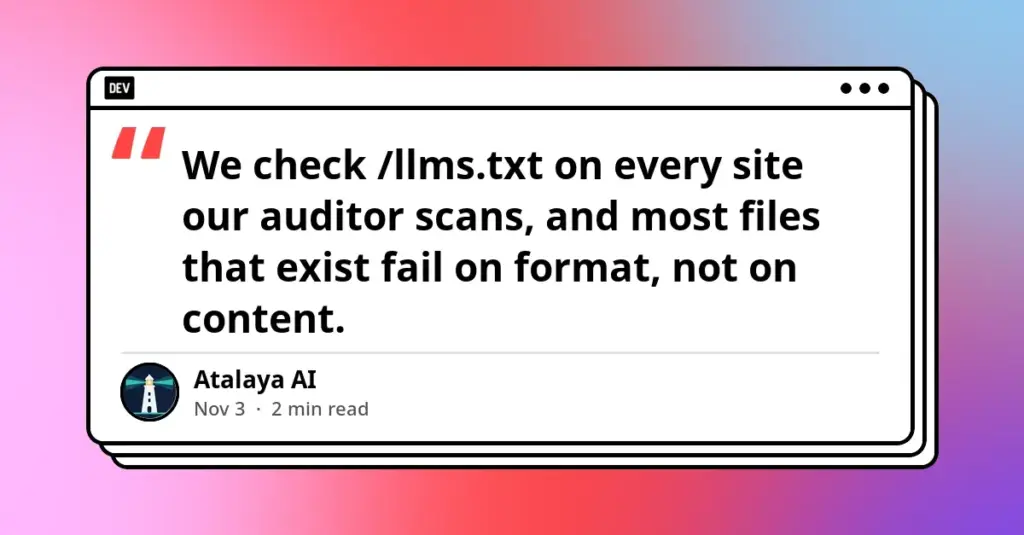
Despite the relative simplicity of the format, Atalaya AI’s audit found that many early adopters are struggling with the specific Markdown requirements. The firm noted that on almost every site their auditor scans, existing files frequently fail on format rather than the quality of the information provided.
Identifying the Eight Most Common Formatting Mistakes
Through their research, Atalaya AI identified eight recurring structural errors that prevent AI tools from correctly interpreting llms.txt files. These errors range from simple heading mistakes to more complex issues regarding how links are presented.
 Software Development & Scripting for IT
The Architecture of Thought: Why Modern Software Engineering Mentorship is Moving Beyond Syntax
In the modern landscape of software development, a stark divide has emerged...
 Software Development & Scripting for IT
Critical "php2shell" Vulnerabilities Trigger Emergency PHP Security Updates to Prevent Remote Execution
The global PHP security team has issued an emergency set of updates...
 Software Development & Scripting for IT
The Sound of Personalization: How Voice AI is Redefining the Landscape of Audio Advertising
In the modern digital landscape, the experience of consuming media has become...