
Current Adoption Rates and Regional Trends
The utility of llms.txt remains a subject of debate within the web development community, primarily because it is a proposal rather than a formal standard recognized by bodies like the IETF or W3C. There is currently no legal or technical obligation for AI companies to respect or read the file. Furthermore, the file does not act as a security measure; it does not grant or block access to a site, a task that remains the responsibility of robots.txt and Content Delivery Network (CDN) settings.
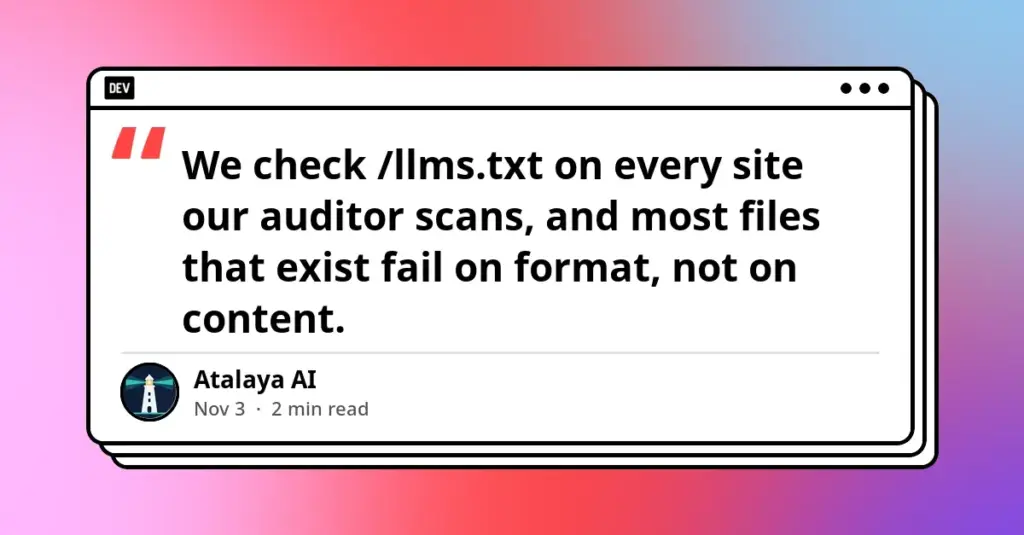
Nevertheless, the audit conducted in October 2026 provides a snapshot of how the industry is reacting to the rise of AI agents. Out of the 751 popular sites sampled, approximately one in ten had published a valid llms.txt file. The data showed slight regional variations in adoption and compliance. In the United States sample, 11.3% of sites had a valid file, while Canada followed at 8.3%. In Mexico, the rate stood at 9.1%.
These figures suggest a growing recognition that providing "cheap documentation" for AI is a worthwhile endeavor. As AI models become more autonomous in how they browse the web, having a structured guide can influence how a site’s information is summarized and presented to users of AI-powered search engines and personal assistants.
Strategic Recommendations for Site Owners
While the llms.txt validator provides a path toward better AI integration, Atalaya AI emphasizes that it should not be the first priority for every site owner. The firm suggests that developers should ensure their robots.txt files and general SEO foundations are solid before worrying about the nuances of llms.txt.
For those who do choose to implement the file, the move toward full URLs is strongly encouraged. While relative links may work within the context of a browser, AI tools often read these files in isolation. Using absolute URLs ensures that the file remains functional and its links remains reachable regardless of how or where the tool is processing the data.
The llms.txt format represents a shift toward a more cooperative relationship between web publishers and AI consumers. While still in its proposal stage, the effort to standardize how sites introduce themselves to machines highlights the changing nature of the internet. For now, the focus for many will be on the basics: ensuring that when an AI knocks on the door of /llms.txt, it finds a file that it can actually read.
 Software Development & Scripting for IT
Understanding the Architecture of Cross-Origin Resource Sharing in Modern Full-Stack Development
In the contemporary landscape of web development, the integration of a React...
 Software Development & Scripting for IT
The Evolution of Data Analysis: Mastering the Power of SQL Window Functions
In the modern landscape of data-driven decision-making, Structured Query Language (SQL) remains...
 Software Development & Scripting for IT
The Problem-First Paradigm: Why Solving Business Pain Points Outlasts Tool Mastery in the AI Automation Era
In the rapidly evolving landscape of digital transformation, the allure of new...







