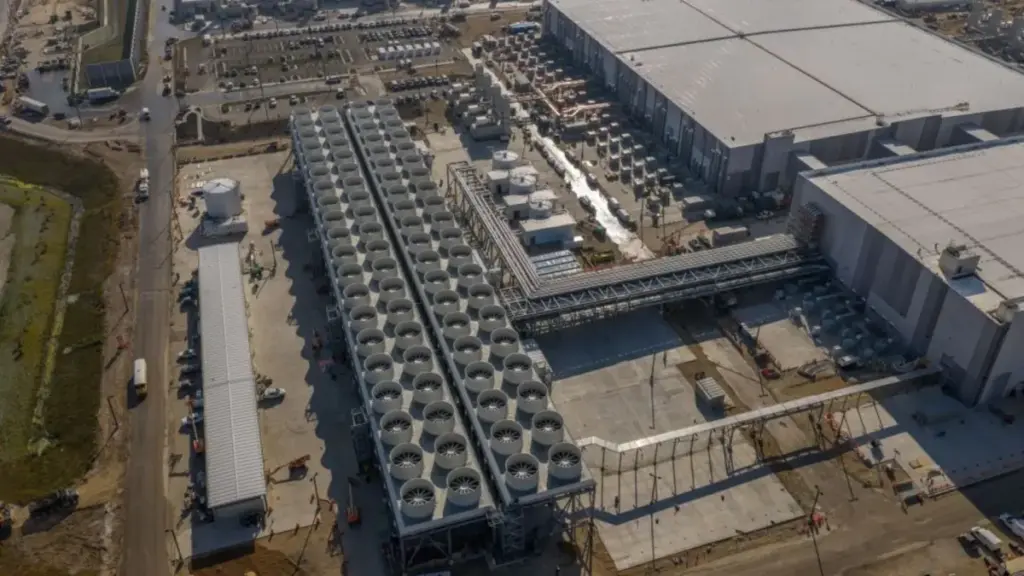
The data center, designed to house the immense computing power necessary for training large language models like Grok, requires a steady and gargantuan supply of electricity that often exceeds what local utility grids can immediately provide. In response to this infrastructure gap, xAI has turned to aeroderivative gas turbines—essentially jet engines modified for stationary power generation. These machines are prized in the energy sector for their ability to ramp up to full power almost instantaneously, making them ideal for emergency backup or "peaking" power. However, using them as a primary or long-term power source for a massive data center represents a significant shift in how tech companies manage their energy footprints. While the technology is efficient in terms of its power-to-size ratio, the sheer volume of fuel consumed and the resulting emissions have placed the facility under intense scrutiny.
According to reports from The New York Times, the state-level permits currently in place for the xAI facility allow for a 25% higher limit in the emission of volatile organic compounds, or VOCs, compared to standard regulatory benchmarks. VOCs are a broad category of chemicals that can have a variety of health effects, ranging from respiratory irritation to more severe long-term complications. When these compounds are released into the atmosphere, they often react with other pollutants and sunlight to form ground-level ozone, a primary component of smog. For a region already balancing industrial growth with environmental preservation, the introduction of eight high-output turbines running at high capacity represents a substantial new source of atmospheric stress.
Beyond the concerns over VOCs, the expulsion of carbon monoxide from the converted jet engines has become a focal point for environmentalists. Carbon monoxide is a colorless, odorless gas that can be harmful when inhaled in large quantities, as it displaces oxygen in the blood. While industrial generators are a common sight in many parts of the country, the scale of the xAI installation and its reliance on aviation-derived technology have led many to warn that this approach is a regressive step in the tech industry’s broader transition toward sustainable energy. In an era where many of Musk’s competitors, such as Google, Microsoft, and Amazon, are making public commitments to carbon neutrality and investing heavily in wind, solar, and even modular nuclear power, the reliance on gas-burning jet turbines in Mississippi stands out as a starkly different strategy.
The legal and regulatory battle over the site has already begun to escalate. The Southern Environmental Law Center (SELC) has officially challenged Mississippi’s decision to approve the use of these turbines at the xAI data center. The SELC, an organization known for its advocacy on behalf of clean air and water across the American South, argues that the permitting process may have overlooked the cumulative impact of these emissions on the local population. Their challenge suggests that the state may have been too lenient in its oversight, potentially in an effort to accommodate the rapid timeline of a high-profile tech investment. The legal filing represents a significant hurdle for xAI, as it could lead to stricter emission controls, mandatory technological upgrades, or even a temporary halt in operations if a court finds that the permits were issued improperly.
 Hardware Reviews & PC Building
Custom Power Distribution Mod Surfaces to Tackle RTX 5090 Overheating Concerns
The launch of NVIDIA’s flagship GeForce RTX 5090 has been met with...
 Hardware Reviews & PC Building
PsiQuantum Leverages Quantum Silicon Photonics to Transform AI Data Center Networking with High-Efficiency Optical Switching
In a strategic move that highlights the growing convergence between quantum computing...
 Hardware Reviews & PC Building
Acer Predator Helios Neo 16S AI Review: Balancing Next-Gen Power with the Constraints of Portability
The landscape of high-end gaming laptops is currently undergoing a significant transformation....