
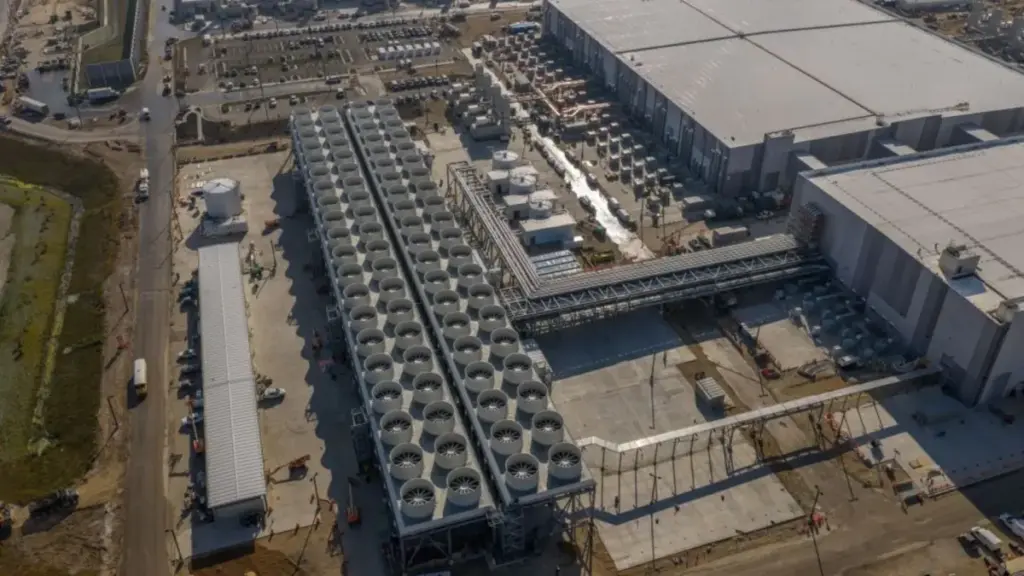
The data center, designed to house the immense computing power necessary for training large language models like Grok, requires a steady and gargantuan supply of electricity that often exceeds what local utility grids can immediately provide. In response to this infrastructure gap, xAI has turned to aeroderivative gas turbines—essentially jet engines modified for stationary power generation. These machines are prized in the energy sector for their ability to ramp up to full power almost instantaneously, making them ideal for emergency backup or "peaking" power. However, using them as a primary or long-term power source for a massive data center represents a significant shift in how tech companies manage their energy footprints. While the technology is efficient in terms of its power-to-size ratio, the sheer volume of fuel consumed and the resulting emissions have placed the facility under intense scrutiny.
According to reports from The New York Times, the state-level permits currently in place for the xAI facility allow for a 25% higher limit in the emission of volatile organic compounds, or VOCs, compared to standard regulatory benchmarks. VOCs are a broad category of chemicals that can have a variety of health effects, ranging from respiratory irritation to more severe long-term complications. When these compounds are released into the atmosphere, they often react with other pollutants and sunlight to form ground-level ozone, a primary component of smog. For a region already balancing industrial growth with environmental preservation, the introduction of eight high-output turbines running at high capacity represents a substantial new source of atmospheric stress.
Beyond the concerns over VOCs, the expulsion of carbon monoxide from the converted jet engines has become a focal point for environmentalists. Carbon monoxide is a colorless, odorless gas that can be harmful when inhaled in large quantities, as it displaces oxygen in the blood. While industrial generators are a common sight in many parts of the country, the scale of the xAI installation and its reliance on aviation-derived technology have led many to warn that this approach is a regressive step in the tech industry’s broader transition toward sustainable energy. In an era where many of Musk’s competitors, such as Google, Microsoft, and Amazon, are making public commitments to carbon neutrality and investing heavily in wind, solar, and even modular nuclear power, the reliance on gas-burning jet turbines in Mississippi stands out as a starkly different strategy.
The legal and regulatory battle over the site has already begun to escalate. The Southern Environmental Law Center (SELC) has officially challenged Mississippi’s decision to approve the use of these turbines at the xAI data center. The SELC, an organization known for its advocacy on behalf of clean air and water across the American South, argues that the permitting process may have overlooked the cumulative impact of these emissions on the local population. Their challenge suggests that the state may have been too lenient in its oversight, potentially in an effort to accommodate the rapid timeline of a high-profile tech investment. The legal filing represents a significant hurdle for xAI, as it could lead to stricter emission controls, mandatory technological upgrades, or even a temporary halt in operations if a court finds that the permits were issued improperly.
The tension between technological progress and environmental protection is not a new phenomenon, but the scale of the AI boom has accelerated the conflict. Training a single large-scale AI model can consume as much electricity as thousands of homes use in a year. As companies like xAI race to build "compute clusters" featuring tens of thousands of high-end graphics processing units, the demand for power has become the single greatest bottleneck in the industry. For Musk, whose business philosophy often emphasizes speed and the removal of bureaucratic "red tape," the use of jet engine turbines is a pragmatic solution to an immediate problem. By generating its own power on-site, xAI can bypass the years of planning and construction typically required to upgrade local grid infrastructure.
However, the "move fast and break things" ethos that has defined much of the Silicon Valley era is facing a different kind of resistance in the realm of heavy industry and environmental law. Critics of the Mississippi project argue that the "boneyard" approach—repurposing older engine designs for modern data needs—might be cost-effective for the company, but it shifts the environmental "cost" onto the public. The 25% increase in allowed VOC emissions is particularly galling to local activists, who note that such allowances are rarely granted without significant public benefit or rigorous proof that no cleaner alternative exists. They contend that a company with the resources of xAI should be leading the way in clean energy innovation rather than relying on mid-20th-century combustion technology.
The situation in Mississippi is being closely watched by industry analysts and environmental groups alike, as it may set a precedent for how other AI firms handle their energy needs in the future. If xAI is successful in maintaining its current power structure despite the legal challenges, it could signal a trend where data centers become increasingly decoupled from the public grid, operating as self-contained, fossil-fuel-powered islands of computation. Conversely, if the Southern Environmental Law Center prevails, it could force the industry to reconsider the environmental cost of rapid AI expansion and invest more heavily in the "green" infrastructure that many companies have promised in their corporate social responsibility reports.
The technical details of the turbines themselves add another layer of complexity to the story. These are not standard diesel generators found behind a typical hospital or grocery store. Aeroderivative turbines are sophisticated pieces of machinery that require precise maintenance and specific fuel blends to operate safely and efficiently. While they are cleaner than coal-fired power plants, they still represent a significant source of greenhouse gases and local pollutants. The expulsion of carbon monoxide and VOCs is a byproduct of the high-temperature combustion process required to generate the megawatts of power needed to keep xAI’s servers running cool and fast.
As the legal proceedings move forward, the community in Mississippi remains caught in the middle of a global technological arms race. On one hand, the arrival of a high-tech firm like xAI brings the promise of jobs, prestige, and further investment in a state that has often struggled to attract the biggest names in the tech industry. On the other hand, the physical reality of eight jet engines roaring in the background—and the invisible pollutants they release into the air—serves as a constant reminder of the trade-offs involved in such development. The outcome of the SELC’s challenge will likely determine whether Mississippi becomes a model for a new kind of industrial-tech synergy or a cautionary tale about the risks of prioritizing speed over sustainability.
For now, the turbines continue to spin, powering the chips that are currently processing the vast amounts of data needed to make Grok more intelligent and capable. The data center stands as a monument to the sheer physical force required to sustain the digital world. Whether that force can be harnessed in a way that satisfies both the demands of the AI revolution and the requirements of environmental law remains an open question. With the Southern Environmental Law Center pushing for a judicial review of the state’s permitting process, the next chapter of this story will likely be written in a courtroom, where the high-speed world of artificial intelligence will have to answer to the long-standing principles of environmental protection and public health.
 Hardware Reviews & PC Building
The PC gaming ray tracing obsession began with the first RTX 20 graphics cards released on this day in 2018 — the…
The debut of the GeForce 20 series was spearheaded by the release...
 Hardware Reviews & PC Building
Corsair HX1000i Shift Crystal: A High-Performance Digital Power Supply That Puts Its Internals on Display
In the modern landscape of enthusiast PC building, the power supply unit...
 Hardware Reviews & PC Building
Nvidia’s Strategic "Design Intuition": Ian Finder Addresses Skepticism Over Vera CPU’s Agentic AI Roots
The landscape of high-performance computing and artificial intelligence is currently defined by...







