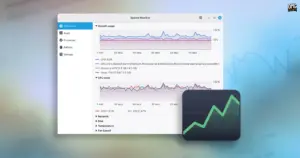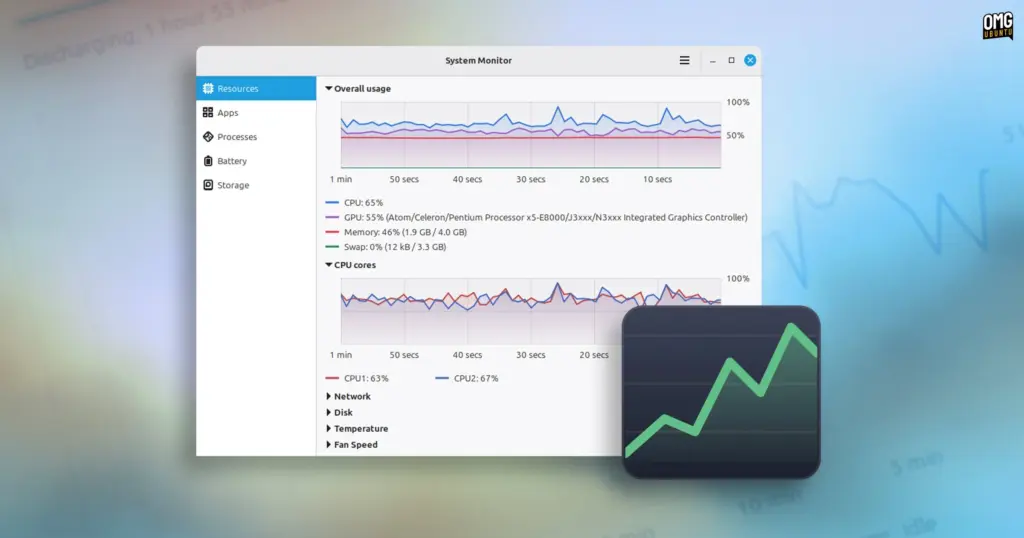
Other major distributions and independent developer communities have addressed this gap in recent cycles. Canonical replaced the classic utility in Ubuntu with Resources, System76 engineered a purpose-built system monitor tailored for its Rust-based COSMIC desktop environment, and community projects such as Mission Center have gained widespread traction by modernizing performance telemetry across flatpak distributions. With Superlight, Linux Mint ensures its desktop stack retains parity with modern diagnostic design patterns while keeping development aligned with Mint’s specific UI sensibilities.
Looking forward toward the stable release of Linux Mint 27, development on Superlight is expected to continue expanding. Future updates are planned to bring integrated system log viewing directly into the application, centralizing error reporting and hardware warnings alongside runtime performance data. Additional user-configurable parameters—such as customizable metric polling intervals to minimize background CPU overhead on low-power devices—are also under consideration.
Notably, the tool deliberately omits ultra-detailed hardware component profiling, such as granular CPU instruction sets, physical processor socket specifications, or memory bank timings. While alternatives like Mission Center or Resources sometimes blend low-level hardware component sheets into their telemetry views, Linux Mint already provides a dedicated System Information utility within the operating system. By keeping deep hardware component inventories separated from runtime operational telemetry, Superlight avoids unnecessary interface bloat, keeping its primary focus locked on real-time system performance, process control, and storage management.
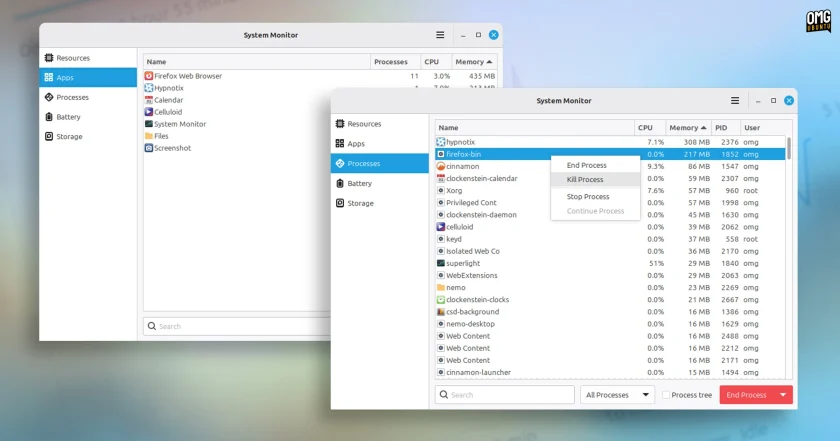
Expanding the XApp Ecosystem: Velocitty and Beyond
The introduction of Superlight is not an isolated update; it forms part of a wider software refresh spearheaded by the XApp Project. Initiated by the Linux Mint team, the XApp initiative is guided by a specific development mandate: to produce a collection of lightweight, traditional, yet modern desktop applications that remain agnostic of any single desktop environment. While designed to integrate seamlessly into Linux Mint’s flagship Cinnamon desktop, XApps are specifically engineered to function predictably across traditional GTK-based environments, including MATE, Xfce, and standard desktop shells.
Longstanding applications like Pix (for image viewing and organization), Thingy (a dedicated document manager), and Library (for quick file access) have established the XApp design language. Superlight joins this portfolio to ensure that core administrative tasks no longer depend on external upstream software whose interface guidelines may diverge from traditional desktop paradigms.
The utility is accompanied by several other new applications currently making their way through the Mint engineering pipeline. Among the most notable additions is Velocitty, an upcoming terminal emulator designed for Linux Mint. Developed with inspiration drawn from modern terminal projects such as Ghostty and Ptyxis, Velocitty aims to combine contemporary terminal performance and features with the stability and layout consistency expected by the distribution’s user base.
Beyond terminal emulation and performance tracking, the development team is also actively working on a modern calendar and clock utility, a dedicated archive manager to streamline archive extraction and compression tasks, and a lightweight ebook reader designed for the desktop.
Together, these parallel software developments illustrate the continued evolution of the Linux Mint ecosystem. As the project marches toward the launch of Linux Mint 27, the arrival of Superlight and its companion utilities highlights a development philosophy focused on delivering refined, self-contained, and intuitive tools that modernize the desktop without compromising user familiarity.
 Linux & Open Source Solutions
Linux Mint Unveils "Superlight," a Modern System Monitor Slated for Version 27
Linux Mint is preparing a major refresh of its core software lineup...
 Linux & Open Source Solutions
Canonical Releases Official Ubuntu Desktop Images for RISC-V Hardware Ahead of Ubuntu 26.10
Installing Ubuntu on RISC-V hardware is poised to become significantly more straightforward...
 Linux & Open Source Solutions
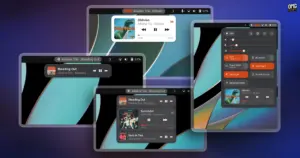
Now Playing Card shows media info for multiple apps at a time
In the standard GNOME Shell environment, media playback has long been relegated...