
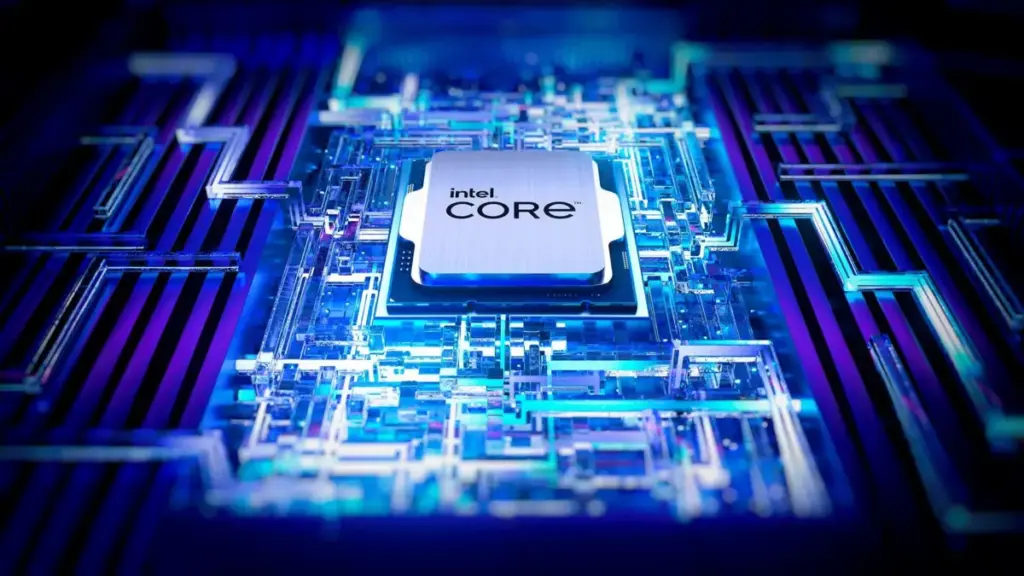
Intel appears to be moving forward with a strategic extension of its previous-generation hardware ecosystem, as new evidence points toward a forthcoming line of processors designated "Raptor Lake Next." The emergence of an internal test driver carrying the "RPL-NEXT" identifier, coupled with detailed shipping manifests from Southeast Asia, suggests that the Santa Clara-based chipmaker is preparing to support the LGA 1700 socket and DDR4 memory well into the latter half of the decade. This move represents a significant shift in Intel’s traditional product lifecycle management, echoing a strategy successfully employed by its primary competitor, AMD, to maintain relevance in the budget and mid-range market segments.
The first concrete indication of this development arrived via an internal Intel test driver, which explicitly utilized the "RPL-NEXT" label. This nomenclature is widely understood within the industry to refer to a subsequent iteration or a specialized refresh of the Raptor Lake architecture, which currently powers Intel’s 13th and 14th Generation Core processors. While Intel has recently transitioned its flagship enthusiast and performance tiers to the new LGA 1851 socket and the Arrow Lake architecture, the "Next" designation suggests that the company is not yet ready to abandon the millions of users currently utilizing the LGA 1700 platform.
Corroborating the software-based leak, shipping manifests originating from Vietnam have provided a more tangible look at the hardware in development. These documents, which track exports of silicon components, have reportedly shown entries for "Raptor Lake Next" CPUs dating as far back as August. Unlike typical early-stage prototypes, these manifests included specific technical details, such as cache configurations and clock speeds, indicating that the silicon is likely in an advanced stage of testing or early production. The presence of these components in Vietnam is particularly noteworthy, as the region hosts one of Intel’s largest assembly and test facilities (VNAT), often serving as a final stop for hardware before it reaches global distribution channels.
The decision to revisit the Raptor Lake architecture for a 2027 release window suggests a calculated effort to capture the "value" segment of the PC market. Historically, Intel has been known for a relatively rapid cadence of socket transitions, often requiring users to purchase new motherboards every two generations. However, the longevity of AMD’s AM4 platform, which continues to receive new CPU releases years after the launch of its successor, AM5, has demonstrated a clear consumer appetite for platform stability. By extending the life of LGA 1700, Intel provides an upgrade path for users on older 12th or 13th Gen systems who may be hesitant to invest in the higher costs associated with DDR5 memory and new Z890 or B860 motherboards.
Central to this strategy is the continued support for DDR4 memory. While DDR5 has become the standard for high-end gaming and professional workstations, DDR4 remains significantly more affordable and is still manufactured in massive quantities. For educational institutions, enterprise fleets, and budget-conscious builders in emerging markets, the ability to pair a modern, capable processor with inexpensive DDR4 modules and mature LGA 1700 motherboards is a compelling proposition. The "Raptor Lake Next" lineup appears designed to fill this specific niche, offering a bridge between legacy hardware and modern processing requirements.
Technically, Raptor Lake Next is expected to build upon the refined Intel 7 process node. The original Raptor Lake architecture introduced a hybrid design featuring high-performance "Raptor Cove" P-cores and energy-efficient "Gracemont" E-cores. By further optimizing this architecture, Intel can potentially offer higher efficiency or slightly improved clock speeds without the massive research and development costs associated with a brand-new architecture. The shipping manifests’ mention of specific cache sizes suggests that Intel may be tweaking the balance between P-cores and E-cores to better suit modern software demands, perhaps offering higher core counts in the mid-range i5 and i3 equivalents.
The timing of these leaks coincides with a broader industry trend where the "performance per dollar" metric is becoming increasingly scrutinized. As the cost of leading-edge semiconductor manufacturing rises, the industry is seeing a bifurcation: a high-end tier pushing the boundaries of Moore’s Law with expensive new nodes, and a "long-tail" tier that maximizes the utility of older, more mature nodes. Raptor Lake Next fits firmly into the latter. By utilizing the Intel 7 process, which has reached a high level of yield and maturity, Intel can produce these chips more cost-effectively than its latest 3nm or 20A-based designs.
This strategy also serves as a defensive maneuver against AMD’s persistent support for its older platforms. AMD recently refreshed its AM4 lineup with the Ryzen 5000XT series, ensuring that users who bought motherboards in 2017 or 2018 still have viable, modern CPU options in 2024 and beyond. Intel’s LGA 1700 socket, which debuted in late 2021 with Alder Lake, has already seen three generations of support. If "Raptor Lake Next" indeed carries the platform into 2027, it would mark one of the longest-lived consumer sockets in Intel’s history, rivaling the legendary longevity of the LGA 775 era.
There are also logistical advantages to this approach. The global supply chain for LGA 1700 motherboards—ranging from the high-end Z790 to the budget H610 chipsets—is well-established. System integrators and OEMs (Original Equipment Manufacturers) often prefer platforms with long lifecycles because they reduce the need for frequent re-validation of hardware configurations. A "Next" series allows these partners to continue offering reliable, well-understood systems to their clients while still being able to market "new" processor technology.
Furthermore, the "Raptor Lake Next" initiative may address some of the market gaps left by the transition to Arrow Lake. While Arrow Lake focuses on architectural efficiency and integrated AI capabilities (NPU), it lacks support for DDR4 and requires a completely new power delivery infrastructure. For users whose workloads do not benefit from AI acceleration or the latest PCIe 5.0 advancements, a refreshed Raptor Lake chip provides a more straightforward performance boost without the "platform tax" of a total system overhaul.
The details found in the shipping manifests—specifically the clock speeds and cache—suggest that these are not merely "rebadges" of existing 14th Gen parts. In the semiconductor world, a refresh often involves selecting better-binned silicon or adjusting the voltage-frequency curves to provide a more stable or slightly faster product. Given the stability challenges that faced some high-end 13th and 14th Gen parts earlier this year, a "Next" iteration could also represent a "corrected" version of the architecture, incorporating microcode and hardware-level adjustments from the factory to ensure long-term reliability.
While Intel has not yet officially commented on the "Raptor Lake Next" branding or the specific release timeline, the convergence of driver data and international shipping logs makes the project’s existence difficult to dispute. The projected 2027 window suggests that Intel views the transition to DDR5 and LGA 1851 as a multi-year process, rather than an overnight switch. By maintaining a dual-platform strategy, Intel can cater to the enthusiast "early adopters" with Arrow Lake and its successors, while simultaneously defending its market share in the high-volume budget and corporate sectors with Raptor Lake Next.
As the PC market continues to stabilize following the volatility of the past few years, the demand for longevity and value has never been higher. Intel’s apparent decision to take a page from the AMD playbook indicates a more pragmatic approach to platform management. For the consumer, this means more choices and a longer period of utility for their existing investments. For the industry, it signals a recognition that "new" does not always have to mean "completely different," and that there is immense value in refining and extending the life of proven, capable technology.
The "RPL-NEXT" driver and the Vietnamese shipping manifests provide a glimpse into a roadmap where the LGA 1700 socket remains a cornerstone of Intel’s strategy for years to come. Whether this will culminate in a "15th Gen" branding for the older socket or a separate "Core" (Series 1) naming convention remains to be seen, but the intent is clear: Raptor Lake still has more to give.
 Hardware Reviews & PC Building
Nvidia CEO Jensen Huang admits to an affair with a suspected Chinese spy — Jensen apologizes in letter to staff,…
The revelation came to light after a series of reports suggested that...
 Hardware Reviews & PC Building
The PC gaming ray tracing obsession began with the first RTX 20 graphics cards released on this day in 2018 — the…
The debut of the GeForce 20 series was spearheaded by the release...
 Hardware Reviews & PC Building
GlobalFoundries Unveils FDX Fusion: Aiming for 7nm Performance with Planar Transistors and No EUV by 2030
In a strategic move that reinforces its departure from the traditional "leading-edge"...







