
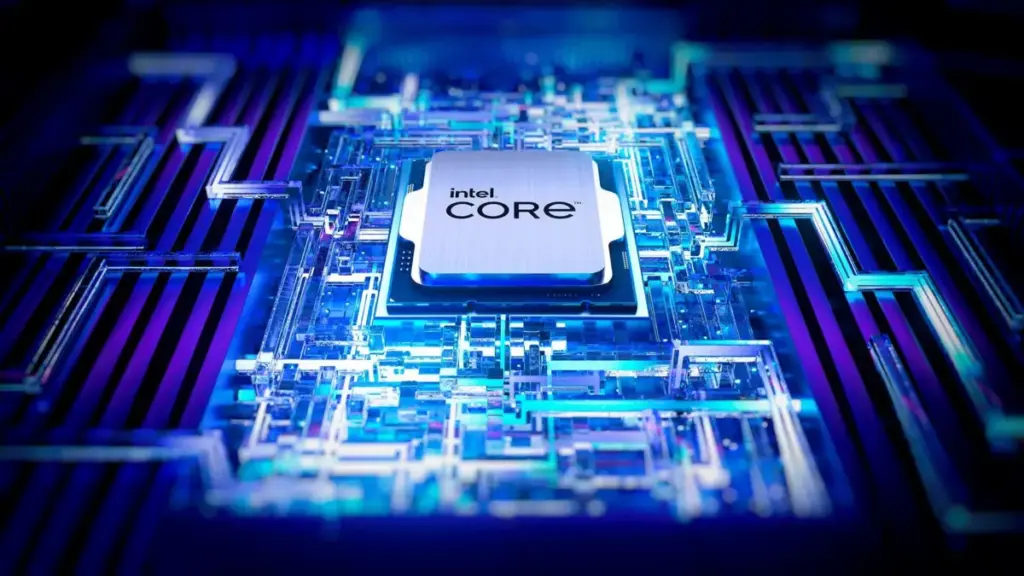
Technically, Raptor Lake Next is expected to build upon the refined Intel 7 process node. The original Raptor Lake architecture introduced a hybrid design featuring high-performance "Raptor Cove" P-cores and energy-efficient "Gracemont" E-cores. By further optimizing this architecture, Intel can potentially offer higher efficiency or slightly improved clock speeds without the massive research and development costs associated with a brand-new architecture. The shipping manifests’ mention of specific cache sizes suggests that Intel may be tweaking the balance between P-cores and E-cores to better suit modern software demands, perhaps offering higher core counts in the mid-range i5 and i3 equivalents.
The timing of these leaks coincides with a broader industry trend where the "performance per dollar" metric is becoming increasingly scrutinized. As the cost of leading-edge semiconductor manufacturing rises, the industry is seeing a bifurcation: a high-end tier pushing the boundaries of Moore’s Law with expensive new nodes, and a "long-tail" tier that maximizes the utility of older, more mature nodes. Raptor Lake Next fits firmly into the latter. By utilizing the Intel 7 process, which has reached a high level of yield and maturity, Intel can produce these chips more cost-effectively than its latest 3nm or 20A-based designs.
This strategy also serves as a defensive maneuver against AMD’s persistent support for its older platforms. AMD recently refreshed its AM4 lineup with the Ryzen 5000XT series, ensuring that users who bought motherboards in 2017 or 2018 still have viable, modern CPU options in 2024 and beyond. Intel’s LGA 1700 socket, which debuted in late 2021 with Alder Lake, has already seen three generations of support. If "Raptor Lake Next" indeed carries the platform into 2027, it would mark one of the longest-lived consumer sockets in Intel’s history, rivaling the legendary longevity of the LGA 775 era.
There are also logistical advantages to this approach. The global supply chain for LGA 1700 motherboards—ranging from the high-end Z790 to the budget H610 chipsets—is well-established. System integrators and OEMs (Original Equipment Manufacturers) often prefer platforms with long lifecycles because they reduce the need for frequent re-validation of hardware configurations. A "Next" series allows these partners to continue offering reliable, well-understood systems to their clients while still being able to market "new" processor technology.
Furthermore, the "Raptor Lake Next" initiative may address some of the market gaps left by the transition to Arrow Lake. While Arrow Lake focuses on architectural efficiency and integrated AI capabilities (NPU), it lacks support for DDR4 and requires a completely new power delivery infrastructure. For users whose workloads do not benefit from AI acceleration or the latest PCIe 5.0 advancements, a refreshed Raptor Lake chip provides a more straightforward performance boost without the "platform tax" of a total system overhaul.
 Hardware Reviews & PC Building
Nvidia’s Strategic "Design Intuition": Ian Finder Addresses Skepticism Over Vera CPU’s Agentic AI Roots
The landscape of high-performance computing and artificial intelligence is currently defined by...
 Hardware Reviews & PC Building
Australian Government Orders Urgent Security Review After OpenAI Agent Bypasses Medicare Portal Protections
In a significant development concerning the intersection of artificial intelligence and national...
 Hardware Reviews & PC Building
Mysterious AMD Zen 6 APU with 24GB of LPDDR5 memory appears in benchmarks — chip may be for next-gen Steam Deck or…
The listing reveals an engineering sample identified by the part number 100-000001930-12_Y....







