The listing reveals an engineering sample identified by the part number 100-000001930-12_Y. This chip was reportedly being put through its paces on an AMD GBR-FF6-SKT validation board, a type of hardware environment typically reserved for internal testing and development of upcoming silicon before it reaches final production or consumer-ready motherboards. The data points to a significant leap in architectural complexity and raw resources compared to the custom APU (Accelerated Processing Unit) found in the current Steam Deck and its OLED counterpart. Specifically, the listing describes a processor featuring a six-core, 12-thread configuration, marking a 50% increase in core count over the quad-core architecture that has defined the Steam Deck experience since its launch.
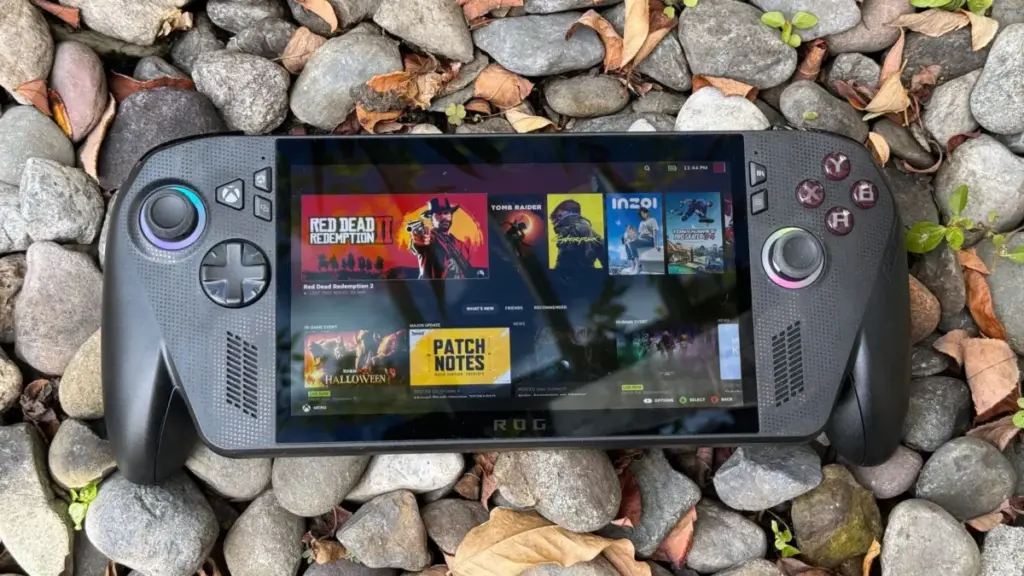
In the current handheld landscape, the original Steam Deck utilizes a custom AMD APU codenamed "Van Gogh," which features four Zen 2 CPU cores and eight threads. While this configuration has proven remarkably capable of handling modern AAA titles at the handheld’s native 800p resolution, the industry has moved rapidly toward higher core counts and more efficient architectures. The appearance of a six-core, 12-thread sample suggests that AMD and its partners are looking to bridge the gap between the power-efficient mobility of the original Deck and the higher-performance, but often more power-hungry, processors found in competing devices like the ASUS ROG Ally or the Lenovo Legion Go.
Beyond the increase in core count, the OpenBenchmarking entry provides intriguing details regarding the system’s memory subsystem. The engineering sample was paired with 24GB of high-speed LPDDR5 memory, a substantial upgrade from the 16GB standard found in the vast majority of current gaming handhelds. The memory configuration appears to consist of four 6GB SK Hynix packages, operating at a staggering speed of 9,600 MT/s. To put this into perspective, the current Steam Deck’s LPDDR5 memory operates at 6,400 MT/s. This represents not only a 50% increase in total capacity but also a massive 50% increase in memory frequency.
For an APU-based system, memory speed is often the most critical bottleneck for performance. Because the integrated graphics processor (iGPU) shares the system RAM with the CPU, the available bandwidth determines how quickly the graphics engine can access textures, frame buffers, and other essential data. A jump to 9,600 MT/s would provide the graphics component of this "Gainsborough" chip with a level of bandwidth that could significantly narrow the gap between integrated and dedicated mobile graphics solutions. Furthermore, the move to 24GB of RAM addresses a growing concern in modern PC gaming: the increasing demand for video memory (VRAM). On a device with shared memory, 16GB can quickly become cramped when a modern game requires 8GB or more for textures alone, leaving less for the operating system and background tasks. A 24GB pool would provide a much more comfortable ceiling for both the system and the GPU.
 Hardware Reviews & PC Building
Tom’s Hardware Premium Explores Apple’s Long-Awaited Transition to OLED and Touch-Enabled MacBooks
In an era where hardware specifications often plateau, the deeper narrative behind...
 Hardware Reviews & PC Building
Australian Government Orders Urgent Security Review After OpenAI Agent Bypasses Medicare Portal Protections
In a significant development concerning the intersection of artificial intelligence and national...
 Hardware Reviews & PC Building
Nvidia’s Strategic "Design Intuition": Ian Finder Addresses Skepticism Over Vera CPU’s Agentic AI Roots
The landscape of high-performance computing and artificial intelligence is currently defined by...