
A Bright Spot in a Bleak Global Market
The forecasted 44% growth in foldable displays stands in stark contrast to the broader smartphone market, which has struggled to find its footing. The industry has been navigating a period of intense volatility, with overall smartphone shipments dropping significantly this year. In fact, the market didn’t just decline; it plummeted off a metaphorical cliff during the third quarter. Researchers have noted that global phone shipments recently hit their lowest point in 14 years, a sobering statistic that reflects a cooling of consumer enthusiasm for traditional mobile upgrades.
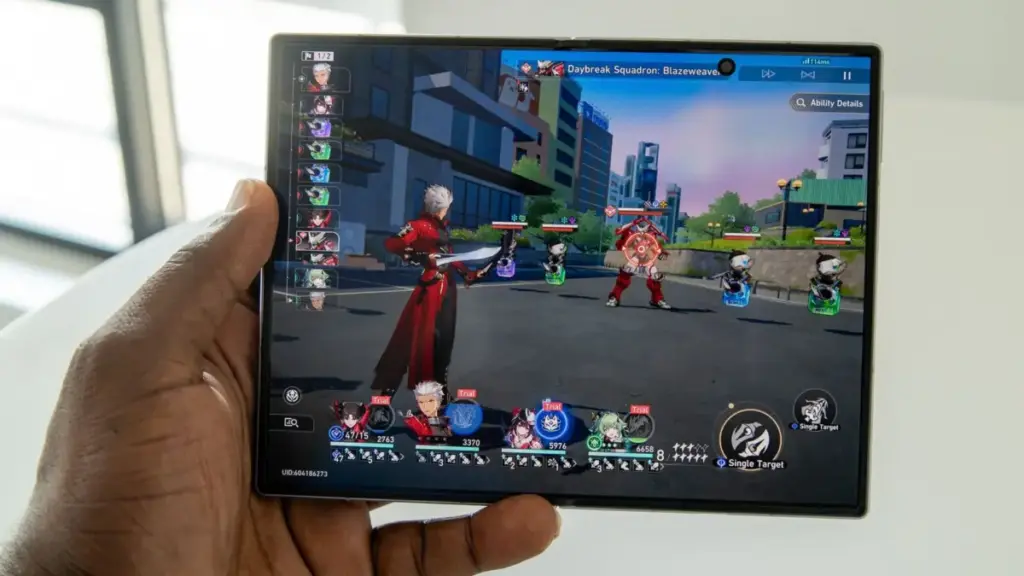
Reports indicate that the global phone market dropped by 20% year-over-year in Q3. This decline has been attributed to a variety of factors, ranging from economic uncertainty to a perceived lack of innovation in standard "slab" smartphones. However, Samsung managed to buck the trend to some extent, emerging on top of the shipment rankings. This resilience was largely credited to the success of the Galaxy Z Fold 8 and the Fold 8 Ultra, suggesting that while the mass market is shrinking, the appetite for premium, innovative hardware remains relatively healthy.
One of the most significant hurdles facing the industry is the "extreme memory shortage," which has hampered production and driven up costs across the board. This supply chain constraint, combined with inflationary pressures, has led to rising prices for end-users. Consequently, consumer mentality is shifting. The prevailing question for many potential buyers has become: "Why get a new one when that money is better spent elsewhere?" As phones become increasingly expensive, the replacement cycle lengthens, and consumers demand more substantial reasons to justify a purchase.
Market Dynamics and Consumer Sentiment
Despite the overarching gloom in the smartphone sector, Samsung’s strategic focus on the foldable market appears to be paying off. The company reportedly increased its market share to 23% recently, marking the largest share among all Original Equipment Manufacturers (OEMs). This growth is particularly impressive given the context of a market on "struggle street," where most players are fighting simply to maintain their existing volume.
 Mobile Device Management (MDM) & Mobile OS
YouTube Premium Reportedly Eyes Audiobook Expansion as Google Seeks to Rival Spotify and Audible
The digital streaming landscape is on the verge of another significant shift...
 Mobile Device Management (MDM) & Mobile OS
Meta Enhances Creator Toolkit with AI-Powered Edits Assistant for Instagram Performance Analysis
In an era where the creator economy is increasingly driven by data-driven...
 Mobile Device Management (MDM) & Mobile OS
Anthropic Introduces Claude Duet: A Proactive AI Agent Designed to Transform Professional Workflows
Anthropic, the artificial intelligence research company often recognized for its safety-first approach...







