
In the rapidly evolving landscape of smart home technology, the gap between powerful functionality and user-friendly accessibility has often been a significant point of friction for even the most dedicated enthusiasts. While Apple’s HomeKit ecosystem provides a robust framework for device connectivity, the process of creating intricate, multi-layered automations has traditionally required a deep understanding of logical triggers, conditions, and sequential actions. Controller for HomeKit, a long-standing favorite among power users for its deep integration and advanced management tools, is now aiming to bridge this gap with its latest update, which introduces a sophisticated AI-driven feature designed to transform the way users interact with their living spaces.
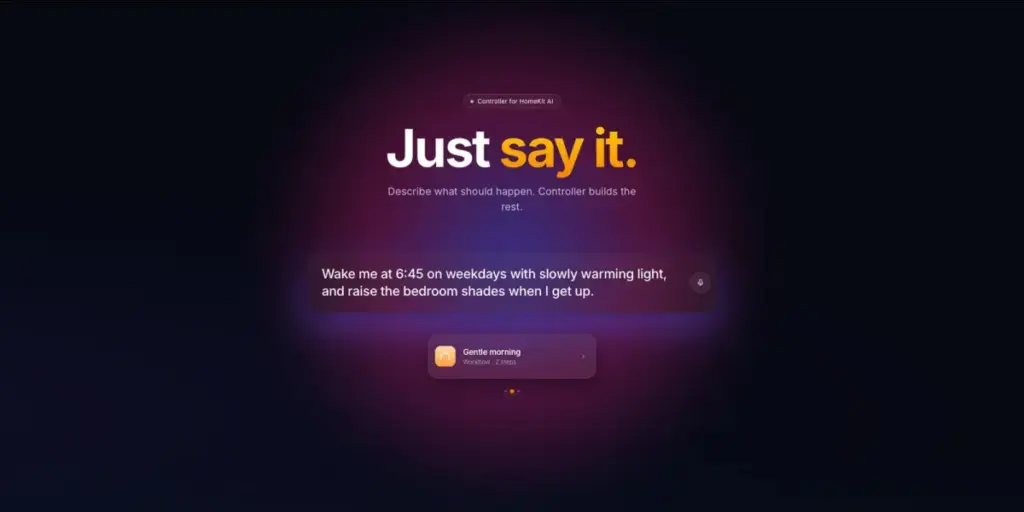
The centerpiece of this update is a new natural language processing tool that the developer is promoting under the evocative slogan, "Just say it." The premise is straightforward yet ambitious: instead of manually navigating through menus, selecting individual devices, and assigning specific states or schedules, users can simply describe what they want to happen in plain English. The underlying artificial intelligence then takes this descriptive input and automatically translates it into the technical architecture required to build a HomeKit scene, workflow, or automation.
This shift toward natural language interaction represents a significant departure from the standard "if-this-then-that" interface that has dominated smart home management for years. For many users, the primary barrier to a truly "smart" home has been the time and cognitive effort required to program complex routines. By leveraging AI to handle the heavy lifting of configuration, Controller for HomeKit is positioning itself as a bridge between human intent and digital execution. The app’s website emphasizes this simplicity, suggesting that the user’s only responsibility is to articulate the desired outcome, while the software manages the intricate backend logic.
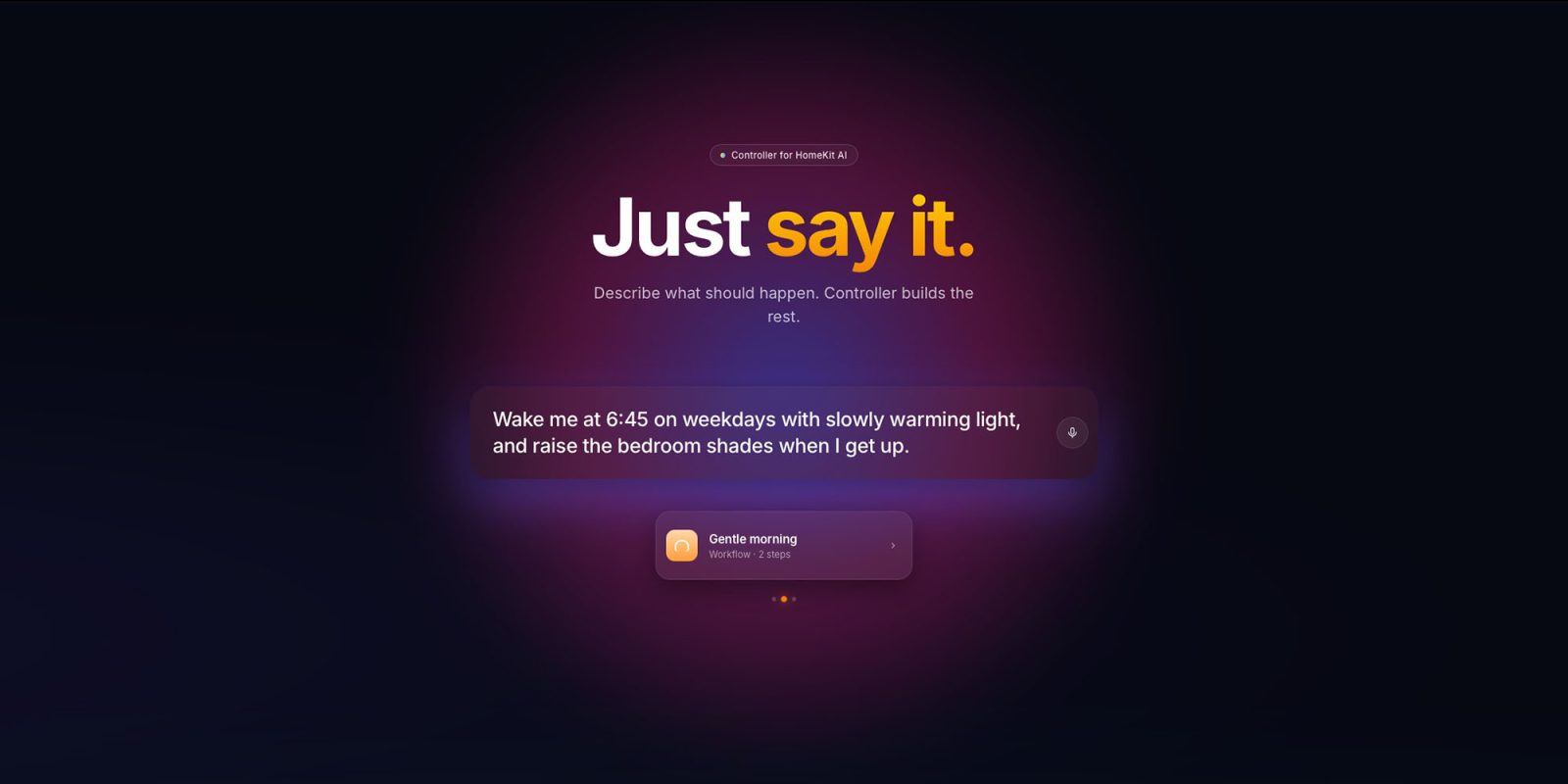
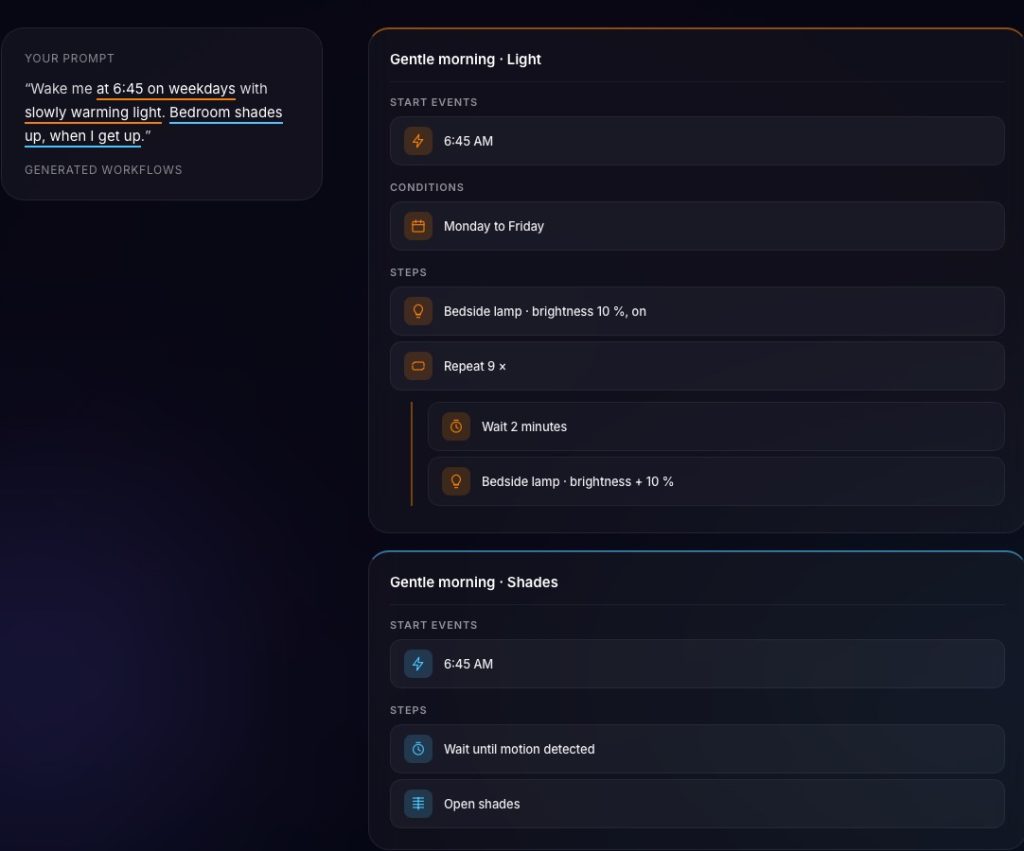
To illustrate the capabilities of the new feature, the developers have provided several examples of how varied and specific these prompts can be. One example demonstrates a morning routine: "Wake me at 6:45 on weekdays with slowly warming light, and raise the bedroom shades when I get up." This single sentence involves several distinct commands and triggers that would normally require multiple steps to program. It necessitates a time-based trigger for specific days of the week, a gradual transition of light intensity and color temperature—a feature often referred to as "adaptive lighting" or "circadian transition"—and a secondary action involving window coverings based on a "getting up" event, which might be tied to a sensor or a manual override.
Another example showcases the AI’s ability to handle environmental settings for entertainment: "Movie night: dim the living room lights to 20% and close the curtains." In traditional setups, a user would need to create a specific "Movie Night" scene, find every relevant light fixture and curtain motor, and manually set their percentages. With the new "Just say it" feature, the AI identifies the relevant categories of devices and applies the requested parameters instantly.
The third example provided by the developer highlights the logic-based potential of the system: "If someone comes home after midnight, turn only the hallway light to 15%." This prompt is particularly notable because it combines a location-based trigger (someone arriving home) with a time-based condition (after midnight) and a specific device state (dimmed lighting). For many users, setting up such conditional logic in the native Apple Home app can be a cumbersome process, often requiring the use of Shortcuts or third-party logic gates. The AI feature in Controller for HomeKit seeks to condense that entire logical chain into a single, understandable sentence.
The technical sophistication required to turn these prompts into HomeKit commands is substantial. When a user enters a phrase like the morning routine mentioned above, the app must parse the text to identify the "when" (6:45 AM, weekdays), the "what" (light, bedroom shades), and the "how" (slowly warming, raising). It then cross-references these intents with the user’s existing HomeKit database to find the specific lights and shades that match the description. This level of contextual awareness is what sets the AI update apart from basic voice commands, as it focuses on the creation of permanent automations rather than just one-time executions.
Despite the complexity of the backend, early indications suggest that the system is remarkably intuitive. In a brief initial test of the feature, the app was asked to perform a relatively simple but multi-step automation: switching on a bedroom fan specifically when the living room lights were turned off. This type of "cross-room" logic is a common requirement for users who want their home to react to their movements and habits. Even with a minimal smart home setup consisting of only a few lights and a smart plug, the AI was able to perfectly interpret the request and generate a functional automation without further manual intervention.
The timing of this update is particularly relevant as the broader tech industry moves toward "Apple Intelligence" and more integrated AI experiences across the iOS and macOS ecosystems. While Apple has signaled that Siri will become more capable of handling on-device tasks through its own AI advancements, third-party developers like those behind Controller for HomeKit are moving quickly to provide specialized, high-power tools for the "prosumer" market. Controller for HomeKit has long been known for features that Apple’s native Home app lacks, such as the ability to back up and restore HomeKit configurations, detailed logging of device states, and advanced "Workflows" that can trigger multiple scenes across different homes.
However, these advanced capabilities and the new AI integration come with a specific pricing structure. Controller for HomeKit operates on a subscription model, reflecting the ongoing costs associated with maintaining a high-end management tool and the cloud-based resources often required for advanced AI processing. The "Essentials" tier is priced at $40 per year, while the "Plus" tier, which includes the full suite of advanced features, is available for $80 per year. For those who are hesitant to commit to a yearly subscription without testing the AI’s efficacy in their own environment, the developer offers a seven-day free trial.
The subscription-based approach is becoming increasingly common for apps that provide specialized services within the Apple ecosystem, particularly those that offer tools for power users who manage dozens or even hundreds of smart devices. For a user with a simple setup of a few bulbs, the cost might be difficult to justify. However, for those with complex installations involving multiple rooms, various manufacturers, and intricate daily routines, the ability to "just say" a command and have the system build the automation could save hours of manual configuration.

As smart home technology continues to mature, the focus is clearly shifting away from simple connectivity and toward intelligent automation. The goal is no longer just to control a light from a smartphone, but to have the home anticipate the user’s needs and react to their lifestyle with minimal input. By introducing natural language processing into the automation-building process, Controller for HomeKit is taking a significant step toward that vision of a "proactive" home.
A more comprehensive evaluation of the feature will be necessary to see how it handles truly massive HomeKit environments—those with hundreds of devices where naming conventions might overlap or where logic becomes increasingly tangled. The ability of the AI to distinguish between "the lamp in the corner" and "the floor lamp" based on the user’s habitual language will be a key test of its long-term utility. Furthermore, the reliability of these AI-generated automations over time, and how easily they can be edited or refined after their initial creation, will be of interest to the community.
For now, the "Just say it" update stands as a compelling example of how generative AI can be applied to practical, everyday problems in the home. It moves the conversation from "how do I program this?" to "what do I want my home to do?", simplifying the user experience without sacrificing the depth of control that has made Controller for HomeKit a staple for the smart home community. Users who have already integrated the app into their routines are encouraged to explore the new AI functionality, while those new to the platform may find the seven-day trial an opportune moment to see if natural language is indeed the future of home automation.
 Smart Home & IoT Solutions
Report: Apple ‘HomeView’ smart home hub will ship in November, come in four colors, A18 chip
The HomeView represents a departure from Apple’s previous hardware philosophies for the...
 Smart Home & IoT Solutions
Apple Reimagines the Smart Home with iOS 27: 4K Video Support and Intelligence-Driven Notifications Take Center Stage
As Apple prepares for what is rumored to be one of its...
 Smart Home & IoT Solutions
Apple and LG Partner on Major Smart Home Expansion Featuring Cameras, Locks, and Thermostats
Apple is preparing a significant escalation in its ambitions for the connected...







