
As Apple continues to integrate its sophisticated "Apple Intelligence" framework across its ecosystem, the company is beginning to clarify the hardware and service requirements for its next generation of smart home features. While the promise of a more intuitive, AI-driven Home app was a highlight of this year’s Worldwide Developers Conference (WWDC), new details emerging from the latest software betas suggest that the most advanced home security features will come with a mandatory monthly cost.
Hidden within the technical documentation and release notes for macOS 27 beta 3 is a significant caveat for users of HomeKit Secure Video. According to the release notes, the new AI-powered security camera features—including intelligent notification summaries and advanced video search—will require a 2TB iCloud+ subscription. This requirement, which also applies to users on iOS 27 and iPadOS 27, marks a shift in how Apple gates its premium software capabilities, tying them directly to its highest-tier storage and services plan.
The discovery has sparked a debate among smart home enthusiasts and privacy advocates. For years, Apple’s HomeKit Secure Video (HKSV) has been marketed as a more private and often more cost-effective alternative to the subscription-heavy models of competitors like Amazon-owned Ring or Google’s Nest. By mandating a $9.99 per month subscription for these new AI enhancements, Apple is moving closer to the industry standard of "features-as-a-service," a move that some find disappointing given the premium price of Apple hardware.
The Evolution of the Home App via Apple Intelligence
At WWDC, Apple showcased a vision for the Home app that aimed to solve one of the most persistent problems in smart home technology: notification fatigue. In the current iteration of the Home app, a single event—such as a family member returning home—can trigger a relentless barrage of alerts. A user might receive a notification when the driveway camera spots a car, another when the garage door opens, a third when the door closes, and several more as the individual moves from the front porch into the hallway.
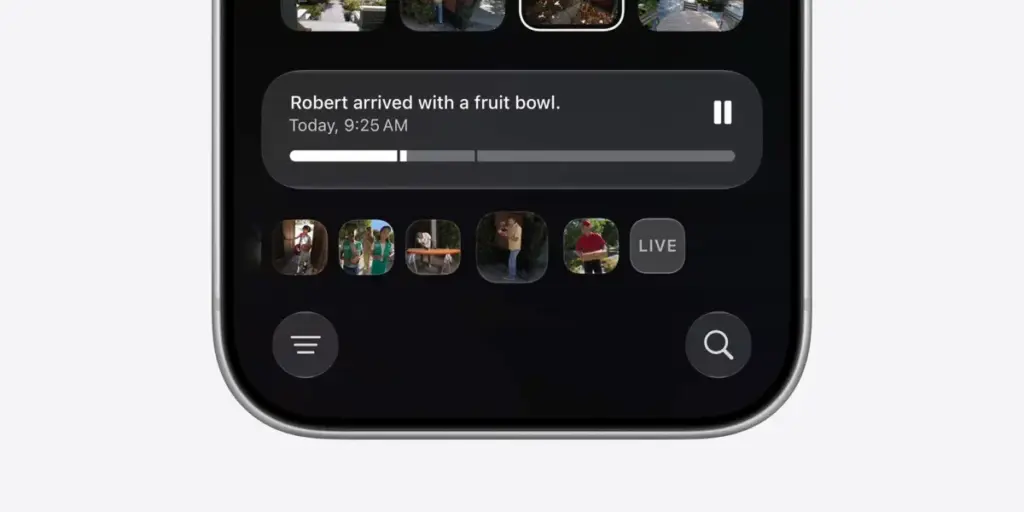
Under the new system powered by Apple Intelligence, these fragmented data points are synthesized into a single, coherent narrative. Instead of six distinct pings, the system provides a solitary, intelligent summary: "Robert arrived home with a fruit bowl." This level of contextual awareness is designed to make the smart home feel less like a collection of sensors and more like an assistant that understands the nuance of daily life.
Beyond notification management, Apple is also introducing significant upgrades to the visual quality and utility of HomeKit Secure Video. For the first time, the service will support 4K resolution, a long-awaited jump from the 1080p limit that has hampered HKSV compared to rival platforms. This increase in resolution is paired with "generated video descriptions," which allow users to read a text summary of what occurred in a clip without having to watch the footage manually.
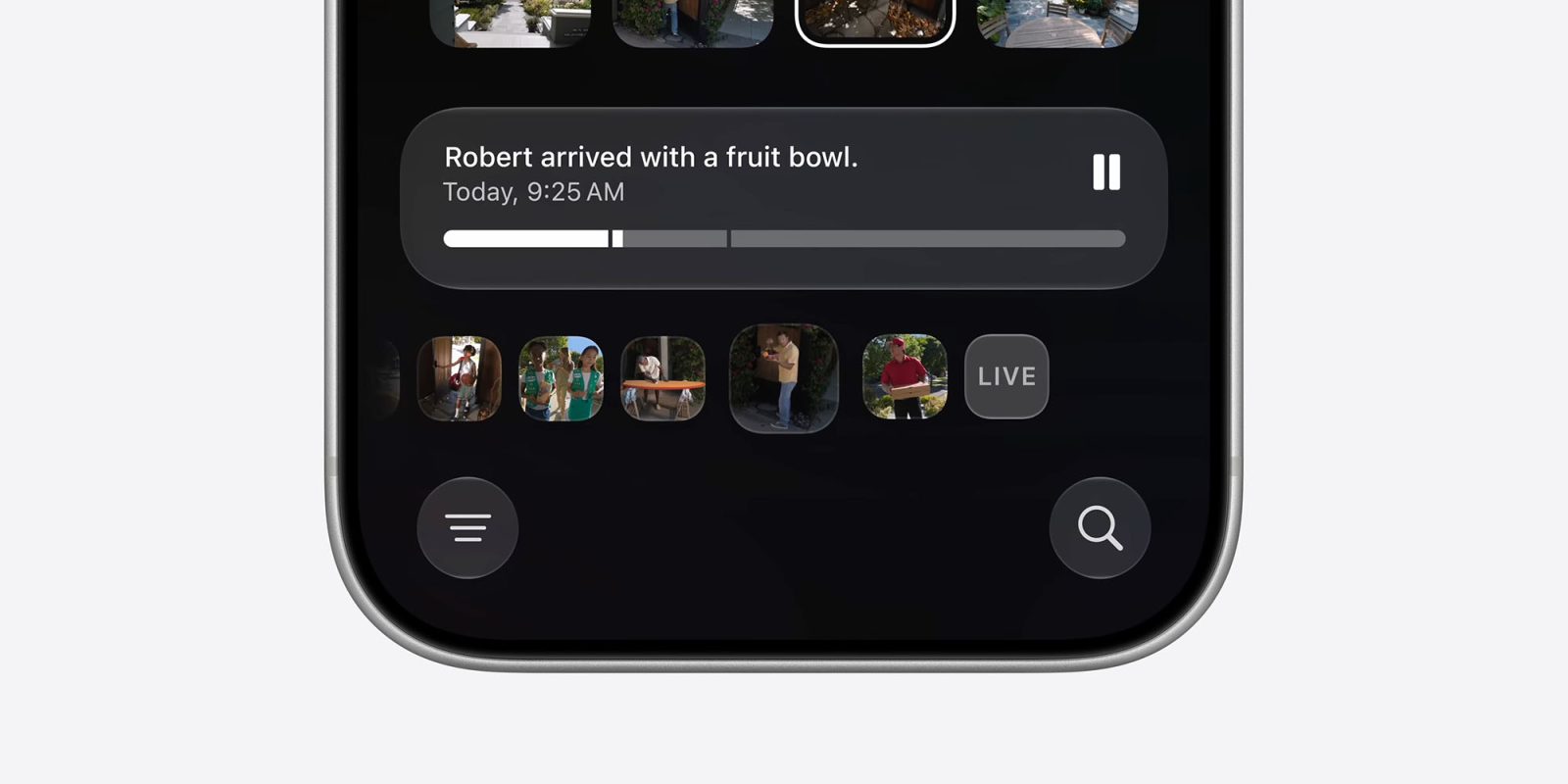
Furthermore, Apple is implementing a semantic search capability for camera footage. Users will be able to query their history for specific events, such as "show me when the UPS truck arrived" or "find clips of the dog in the garden." The Home app will also feature a curated "Search" page that highlights noteworthy clips—such as a package delivery or an unrecognized visitor—ensuring that important moments do not get lost in a sea of mundane motion events.
The 2TB Requirement: A Technical or Financial Barrier?
The revelation that these features are locked behind the 2TB iCloud+ tier has raised questions about Apple’s motivations. Currently, iCloud+ offers three main tiers: 50GB for $0.99 per month, 200GB for $2.99 per month, and 2TB for $9.99 per month (with even higher tiers available for power users).
Under the existing HKSV rules, a single camera can be used with the 50GB plan, while the 200GB plan supports up to five cameras. To unlock support for an unlimited number of cameras, users have historically been required to subscribe to the 2TB plan. By making the 2TB plan the entry point for AI features, Apple is effectively setting the minimum price for an "intelligent" home at roughly $120 per year, regardless of whether the user has one camera or twenty.
There are, however, technical justifications for this requirement. The transition from 1080p to 4K resolution significantly increases the amount of data being uploaded to and stored in Apple’s data centers. While HomeKit Secure Video clips do not count against a user’s actual iCloud storage quota, they do require substantial server-side infrastructure to maintain.
Moreover, Apple Intelligence utilizes a "Private Cloud Compute" model for tasks that are too intensive for local device processing. Analyzing hours of 4K video to generate text descriptions and searchable metadata involves a high computational cost. By tethering these features to the 2TB plan, Apple may be attempting to offset the ongoing operational costs of the server-side AI processing required to deliver these summaries and search results.
A Departure from the HomeKit Philosophy
Despite the technical arguments, the move represents a point of friction for long-time users. One of the primary selling points of the Apple Home ecosystem has been its focus on local control and the avoidance of the "subscription creep" that plagues other smart home brands. Many users invested in HomeKit-compatible cameras specifically to avoid the monthly fees associated with Nest Aware or Ring Protect.
For a user with a single doorbell camera, the jump to a $9.99 monthly plan may feel excessive. While the 2TB plan offers other benefits—such as ample storage for photos and backups, iCloud Private Relay, and "Hide My Email"—those who do not need the storage space may view the requirement as a "tax" on software innovation.

This trend is part of a broader shift within Apple’s business strategy. As hardware replacement cycles lengthen, the company has leaned heavily into its Services division to maintain revenue growth. By transforming what were once considered "OS features" into "Service features," Apple is ensuring a more predictable and recurring revenue stream from its user base.
Industry Comparisons and Consumer Reaction
When compared to the broader market, Apple’s pricing remains competitive for households with many cameras but less so for those with minimal setups. Google Nest, for example, charges $8 per month (or $80 annually) for its basic Nest Aware plan, which covers all cameras in a home and includes intelligent alerts. Amazon’s Ring offers a similar "Plus" tier for $10 a month.
Apple’s disadvantage in this comparison is the lack of a middle ground. While Google and Amazon offer lower-cost tiers for single cameras or reduced feature sets, Apple’s decision to mandate the top-tier 2TB plan for AI features leaves no room for the budget-conscious consumer who still wants a smarter doorbell.
The reaction from the developer community and early adopters has been a mixture of anticipation for the technology and frustration at the delivery mechanism. While the 4K support and AI summaries are universally seen as necessary evolutions for a platform that had begun to lag behind its competitors, the "fine print" of the macOS 27 beta has served as a reminder that the future of the smart home will not be free.
The Road Ahead for Apple Home
As Apple moves toward the public release of macOS 27, iOS 27, and iPadOS 27, it remains to be seen if the company will adjust these requirements based on beta tester feedback. Apple has occasionally walked back or modified service requirements in the past, but given the heavy investment in AI infrastructure, a significant change seems unlikely.
For users, the decision will ultimately come down to a value proposition: is the convenience of a summarized, searchable, 4K-capable home security system worth the $9.99 monthly commitment? For those already entrenched in the Apple ecosystem who use the 2TB plan for family photo sharing and device backups, the new Home app features will arrive as a high-value, "free" upgrade. But for the "HomeKit purists" who have spent years curated a local-first, subscription-free smart home, the news is a sign that the era of the one-time purchase is rapidly drawing to a close.
As the smart home market matures, the distinction between hardware and service is blurring. Apple’s latest move confirms that in the eyes of the world’s most valuable tech company, the "intelligence" in your home is not just a feature of the device you bought—it is a service you rent.
 Smart Home & IoT Solutions
Apple Poised for Major Smart Home Overhaul as Apple Intelligence Breaks Siri Development Bottleneck
For several years, Apple’s presence in the smart home market has felt...
 Smart Home & IoT Solutions
Apple Intelligence in the Home: New AI Security Features Require Top-Tier iCloud+ Subscription
As the development cycle for Apple’s upcoming software ecosystem continues, the release...
 Smart Home & IoT Solutions
Apple Strategic Shift: New Home Security and Monitoring Service Slated for 2027 Launch
Apple is reportedly preparing a significant expansion of its hardware and services...







