
The landscape of digital navigation is undergoing a significant transformation as Google integrates more sophisticated artificial intelligence into its core mapping service. In a move designed to simplify the complexities of travel coordination, Google has announced a major update to its "Ask Maps" functionality. This latest rollout aims to transition Google Maps from a traditional navigation tool into a comprehensive AI-powered travel assistant capable of curating entire holiday itineraries and managing complex scheduling tasks.
The announcement, detailed in a recent company blog post, highlights a strategic pivot toward what Google describes as "agentic AI" capabilities. By leveraging the power of its Gemini models, Google is providing users with tools that do more than just point the way to a destination; they now offer the ability to synthesize vast amounts of local data into personalized, actionable plans. Whether a user is organizing a multi-day road trip or simply coordinating a single afternoon of dining and exploration, the updated Ask Maps feature is designed to handle the heavy lifting of logistics.
A New Era of Itinerary Management
At the heart of this update is a robust itinerary-building tool that utilizes generative AI to create structured schedules. Planning a significant trip has historically required users to juggle multiple tabs, cross-reference opening hours, and manually estimate travel times between stops. Google’s new system attempts to automate this process. When prompted, the AI generates a day-by-day schedule that includes what the company calls "insider tips"—contextual information that goes beyond basic location data to provide a more nuanced understanding of a destination.
To help users visualize their journey, the AI-generated schedules are accompanied by numbered map pins for every stop on the itinerary. This visual representation allows travelers to see the geographic flow of their day, making it easier to understand the proximity of various attractions. Each suggested stop is populated with essential real-time data, including current traffic conditions and precise opening and closing times.
Flexibility remains a core component of the user experience. Recognizing that travel plans are rarely set in stone, Google has ensured that these AI-generated schedules are fully editable. Users have the authority to remove suggested stops that do not interest them or request the inclusion of specific types of locations. For instance, a traveler might ask the AI to insert a "scenic stop" or a specific type of landmark into an existing route. The AI then recalibrates the schedule to accommodate these preferences, ensuring that the final plan feels personalized rather than algorithmic.
To ensure that these plans are accessible for long-term use, Google is introducing an "itinerary badge" within the app. Much like the persistent chat history found in Google’s Gemini interface, this badge allows users to revisit previous conversations with the AI and retrieve their saved plans at any time. Furthermore, once an itinerary is finalized, it can be easily shared with friends or family members, streamlining the coordination process for group travel.

The Rise of Agentic AI in Navigation
Beyond simple trip planning, the latest update introduces more advanced "agentic AI" capabilities into the Maps ecosystem. In the tech industry, "agentic" refers to AI systems that can act with a degree of autonomy to complete complex, multi-step tasks. In the context of Google Maps, this means the AI can now assist with specific appointments and reservations by understanding the nuances of a user’s request.
 Mobile Device Management (MDM) & Mobile OS
Meowdoku: How a Cat-Themed Logic Puzzle Became a Viral Sensation Despite an Exhausting Ad Experience
In the modern digital landscape, the mobile gaming market is increasingly saturated...
 Mobile Device Management (MDM) & Mobile OS
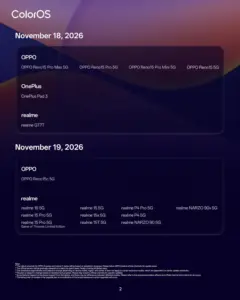
OnePlus Outlines Comprehensive Android 17 Rollout Schedule as OxygenOS Transitions to ColorOS
The landscape of the OnePlus software experience is undergoing its most significant...
 Mobile Device Management (MDM) & Mobile OS
Foldable Smartphone Market Set for 44% Surge in 2026 as Wide-Screen Designs Lead Industry Recovery
The landscape of the mobile industry is preparing for a significant shift...