
As the development cycle for Apple’s upcoming software ecosystem continues, the release of the third developer beta for macOS 27 has brought to light a significant detail regarding the company’s smart home strategy. Tucked away within the technical documentation and release notes is a requirement that may alter the value proposition for many smart home enthusiasts: to access the latest AI-driven security camera features in the Apple Home app, users will be required to maintain a 2TB iCloud+ subscription.
This discovery, first noted by developers exploring the latest software builds, highlights a growing trend in the tech industry where advanced software capabilities are increasingly tied to recurring service fees. While Apple has long positioned its HomeKit Secure Video (HSV) as a privacy-centric alternative to third-party camera subscriptions, the move to gate new "Apple Intelligence" features behind its most expensive storage tier has sparked a conversation about the rising costs of the modern connected home.
Intelligent Home App Notifications and the User Experience
The suite of features in question was a highlight of this year’s Worldwide Developers Conference (WWDC), where Apple showcased how its move into generative AI and advanced machine learning would manifest in the Home app. One of the most practical applications of this technology is the overhaul of the notification system, which aims to solve a long-standing grievance among smart home users: notification fatigue.
Currently, a standard HomeKit-enabled security camera or video doorbell can be overly communicative. For instance, when a family member returns home, a user might receive a barrage of individual alerts. The sequence often begins with a motion detection notification in the driveway, followed by an alert that the garage door has opened, another when it closes, a person detection alert at the front door, and finally notifications for the unlocking and locking of the smart lock. While accurate, this stream of data can be overwhelming and often leads to users silencing their alerts entirely.
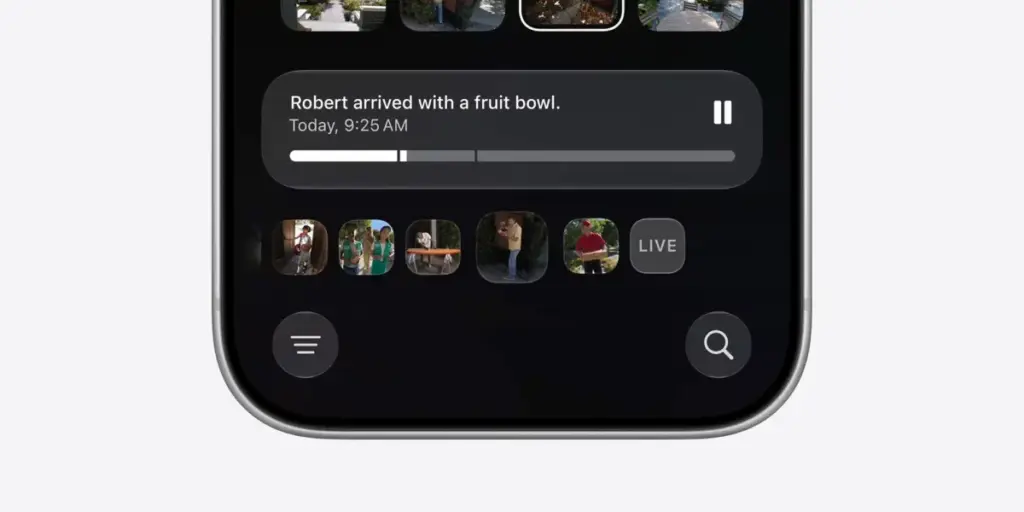
Under the new system introduced for iOS 27 and its sister operating systems, Apple Intelligence is used to synthesize these events into a single, coherent narrative. Instead of six or seven pings, the user receives one intelligent summary: "Robert arrived home." This processing requires the system to understand the context of multiple devices and sensors working in tandem, providing a level of domestic awareness that was previously unavailable in the Home app.
However, the improvements extend beyond mere notification management. Apple also announced a significant technical upgrade to HomeKit Secure Video, moving the ceiling for supported resolutions from 1080p to 4K. To complement this higher fidelity, Apple Intelligence is being employed to analyze footage in ways that mimic human observation.
Among the capabilities highlighted by the company are generated video descriptions. These allow users to understand the contents of a video clip without having to watch the footage manually. For example, rather than scrubbing through several minutes of video to see if a courier left a package in the rain or under a porch, the Home app can provide a text-based summary of the action.
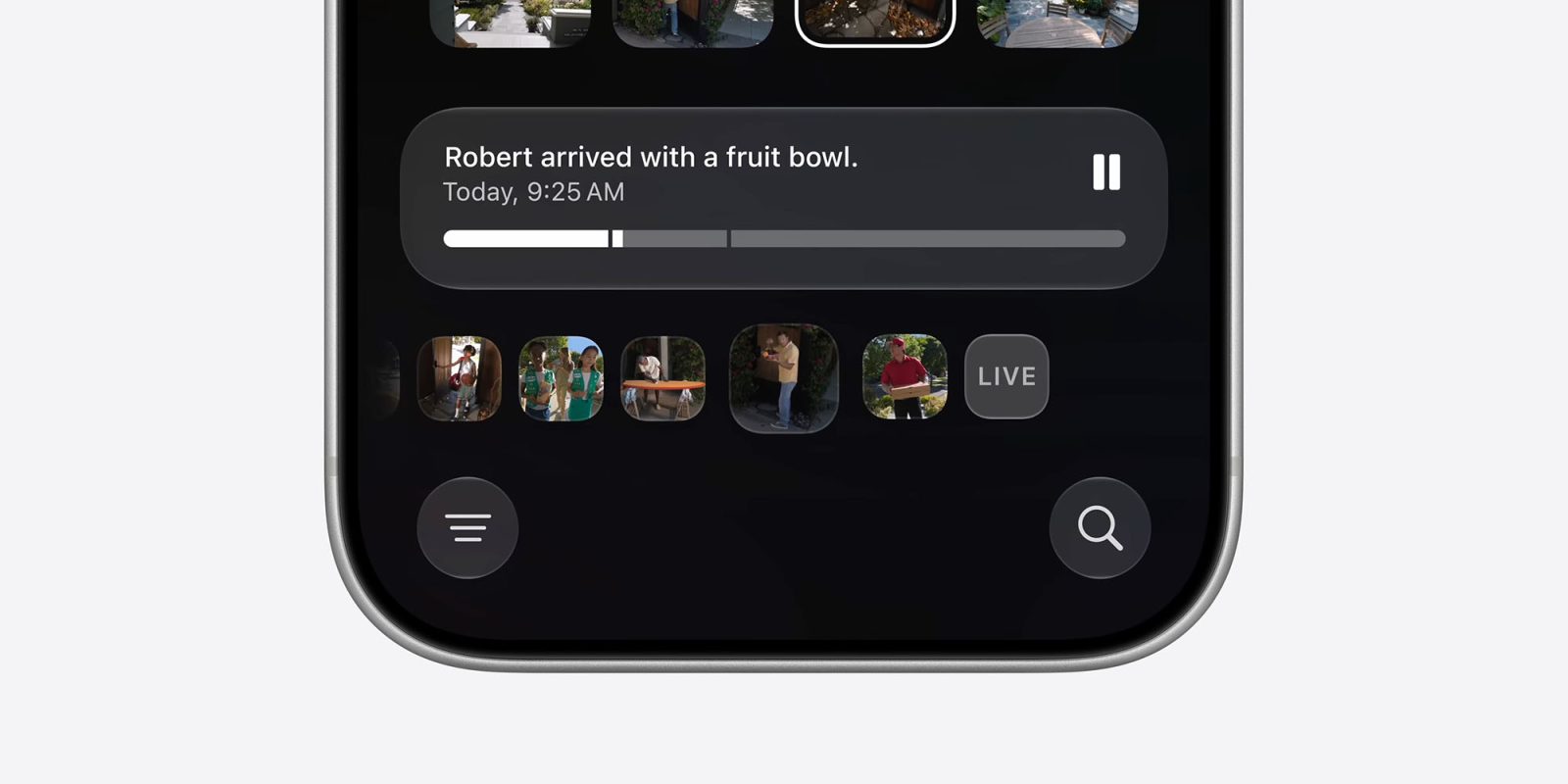
Furthermore, the update introduces an advanced search functionality for camera clips. Users can query their history for specific events, such as "when was the UPS truck here?" or "did a friend drop something off today?" The Home app’s Search page will also proactively elevate "noteworthy" clips—moments the AI deems important, such as a child returning from school or an unrecognized person lingering near a door—so they can be reviewed at a glance.
The Cost of Intelligence: The 2TB Requirement
While these features represent a substantial leap forward for Apple’s smart home platform, the discovery in the macOS 27 beta 3 release notes clarifies that they are not a universal upgrade for all Home app users. The notes explicitly state that enabling Apple Intelligence features within the Home app requires a 2TB iCloud+ subscription.
In the United States, the 2TB iCloud+ plan is priced at $9.99 per month. While many users already subscribe to this tier for its ample cloud storage for photos, videos, and device backups, the requirement creates a mandatory entry price for those who might otherwise manage with smaller storage plans. For a user who currently pays $2.99 a month for the 200GB plan—or someone who relies on the free 5GB tier—the jump to $9.99 represents a significant increase in the total cost of ownership for their security system.
The decision to link these features to the 2TB tier is likely rooted in both technical and business considerations. From a technical standpoint, 4K video streams and the metadata generated by AI analysis require significantly more storage and bandwidth than the 1080p standard that has defined HomeKit Secure Video since its inception. By mandating the highest storage tier, Apple ensures that users have the necessary overhead to store high-resolution archival footage and the associated AI-generated descriptions.
From a business perspective, the move aligns with Apple’s broader strategy of growing its Services revenue. As hardware replacement cycles lengthen, services like iCloud+, Apple Music, and Apple TV+ have become critical drivers of the company’s financial growth. Integrating "must-have" software features into existing subscription tiers is a proven method for increasing the average revenue per user.
A Departure from the HomeKit Secure Video Promise
The imposition of the 2TB requirement has been met with a degree of disappointment from early adopters and privacy advocates. Historically, one of the primary selling points of HomeKit Secure Video was its ability to help users avoid the "subscription trap" common in the security camera market.
Most major camera brands, including Ring, Nest, and Arlo, require monthly fees to access basic features like cloud recording, person detection, and activity zones. When Apple launched HomeKit Secure Video, it was framed as a benefit of the iCloud storage users were likely already paying for. If a user had a 200GB plan, they could support one camera with ten days of recording history at no extra cost. If they had the 2TB plan, they could support up to five cameras (a limit that was later removed to allow for unlimited cameras on the 2TB tier).
For users with a small setup—perhaps just a single video doorbell or one indoor camera—the 200GB plan at $2.99 was a cost-effective way to secure their home with end-to-end encryption. By moving the new AI features to the $9.99 tier, Apple is effectively tripling the monthly cost for these users if they wish to access the latest technology.

This move mirrors a wider trend in the electronics industry where hardware is increasingly viewed as a gateway to a service. While Apple’s AI processing is touted as being performed on-device or via "Private Cloud Compute" to maintain user privacy, the "storage" requirement acts as a paywall that complicates the value of the hardware itself. For users who purchased high-end 4K cameras specifically for use with HomeKit, the realization that they must now pay $120 a year to utilize the camera’s full potential and Apple’s latest software may be a bitter pill to swallow.
Contextualizing the Subscription Trend
The disappointment expressed by some in the tech community stems from the hope that Apple would remain the "exception to the rule." In an era where even some car manufacturers have experimented with subscriptions for heated seats or faster acceleration, Apple’s ecosystem was often seen as a premium experience where the high cost of the hardware bought a degree of freedom from nickel-and-diming.
However, the reality of maintaining a global cloud infrastructure and developing cutting-edge AI models is expensive. Apple’s "Private Cloud Compute," which handles AI requests that are too complex for on-device processing while maintaining strict privacy standards, requires a massive investment in custom silicon and data center security. From Apple’s perspective, the 2TB subscription may be the only sustainable way to offer these features without compromising on the privacy and security standards that define the brand.
Furthermore, it is worth noting that for a segment of the user base, this change will have no financial impact. Those with large families or extensive photo libraries are often already on the 2TB plan. Similarly, users with six or more cameras are already required to be on the 2TB tier to support that many streams in HomeKit Secure Video. For these "power users," the AI features will arrive as a value-added bonus rather than a new expense.
The friction exists primarily for the middle-market user—the person with two or three cameras who has found the 200GB plan to be the "sweet spot" for their needs. For this demographic, the requirement to upgrade to a plan with ten times the storage they might actually need feels less like a technical necessity and more like a forced upsell.
Looking Ahead to the Public Release
As macOS 27 and iOS 27 move toward their public release in the fall, it remains to be seen if Apple will adjust these requirements based on developer feedback. The company has, on occasion, tweaked its service tiers or feature availability during the beta process, though changes to core subscription requirements are rare.
For now, the message from Cupertino is clear: the future of the smart home is intelligent, contextual, and high-definition—but it comes at a premium. As Apple Intelligence begins to weave its way through the entire Apple ecosystem, from Siri to the Home app, users will increasingly have to weigh the benefits of these advanced features against the monthly cost of the cloud that powers them.
The shift also places more pressure on third-party camera manufacturers. If the "Apple tax" for advanced features becomes too high, users might look back toward brand-specific subscriptions or local-storage-only solutions that bypass the cloud entirely. For the time being, however, Apple seems confident that the convenience of a unified, AI-enhanced Home app will be enough to convince users that $9.99 a month is a price worth paying for a smarter, more secure home.
 Smart Home & IoT Solutions
Apple Prepares Major Smart Home Overhaul as Apple Intelligence Breathes New Life into Siri
For several years, Apple’s presence in the smart home market has been...
 Smart Home & IoT Solutions
Apple and LG’s Upcoming Smart Home Accessories to Feature Exclusive Dynamic Island Proximity Controls
As Apple prepares for its highly anticipated "Welcome home" special event scheduled...
 Smart Home & IoT Solutions
Apple Poised for Major Smart Home Overhaul as Apple Intelligence Breaks Siri Development Bottleneck
For several years, Apple’s presence in the smart home market has felt...







