
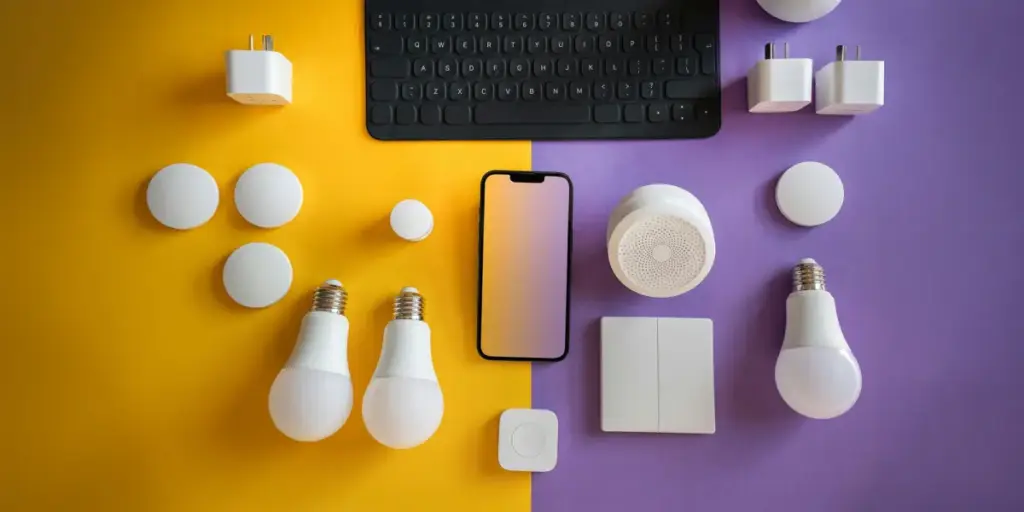
The smart home landscape is currently standing at a significant crossroads, positioned between the incremental refinements of the past year and a looming revolution in artificial intelligence. While much of the industry’s attention is fixed on the upcoming release of iOS 27—which promises a foundational reconstruction of Siri and a flurry of new first-party hardware—Apple has not been idle during the current software cycle. Throughout the iOS 26 era, the company has quietly introduced several sophisticated features that address long-standing pain points in the smart home experience, ranging from climate automation to the friction of device setup.
As Apple prepares to launch a substantial wave of new Home-focused products later this year, it is clear that the groundwork laid during the iOS 26 cycle was designed to make the ecosystem more proactive and less reliant on manual user input. These updates represent a shift in philosophy: moving away from a "remote control" model of a smart home toward a truly "autonomous" environment.
The Rise of Proactive Climate Control: Adaptive Temperature
One of the most significant, yet understated, additions to the Apple Home app during the iOS 26 cycle is the Adaptive Temperature feature. While smart thermostats have existed for over a decade, many have relied on rigid scheduling or basic geofencing that often failed to account for the nuances of daily life. Apple’s new implementation seeks to solve this by leveraging on-device intelligence to create a more responsive heating and cooling system.
The core functionality of Adaptive Temperature is rooted in predictability and energy efficiency. By utilizing the processing power of a user’s iPhone, the Home app can now predict when a resident is likely to return home. Rather than waiting for a user to cross a specific geographic boundary—which can sometimes result in a home that is still too cold or too hot upon arrival—the system calculates the necessary lead time to reach the desired temperature exactly when the door opens.
Furthermore, the feature integrates deeply with the broader Apple ecosystem, specifically the Sleep Schedule defined in the Health app. By aligning the home’s climate with a user’s circadian rhythm, the system can automatically lower temperatures for optimal sleep quality and begin warming the space just before the morning alarm sounds. When the home is empty for extended periods, the system shifts into a high-efficiency mode to reduce carbon footprints and utility costs.
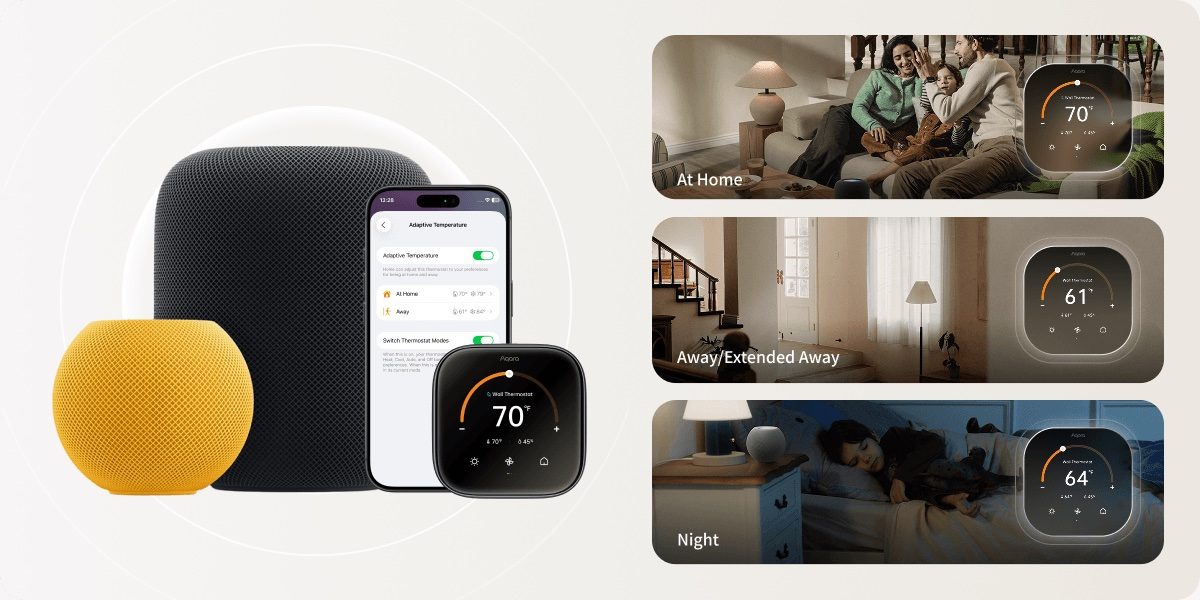
While the software framework for Adaptive Temperature debuted with the initial release of iOS 26.0, the hardware industry has only recently begun to catch up. The Aqara Smart Thermostat W200 stands as the first device to fully support this native Apple feature. Beyond its compatibility with Apple’s intelligence, the W200 serves as a sophisticated infrastructure piece in its own right. It functions as a Matter 1.4 hub, incorporating Thread and Zigbee protocols, and features a four-inch touchscreen that can display live video feeds from compatible doorbells, illustrating the increasing convergence of different smart home categories into single, multifunctional devices.
 Smart Home & IoT Solutions
Apple Set to Unveil "HomeView" Smart Hub with iMac G4-Inspired Design and A18 Chip at Upcoming "Welcome Home" Event
Apple is preparing to make its most significant leap into the smart...
 Smart Home & IoT Solutions
Apple Intelligence in the Home: New AI Security Features Require Top-Tier iCloud+ Subscription
As the development cycle for Apple’s upcoming software ecosystem continues, the release...
 Smart Home & IoT Solutions
SwitchBot Unveils Lock Vision Series Featuring 3D Facial Recognition and Native Matter Integration
In the rapidly evolving landscape of smart home security, the transition toward...







