
In the rapidly evolving landscape of the modern smart home, the promise of a seamless, automated lifestyle often hits a frustrating roadblock: the complexity of configuration. For years, early adopters and tech enthusiasts have curated collections of smart bulbs, connected thermostats, and intelligent sensors, only to find that the "intelligence" part of the equation remains elusive. While the hardware has matured, the software side—specifically the creation of meaningful, lifestyle-driven automation routines—frequently requires a level of patience and technical foresight that many consumers simply do not possess.
Namerah Saud Fatmi, a veteran tech journalist with nearly a decade of experience covering the mobile and smart home sectors, recently encountered this exact dilemma. Despite her deep familiarity with the latest gadgets, the challenge of nailing the perfect automation routines for her own living space remained a hurdle. The solution, it turned out, lay not in more hardware, but in the sophisticated application of generative artificial intelligence. By leveraging Google’s Gemini AI and the "Personal Intelligence" features of the Pixel 10 Pro, Fatmi demonstrated how the next generation of smart homes will likely be built: not through manual triggers and complex "if-this-then-that" logic, but through conversational AI that already understands the user’s life.
The Challenge of the Manual Smart Home
The traditional smart home experience is often characterized by a fragmented ecosystem. Users frequently find themselves jumping between various apps to schedule lights or adjust temperatures, and while platforms like Google Home and Amazon Alexa have attempted to centralize these controls, the actual creation of "routines" remains a manual chore. For many, the process of identifying which devices should turn on at what time, and under what conditions, is an exercise in trial and error that rarely results in a perfect fit.
Fatmi’s journey into AI-assisted automation began with a realization that her existing setup, while robust, was underutilized. Her home relies on a Matter-compatible hub from SwitchBot, a strategic choice that allows for the centralization of diverse devices. Because the hub includes an infrared (IR) blaster, it effectively "smartens up" older, non-connected technology, bringing legacy appliances into the Google Assistant and Alexa ecosystems. These devices are neatly categorized by room within the Google Home app, yet the synergy between them was lacking until she turned to Gemini.
The decision to use Gemini was fueled by a pragmatic approach to digital privacy. In an era where data security is a constant concern, Fatmi took a transparent stance: since Google already possesses her user history, location data, and device logs, it was only logical to put that data to work. Using a Pixel 10 Pro equipped with the Google AI Plus plan, she sought to see if Gemini could translate her digital footprint into a more comfortable physical environment.
Knowledge is Power: The Information Audit
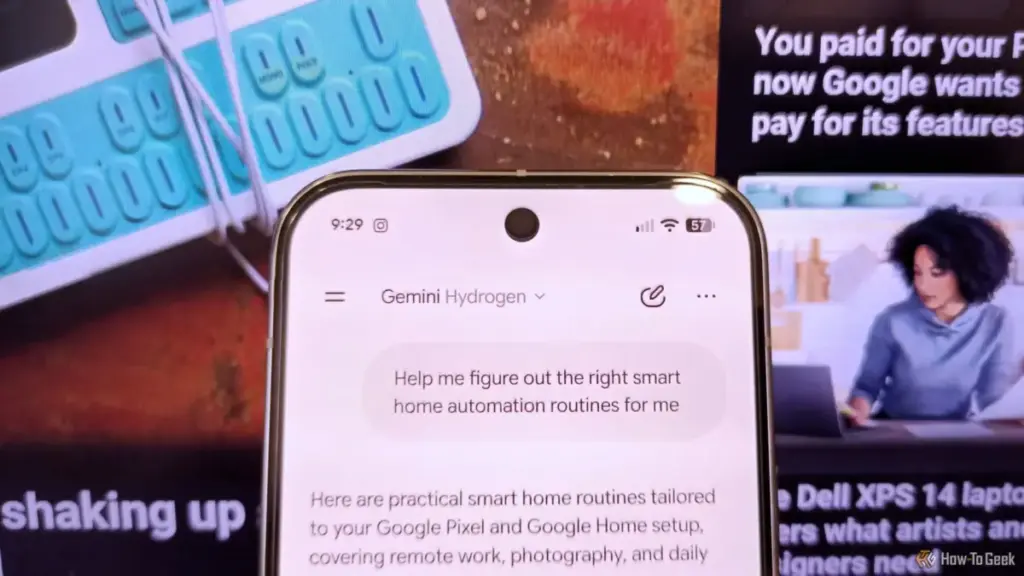
The process began with a foundational "information audit." Before allowing an AI to manage one’s home, it is essential to understand exactly what the AI knows. Fatmi initiated the conversation with a simple, natural language prompt: "Help me figure out the right smart home automation routines for me."
 Tech Tutorials & How-To Guides
The Persistence of Startup Bloat: Why Windows Apps Continue to Launch Against User Preferences
For many Windows users, the ritual of optimizing a computer begins with...
 Tech Tutorials & How-To Guides
Navigating the Modern Desktop: Why the ‘This PC’ Icon Remains a Staple for Windows Users
For nearly three decades, the "My Computer" icon served as the digital...
 Tech Tutorials & How-To Guides
Documentary Deep Dive: Exploring the Most Compelling Non-Fiction Titles on HBO Max This Weekend
The landscape of premium streaming continues to be defined by a relentless...







