
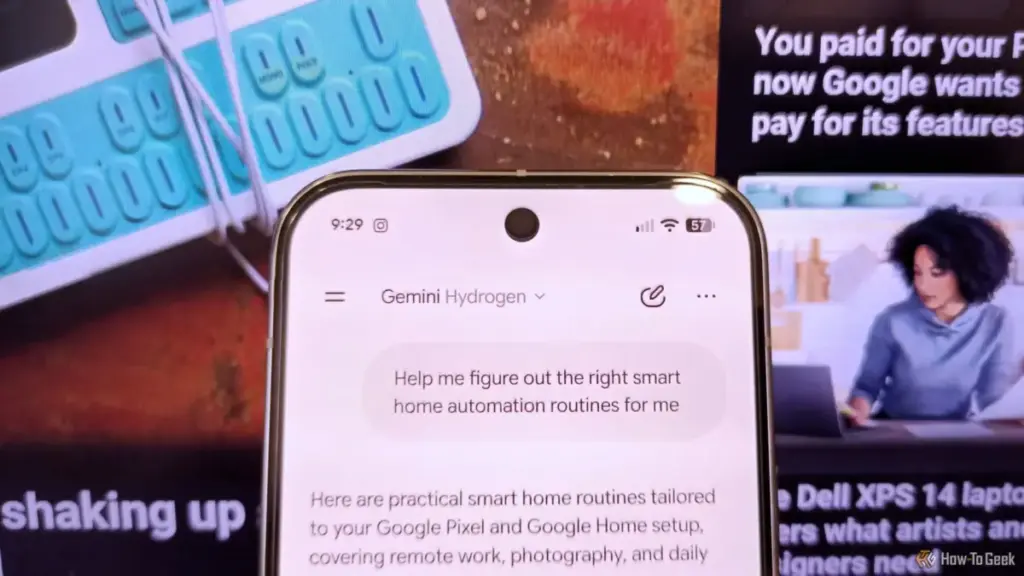
The response from Gemini was immediate and, by Fatmi’s account, somewhat eerie in its accuracy. Rather than providing generic suggestions like "turn on the lights at sunset," the AI pulled from its deep integration with her Google profile. It referenced her specific hardware setup—the Google Pixel and Google Home devices—and highlighted key pillars of her daily life, such as her career in remote work and her passion for photography.
To verify the depth of this integration, Fatmi pushed the AI further, asking it to detail exactly what personal information it was using to formulate these suggestions. The results were categorized into two primary groups: "Tech & Work Setup" and "Household." The AI demonstrated an intimate knowledge of her professional responsibilities, her regular activity patterns, and even the specifics of her domestic life. In a striking display of data synthesis, Gemini even correctly identified her cat—a black feline named Bruce Wayne—suggesting that the AI’s "Personal Intelligence" features were successfully pulling information from various nodes of her digital life to create a holistic view of her needs.
Leveraging the Google Ecosystem for Contextual Awareness
One of the most significant advantages of using a platform-native AI like Gemini is its ability to access cross-app data. During the setup process, Fatmi observed Gemini processing information from Google Calendar, Slack, and other productivity tools. This allowed the AI to build a remarkably accurate picture of her daily schedule, including when she is typically "at her desk" versus when she is winding down for the evening.

However, the audit also revealed that even the most advanced AI requires human refinement. Some of the data Gemini possessed was slightly outdated or incomplete. To bridge these gaps, Fatmi provided specific context regarding her current work hours and her goals for the future, such as a desire to implement a stricter bedtime routine to improve her sleep hygiene.
This collaborative approach highlights a shift in how users interact with smart technology. Instead of acting as a programmer, the user acts as a director, providing the high-level goals while the AI handles the granular execution. Gemini’s ability to categorize devices by room—identifying everything from the thermostat in the living room to the specific smart bulbs in the bedroom—ensured that its recommendations were grounded in the actual layout of the home.
From Suggestions to Implementation: The AI-Driven Routine
Once the information audit was complete and the gaps were filled, the transition from theoretical suggestions to actionable routines was seamless. The routines Gemini proposed were far more sophisticated than the standard "Good Morning" or "I’m Home" presets found in most smart home apps.
 Tech Tutorials & How-To Guides
Paramount+ Strengthens Its Streaming Position with a Curation of Definitive Modern Film Epics
In the increasingly crowded landscape of digital streaming, the competition for subscriber...
 Tech Tutorials & How-To Guides
Classic Emotional Cinema: Four Heart-Wrenching Masterpieces Currently Streaming on Netflix
The power of cinema often lies in its ability to transcend the...
 Tech Tutorials & How-To Guides
Optimizing the Modern Workspace: Quntis Monitor Light Bar Sees Significant Price Drop on Amazon
In an era where the boundary between professional obligations and personal time...







