
The map in question is a visual representation of more than 335,000 camera locations across the United States, all belonging to Flock Surveillance, a dominant player in the automated license plate recognition (ALPR) industry. Joshua Michael, the researcher who built the map, compiled the data after discovering an unauthenticated flaw in Flock’s own systems. This vulnerability essentially allowed for the extraction of geographic coordinates for the company’s vast network of cameras, which are utilized by thousands of law enforcement agencies and private neighborhood associations nationwide. By making this information public, Michael sought to provide citizens with a clear understanding of the density and reach of the surveillance apparatus operating in their own communities.
However, the publication of this data was met with immediate and aggressive resistance from Flock Surveillance. The company, which markets its technology as a vital tool for public safety and crime reduction, viewed the disclosure not as an act of public service or security research, but as a threat to its proprietary infrastructure and the efficacy of its law enforcement partnerships. In response, Flock issued a formal cease-and-desist letter to Michael, demanding the removal of the map and the cessation of its distribution. This legal pressure placed the researcher in a precarious position, facing the daunting prospect of a protracted courtroom battle against a well-funded corporate entity.
Beyond the immediate legal threats, the original hosting of the map faced significant technical and accessibility hurdles. Joshua Michael’s own website, where the map was first published, was configured to be accessible only to users within the United States. This geofencing meant that international researchers, privacy advocates, and journalists were forced to use virtual private networks (VPNs) to view the data, creating a barrier to global scrutiny of the American surveillance landscape. The fragility of this setup, combined with the looming threat of a forced takedown, created an urgent need for a more robust and legally shielded platform.
This is where Proton AG intervened. By choosing to host the Flock camera map on its own infrastructure, Proton has effectively placed its significant institutional weight behind Michael’s research. Proton is uniquely positioned for such a task; as a company headquartered in Switzerland, it operates under some of the world’s most stringent data protection and privacy laws. The Swiss legal system provides a formidable barrier against the type of civil litigation and takedown requests that are common in the United States. For a company like Flock to successfully force the removal of content hosted by Proton in Switzerland, they would likely have to navigate a complex international legal process that is far more demanding than the standard American cease-and-desist procedure.
Proton’s decision to adopt the map is a direct extension of its core organizational ethos. Since its founding by scientists who met at CERN, Proton has positioned itself as a defender of digital rights and a provider of tools—such as Proton Mail and Proton VPN—that allow individuals to reclaim their privacy from both state and corporate surveillance. In their view, the existence of a massive, privately owned surveillance network that tracks the movements of millions of citizens is a matter of profound public interest. By hosting the map, Proton is asserting that the public has an inherent right to know where these cameras are located, regardless of the proprietary concerns of the manufacturer.
 Hardware Reviews & PC Building
The PC gaming ray tracing obsession began with the first RTX 20 graphics cards released on this day in 2018 — the…
The debut of the GeForce 20 series was spearheaded by the release...
 Hardware Reviews & PC Building
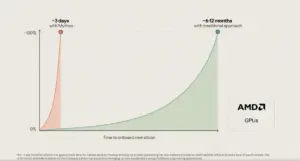
Anthropic’s Claude Mythos Model Achieves Rapid AI Portability to AMD Hardware, Challenging Nvidia’s Software Dominance
In a significant revelation that could signal a shift in the competitive...
 Hardware Reviews & PC Building
Digital Fly Brain Achieves 20 Percent Win Rate in Balatro Following Breakthrough Google Neural Mapping
In the rapidly evolving landscape of artificial intelligence and computational neuroscience, the...