
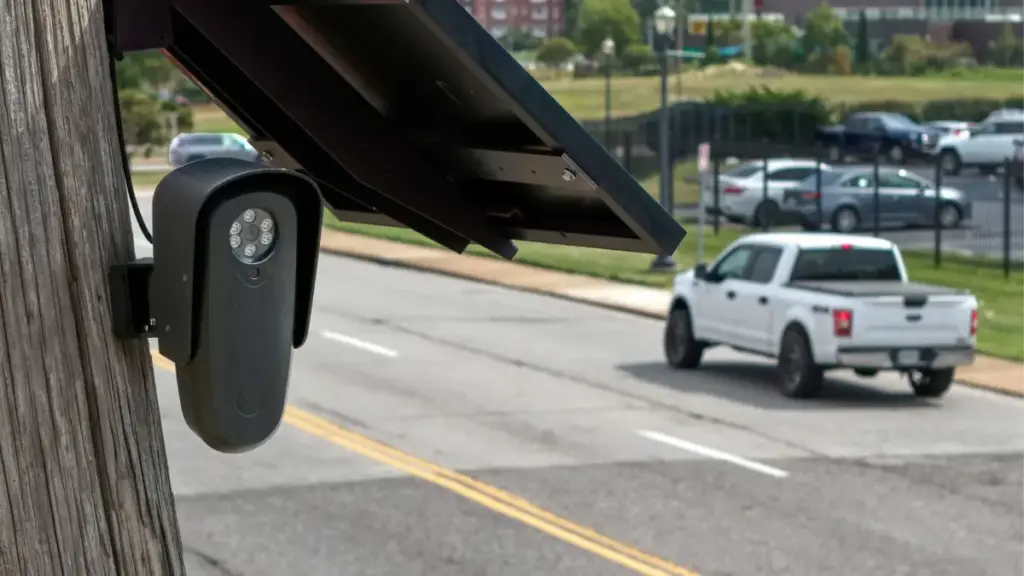
The map in question is a visual representation of more than 335,000 camera locations across the United States, all belonging to Flock Surveillance, a dominant player in the automated license plate recognition (ALPR) industry. Joshua Michael, the researcher who built the map, compiled the data after discovering an unauthenticated flaw in Flock’s own systems. This vulnerability essentially allowed for the extraction of geographic coordinates for the company’s vast network of cameras, which are utilized by thousands of law enforcement agencies and private neighborhood associations nationwide. By making this information public, Michael sought to provide citizens with a clear understanding of the density and reach of the surveillance apparatus operating in their own communities.
However, the publication of this data was met with immediate and aggressive resistance from Flock Surveillance. The company, which markets its technology as a vital tool for public safety and crime reduction, viewed the disclosure not as an act of public service or security research, but as a threat to its proprietary infrastructure and the efficacy of its law enforcement partnerships. In response, Flock issued a formal cease-and-desist letter to Michael, demanding the removal of the map and the cessation of its distribution. This legal pressure placed the researcher in a precarious position, facing the daunting prospect of a protracted courtroom battle against a well-funded corporate entity.
Beyond the immediate legal threats, the original hosting of the map faced significant technical and accessibility hurdles. Joshua Michael’s own website, where the map was first published, was configured to be accessible only to users within the United States. This geofencing meant that international researchers, privacy advocates, and journalists were forced to use virtual private networks (VPNs) to view the data, creating a barrier to global scrutiny of the American surveillance landscape. The fragility of this setup, combined with the looming threat of a forced takedown, created an urgent need for a more robust and legally shielded platform.
This is where Proton AG intervened. By choosing to host the Flock camera map on its own infrastructure, Proton has effectively placed its significant institutional weight behind Michael’s research. Proton is uniquely positioned for such a task; as a company headquartered in Switzerland, it operates under some of the world’s most stringent data protection and privacy laws. The Swiss legal system provides a formidable barrier against the type of civil litigation and takedown requests that are common in the United States. For a company like Flock to successfully force the removal of content hosted by Proton in Switzerland, they would likely have to navigate a complex international legal process that is far more demanding than the standard American cease-and-desist procedure.
Proton’s decision to adopt the map is a direct extension of its core organizational ethos. Since its founding by scientists who met at CERN, Proton has positioned itself as a defender of digital rights and a provider of tools—such as Proton Mail and Proton VPN—that allow individuals to reclaim their privacy from both state and corporate surveillance. In their view, the existence of a massive, privately owned surveillance network that tracks the movements of millions of citizens is a matter of profound public interest. By hosting the map, Proton is asserting that the public has an inherent right to know where these cameras are located, regardless of the proprietary concerns of the manufacturer.
The scale of the data involved is staggering. With 335,701 specific camera locations identified, the map reveals a level of granular detail that was previously unavailable to the public. Flock’s cameras are not just located on major highways; they are increasingly found at the entrances to suburban subdivisions, in shopping center parking lots, and at busy urban intersections. These cameras do more than just record video; they use artificial intelligence to identify vehicle makes, models, colors, and even specific bumper stickers or roof racks, creating a searchable database of vehicle movement that can be used to reconstruct a person’s daily life. The exposure of these locations allows citizens to see exactly how their movements are being monitored as they go about their routine activities.
The controversy surrounding the map highlights a fundamental tension in the modern security landscape: the conflict between "security through obscurity" and the principles of open security research. Flock Surveillance argued that the disclosure of camera locations could assist criminals in avoiding detection, thereby undermining the safety benefits the system provides to police departments. Security researchers like Michael, however, argue that if a security system relies entirely on its location being a secret, it is inherently flawed. Furthermore, they contend that in a democratic society, the deployment of mass surveillance technology should be transparent and subject to public oversight, rather than hidden behind corporate non-disclosure agreements and technical obfuscation.
The accessibility of the map under Proton’s stewardship has also been greatly improved. Unlike Michael’s geofenced site, Proton’s mirror of the Flock camera map is easily accessible from anywhere in the world. This global availability ensures that the data remains a permanent part of the public record, serving as a resource for academics and civil liberties groups who study the proliferation of ALPR technology. It also serves as a proof of concept for how privacy-focused companies can provide "jurisdictional arbitrage" for whistleblowers and researchers who find themselves targeted by powerful interests in their home countries.
While the original map created by Joshua Michael remains online for the time being, its future was undeniably uncertain before Proton stepped in. The legal costs associated with defending against a cease-and-desist from a company of Flock’s size can be ruinous for an individual, often leading to "voluntary" takedowns even when the researcher has a strong legal standing. By providing a secure, Swiss-hosted home for the map, Proton has effectively neutralized the immediate threat of the data being erased from the internet through legal intimidation.
This development also underscores the growing role of private tech companies as political and social actors. Proton is not merely providing a service; it is taking a side in a high-stakes debate about the nature of the public square and the limits of corporate surveillance. Their move suggests a belief that the tools of privacy should not only be used to protect individual communications but also to protect the transparency necessary for a functioning civil society. In a world where surveillance technology is often deployed silently and without public debate, the act of mapping that technology becomes a vital form of counter-surveillance.
The implications for Flock Surveillance are equally significant. The company now faces a situation where the data it sought to suppress is not only still public but is being hosted by an entity that is famously resistant to external pressure. This case may serve as a warning to other surveillance firms that legal threats against researchers can sometimes backfire, resulting in even greater exposure and more resilient hosting solutions. It also brings renewed attention to the underlying vulnerability that allowed the data to be leaked in the first place, raising questions about the internal security practices of companies that handle sensitive tracking data for law enforcement.
As the map continues to circulate, it is likely to fuel ongoing legislative debates regarding the regulation of ALPR technology. Several states and municipalities in the U.S. have already begun to implement stricter rules on how long license plate data can be stored and who can access it. The visual evidence provided by the Flock map—showing a literal grid of surveillance across entire cities—provides a powerful tool for advocates who are calling for more stringent oversight and more transparent deployment policies.
Ultimately, the partnership between Joshua Michael’s research and Proton’s infrastructure represents a new chapter in the digital privacy movement. It demonstrates a shift toward more collaborative and international efforts to preserve information that is deemed "inconvenient" by major corporations. As mass surveillance continues to expand through the use of AI and ubiquitous camera networks, the efforts to map, document, and expose these systems are likely to become an increasingly central part of the struggle for digital civil liberties. For now, the Flock camera map stands as a testament to the power of independent research and the critical role of platforms that prioritize the public’s right to know over corporate demands for secrecy.
 Hardware Reviews & PC Building
SpaceX develops its own ‘Kessel’ rack-scale system featuring 72 Nvidia Rubin GPUs for data centers in space,…
The "Kessel" system is built upon the foundation of Nvidia’s upcoming Rubin...
 Hardware Reviews & PC Building
ASUS TUF Gaming Monitor Saves Player’s Life by Deflecting Stray Bullet During Late-Night Session
In the world of high-stakes competitive gaming, the term "clutch" is typically...
 Hardware Reviews & PC Building
Nvidia launches Open Agent Safety Platform to restrain rogue AI agents — new hardware-and-software security stack…
The introduction of the Open Agent Safety Platform arrives at a critical...







