In a significant move to redefine the landscape of digital productivity, Microsoft has announced a comprehensive reimagining of its Copilot platform. The technology giant is transitioning Copilot from a series of disparate AI assistants into a unified, next-generation experience designed to integrate seamlessly into the "flow of human ambition." This evolution aims to provide individuals and organizations with the tools necessary to build, customize, and scale artificial intelligence across every facet of professional life, effectively turning the AI into a central nervous system for workplace operations.
The announcement marks a shift in how Microsoft views the role of AI in the enterprise. Rather than simply being a conversational interface for answering questions or drafting emails, the "new Copilot" is being positioned as a comprehensive environment where work comes together. By connecting the traditional tools that professionals rely on with advanced agentic capabilities, Microsoft is attempting to solve the fragmentation that often occurs when users must jump between different applications and AI interfaces to complete complex tasks.
A New Experience for Every Mode of Work
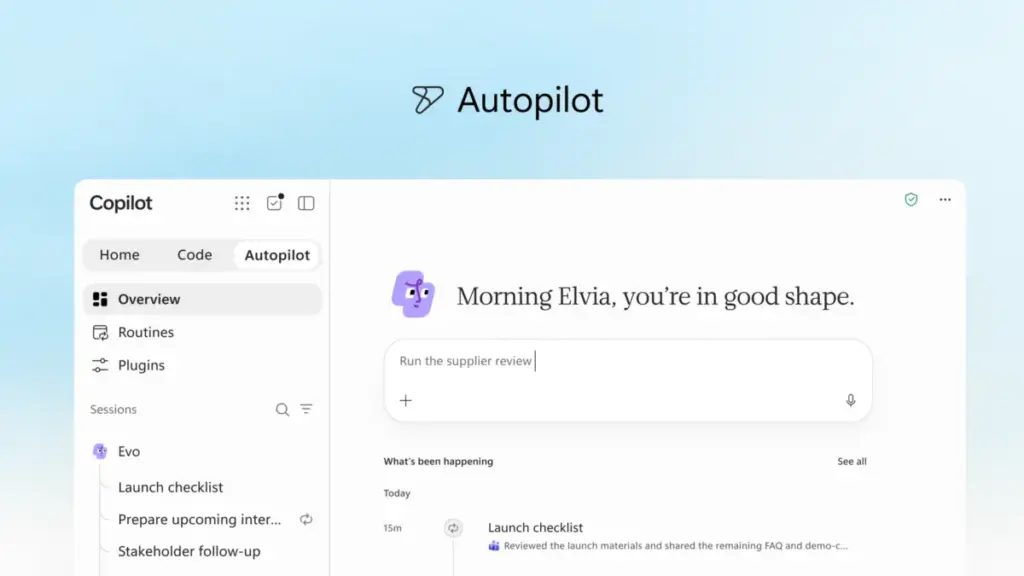
At the heart of this transformation is the introduction of a new starting point called "Home." As professional environments become increasingly cluttered with meetings, chat threads, documents, and various specialized applications, Microsoft identified a need for a centralized "grounding" space. Home serves as a digital command center where two primary modes of interaction—Chat and Cowork—converge. This allows users to maintain their bearings in a fast-moving work stream, offering a view of recent activities and intelligent suggestions on where Copilot can provide the most immediate value.
The distinction between Chat and Cowork represents a fundamental change in AI interaction. While Chat remains the go-to for instant, conversational needs—such as quick lookups, drafting brief responses, or staying updated on a project’s status—Cowork is designed for delegation. In the Cowork mode, users define a complex task, and the AI takes over to execute it end-to-end. This could range from generating a comprehensive Request for Proposal (RFP) response to assembling a full financial close package. Microsoft’s vision is that, eventually, users will not even need to choose between these modes; they will simply state their objective, and Copilot will intelligently route the request to the most appropriate capability, whether it be Chat, Cowork, or the newly introduced Code.

Parallel to this structural shift is the deep integration of "Office in Copilot." This feature brings the full functionality of Word, Excel, and PowerPoint directly into the Copilot experience. The goal is to eliminate the friction of broken formatting and version control issues that often occur when moving content between an AI chat and a standalone document. Within the Copilot app, users can now draft launch briefs or model budgets that exist as real, editable files. These documents remain in sync with the standalone Office applications, allowing for side-by-side refinement and real-time collaboration with human teammates.
The individual Office applications are also receiving targeted AI enhancements. PowerPoint can now automatically maintain brand consistency while fine-tuning images or applying custom templates. Excel has been updated to provide greater transparency; when Copilot or a colleague makes an edit, the system explains exactly what was changed and why. Furthermore, the introduction of "Skills" allows for specialized industry expertise—such as legal or financial workflows—to be scaled across an organization through reusable, role-specific templates.
 Productivity Software & Office Suites
Microsoft Announces Fifth Annual Power Platform Community Conference in Las Vegas to Bridge the Gap Between AI Innovation and Business Process
As the global enterprise landscape continues to evolve, the fundamental machinery of...
 Productivity Software & Office Suites
Microsoft Unveils ‘Autopilots’ and Microsoft Scout: The Next Evolution of Autonomous AI Agents for the Enterprise
The landscape of digital productivity is undergoing a fundamental shift, moving away...
 Productivity Software & Office Suites
Microsoft Outlines Strategic Roadmap for Enterprise AI: Navigating the Shift from Hype to Economic Value
In a comprehensive memo addressed to the global business community, Jared Spataro,...