
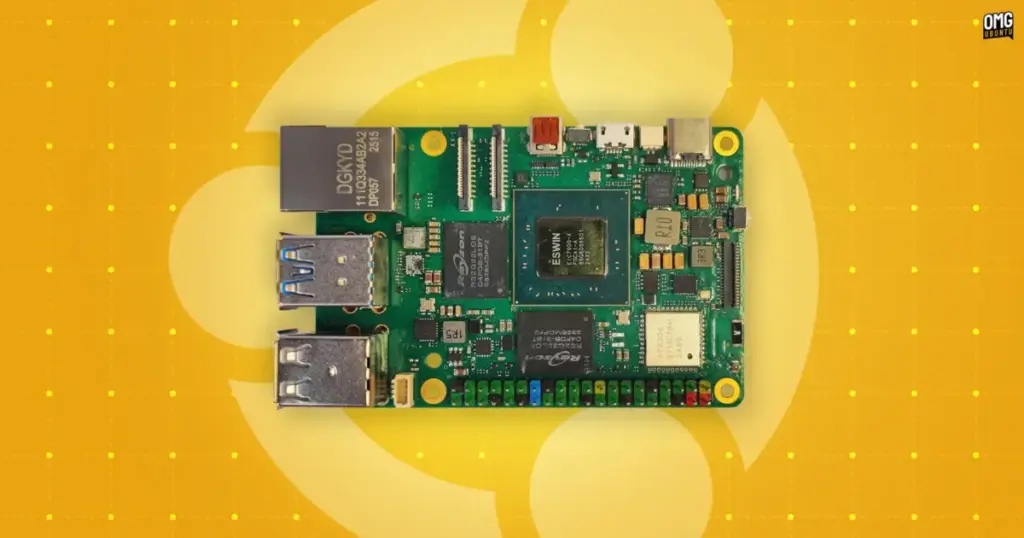
Installing an official Ubuntu desktop operating system on 64-bit RISC-V hardware is poised to become significantly more straightforward with the upcoming release of Ubuntu 26.10. In a notable step forward for the open standard instruction set architecture, Canonical has begun generating official desktop installation images targeting the riscv64 architecture, establishing first-party desktop support alongside its long-standing builds for Intel, AMD, and Arm platforms.
The new development arrives in the form of experimental test builds of Ubuntu 26.10, tailored specifically for the SpacemiT K3 development board. The board represents an ongoing technical collaboration between Canonical and SpacemiT, aimed at validating modern RISC-V computing environments on physical silicon. Rather than offering a single unified image, Canonical has produced two separate installation ISOs for the platform: one featuring the flagship Ubuntu desktop powered by GNOME, and a second, more compact build centered around a minimal Xubuntu environment.
Canonical engineer Valentin Haudiquet publicly announced the images on the official Ubuntu Discourse forum, clarifying that both images are currently experimental and carry no official support for end users. Because the images represent early stages of integration within the Ubuntu 26.10 development cycle, testers are advised that the software will not function flawlessly out of the box. Haudiquet emphasized that early adopters will encounter issues and rough edges, which Canonical plans to address ahead of the final, stable release of Ubuntu 26.10, scheduled to arrive on October 15, 2026.
Despite their preliminary state, the appearance of these images signals a major transition in how the broader open-source ecosystem treats RISC-V personal computing. By bringing the desktop installation experience directly into Canonical’s official continuous build pipelines, the operating system is bridging the gap between niche developer hardware and mainstream desktop usability.
Why are there two images?
The decision to deliver both a standard GNOME desktop image and a lightweight Xubuntu minimal image highlights the unique technical constraints and developer workflows currently surrounding the RISC-V hardware market.
At the center of this strategy is the RVA23 profile, an updated instruction set architecture baseline designed to guarantee modern capabilities, instructions, and performance characteristics across compliant silicon. Because physical hardware meeting the RVA23 baseline is still relatively new to the market, a large portion of software engineers and open-source contributors who wish to test and adapt software for RISC-V do not yet have physical boards on their desks. Instead, these developers rely heavily on QEMU and similar software emulation platforms to run and inspect riscv64 system environments.
Emulating a modern processor architecture inside software carries significant performance penalties. In an emulated QEMU environment, loading the resource-heavy GNOME desktop environment can take upwards of 30 minutes just to reach a functional state. For developers conducting rapid code validation, package verification, or driver debugging, such delays can severely disrupt testing workflows. The minimal Xubuntu image, which relies on the resource-efficient Xfce desktop stack, addresses this emulation bottleneck directly. By offering a lightweight graphical user interface with a smaller memory and processing footprint, the Xubuntu build drastically cuts loading times under emulation and provides a fast, functional environment for automated testing and rapid developer turnaround.
 Linux & Open Source Solutions
GNOME Shell Weather Extensions Bring Dynamic Visuals to the Desktop Panel
While dedicated desktop applications for checking the weather have long enjoyed a...
 Linux & Open Source Solutions
The Document Foundation Unveils New Visual Identity to Establish Distinct Institutional Profile Apart from LibreOffice
The Document Foundation, the charitable non-profit entity responsible for overseeing the development...
 Linux & Open Source Solutions
Canonical Unveils Official Ubuntu Desktop Images for RISC-V Ahead of Ubuntu 26.10
Installing a complete graphical Ubuntu desktop on 64-bit RISC-V hardware is poised...







