
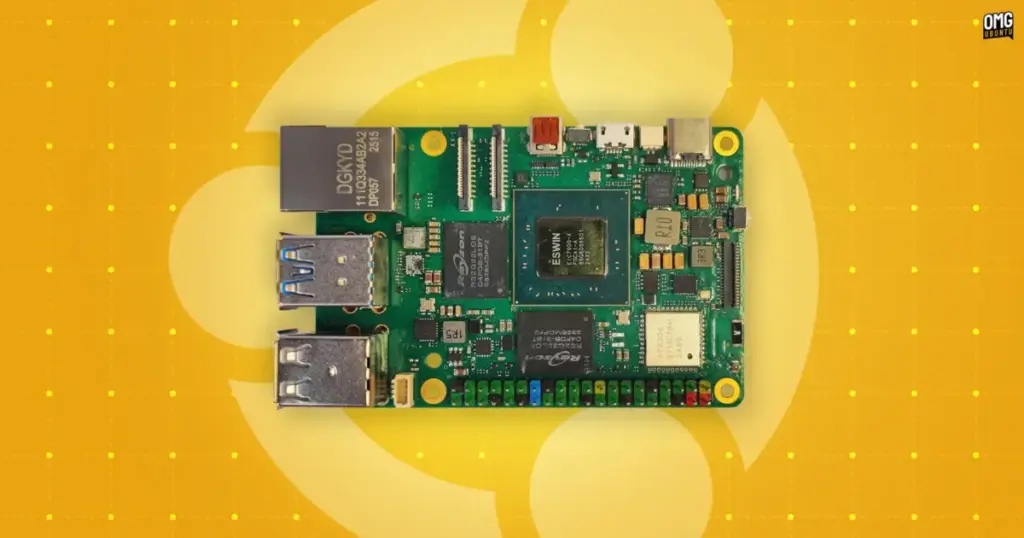
On real physical hardware, however, the computing picture looks radically different. Canonical reports that when running directly on bare metal—such as the SpacemiT K3 board—the standard GNOME image provides a pleasant, performant desktop experience. Recent advances in RISC-V processor design and microarchitectural efficiency have enabled the silicon to handle the visual effects, modern system components, and multitasking overhead of GNOME without requiring users to compromise on desktop aesthetics or modern conveniences.
Reaching this stage required Canonical to solve several underlying technical hurdles across its software stack. A major milestone in this roadmap was Canonical’s targeted effort to bring RISC-V support to Flutter. The modern Ubuntu desktop installer, as well as multiple default applications that ship with the operating system, are constructed using Google’s Flutter framework. Without native Flutter compilation and runtime capabilities on riscv64, delivering the standard Ubuntu installation wizard would have been impossible.
Even with Flutter in place, work remains to be done across the broader application layer. Canonical acknowledged that several desktop snap packages are not yet fully ported or optimized for the RISC-V architecture. Notably, Ubuntu’s default App Center is among the desktop snaps that are not yet functional on riscv64, meaning testers running the experimental images will rely on alternative package management methods while engineers continue porting core snap packages.

Beyond application runtimes and desktop shells, low-level modifications to the core Ubuntu build infrastructure were also required. Engineers had to update livecd-rootfs—the fundamental tooling responsible for generating live bootable media—to properly accommodate RISC-V device trees. At the same time, Canonical adjusted its internal automated build pipeline so that daily riscv64 desktop ISOs could be generated reliably alongside existing target architectures.
But weren’t RISC-V tablets sold with Ubuntu on?
The release of official desktop ISOs raises a natural question for those who follow open-source hardware developments: haven’t consumer and developer devices, including tablets and laptops running Ubuntu, already appeared on the commercial market?
The answer lies in the technical difference between vendor-maintained operating system images and first-party, continuous distribution support from Canonical.
 Linux & Open Source Solutions
The Document Foundation Unveils New Visual Identity to Establish Distinct Institutional Profile Apart from LibreOffice
The Document Foundation, the charitable non-profit entity responsible for overseeing the development...
 Linux & Open Source Solutions
Ubuntu 26.10 Introduces Restricted Media Codec Installation to App Center’s Add-Ons Hub
Ubuntu 26.10 has expanded the functionality of its modern App Center by...
 Linux & Open Source Solutions
GNOME Shell Weather Extensions Bring Dynamic Visuals to the Desktop Panel
While dedicated desktop applications for checking the weather have long enjoyed a...







