
Installing an official Ubuntu desktop operating system on 64-bit RISC-V hardware is poised to become significantly more straightforward with the upcoming release of Ubuntu 26.10. In a notable step forward for the open standard instruction set architecture, Canonical has begun generating official desktop installation images targeting the riscv64 architecture, establishing first-party desktop support alongside its long-standing builds for Intel, AMD, and Arm platforms.
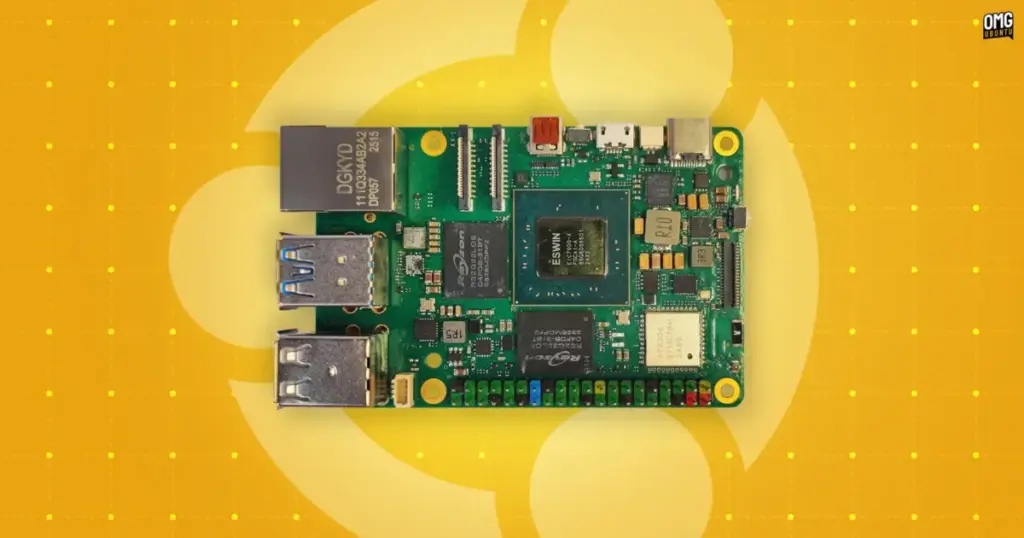
The new development arrives in the form of experimental test builds of Ubuntu 26.10, tailored specifically for the SpacemiT K3 development board. The board represents an ongoing technical collaboration between Canonical and SpacemiT, aimed at validating modern RISC-V computing environments on physical silicon. Rather than offering a single unified image, Canonical has produced two separate installation ISOs for the platform: one featuring the flagship Ubuntu desktop powered by GNOME, and a second, more compact build centered around a minimal Xubuntu environment.
Canonical engineer Valentin Haudiquet publicly announced the images on the official Ubuntu Discourse forum, clarifying that both images are currently experimental and carry no official support for end users. Because the images represent early stages of integration within the Ubuntu 26.10 development cycle, testers are advised that the software will not function flawlessly out of the box. Haudiquet emphasized that early adopters will encounter issues and rough edges, which Canonical plans to address ahead of the final, stable release of Ubuntu 26.10, scheduled to arrive on October 15, 2026.
Despite their preliminary state, the appearance of these images signals a major transition in how the broader open-source ecosystem treats RISC-V personal computing. By bringing the desktop installation experience directly into Canonical’s official continuous build pipelines, the operating system is bridging the gap between niche developer hardware and mainstream desktop usability.
Why are there two images?
The decision to deliver both a standard GNOME desktop image and a lightweight Xubuntu minimal image highlights the unique technical constraints and developer workflows currently surrounding the RISC-V hardware market.
At the center of this strategy is the RVA23 profile, an updated instruction set architecture baseline designed to guarantee modern capabilities, instructions, and performance characteristics across compliant silicon. Because physical hardware meeting the RVA23 baseline is still relatively new to the market, a large portion of software engineers and open-source contributors who wish to test and adapt software for RISC-V do not yet have physical boards on their desks. Instead, these developers rely heavily on QEMU and similar software emulation platforms to run and inspect riscv64 system environments.
Emulating a modern processor architecture inside software carries significant performance penalties. In an emulated QEMU environment, loading the resource-heavy GNOME desktop environment can take upwards of 30 minutes just to reach a functional state. For developers conducting rapid code validation, package verification, or driver debugging, such delays can severely disrupt testing workflows. The minimal Xubuntu image, which relies on the resource-efficient Xfce desktop stack, addresses this emulation bottleneck directly. By offering a lightweight graphical user interface with a smaller memory and processing footprint, the Xubuntu build drastically cuts loading times under emulation and provides a fast, functional environment for automated testing and rapid developer turnaround.
On real physical hardware, however, the computing picture looks radically different. Canonical reports that when running directly on bare metal—such as the SpacemiT K3 board—the standard GNOME image provides a pleasant, performant desktop experience. Recent advances in RISC-V processor design and microarchitectural efficiency have enabled the silicon to handle the visual effects, modern system components, and multitasking overhead of GNOME without requiring users to compromise on desktop aesthetics or modern conveniences.
Reaching this stage required Canonical to solve several underlying technical hurdles across its software stack. A major milestone in this roadmap was Canonical’s targeted effort to bring RISC-V support to Flutter. The modern Ubuntu desktop installer, as well as multiple default applications that ship with the operating system, are constructed using Google’s Flutter framework. Without native Flutter compilation and runtime capabilities on riscv64, delivering the standard Ubuntu installation wizard would have been impossible.
Even with Flutter in place, work remains to be done across the broader application layer. Canonical acknowledged that several desktop snap packages are not yet fully ported or optimized for the RISC-V architecture. Notably, Ubuntu’s default App Center is among the desktop snaps that are not yet functional on riscv64, meaning testers running the experimental images will rely on alternative package management methods while engineers continue porting core snap packages.

Beyond application runtimes and desktop shells, low-level modifications to the core Ubuntu build infrastructure were also required. Engineers had to update livecd-rootfs—the fundamental tooling responsible for generating live bootable media—to properly accommodate RISC-V device trees. At the same time, Canonical adjusted its internal automated build pipeline so that daily riscv64 desktop ISOs could be generated reliably alongside existing target architectures.
But weren’t RISC-V tablets sold with Ubuntu on?
The release of official desktop ISOs raises a natural question for those who follow open-source hardware developments: haven’t consumer and developer devices, including tablets and laptops running Ubuntu, already appeared on the commercial market?
The answer lies in the technical difference between vendor-maintained operating system images and first-party, continuous distribution support from Canonical.
Historically, Ubuntu has supported RISC-V hardware through official server images for years. Advanced users and hardware enthusiasts were technically capable of deploying an official Ubuntu Server image onto supported boards and manually installing graphical desktop environments—such as GNOME, Xfce, or KDE—on top of that base system using standard package managers. This approach existed well before Canonical elevated its supported hardware profile to the RVA23 specification, a strategic change implemented to concentrate software optimization on newer, more capable, and performant hardware platforms.
However, Canonical did not provide official, first-party live installation desktop media tailored for RISC-V boards.
Consequently, hardware manufacturers and original equipment vendors that brought RISC-V products to market had to bridge the gap independently. Companies collaborating with Canonical on RISC-V enablement—many of which produced and marketed RISC-V tablets, laptops, and single-board computers running Ubuntu—frequently had to compile, assemble, and host their own specialized recovery images and operating system builds. If an end user wished to reinstall the operating system, recover a non-booting device, or upgrade components, they were forced to rely on vendor-hosted downloads, third-party software repositories, or custom flashing procedures that existed entirely outside of Canonical’s primary infrastructure.
The release of Ubuntu 26.10 test builds fundamentally resolves this fragmentation. By publishing official riscv64 desktop installation media directly on Canonical’s infrastructure, RISC-V boards conforming to the RVA23 baseline are integrated directly into the distribution’s mainstream distribution pipeline. Users will now be able to download official desktop images from the exact same centralized servers that distribute ISOs for AMD64, Intel 64-bit, and 64-bit Arm architectures.
For users and organizations that prioritize long-term stability over cutting-edge development branches, Canonical is also maintaining an Ubuntu 26.04.1 LTS desktop ISO for riscv64. While the current long-term support desktop image does not yet incorporate hardware support for the SpacemiT K3, Haudiquet confirmed that support for the board is planned to land on the LTS release branch in the near future.
The newly compiled test images are currently accessible to testers, developers, and hardware enthusiasts directly via Canonical’s daily build archives. The Ubuntu 26.10 desktop RISC-V image is hosted within the standard daily-live development directory on cdimage.ubuntu.com, while the minimal Xubuntu 26.10 RISC-V image is available through the official Xubuntu daily builds repository. Both images will continue to receive updates, bug fixes, and software improvements leading up to the scheduled general availability of Ubuntu 26.10 in October 2026.
 Linux & Open Source Solutions
OpenShot Video Editor Arrives on the Canonical Snap Store, Bringing Version 4.0 to Ubuntu Users
In a major milestone for open-source desktop multimedia production, the popular Qt-based...
 Linux & Open Source Solutions
Ubuntu 26.10 Introduces Top-Screen Layout Picker to Streamline Window Tiling
Ubuntu 26.10 is introducing a new way for users to organize their...
 Linux & Open Source Solutions
Ubuntu 26.10 Beta Rescheduled to October 1 Following Unforeseen Infrastructure Issues
Canonical has officially postponed the public beta release of its upcoming operating...







