
The Technical Foundation: Matter and Thread
The smart home industry eventually recognized that fragmentation was its greatest enemy, leading to the development of the Matter and Thread standards. Matter, a royalty-free connectivity standard, was designed to ensure that devices from different brands could work together seamlessly across all major platforms. Thread, a low-power mesh networking protocol, aimed to make those connections faster and more reliable without the need for a central bridge or "hub" for every individual brand.
These standards were a massive leap forward for the industry’s infrastructure. They meant that a manufacturer no longer had to choose between supporting Apple, Google, or Amazon; they could support one standard and reach everyone. For the consumer, it meant less worrying about whether a box had the "Works with Apple Home" logo.
Yet, despite the technical improvements Matter and Thread brought to the table, they did not fully solve the "human" problem. While the devices were better at talking to each other, the process of introducing a new device to a home network still lacked the intuitive "magic" that defines Apple’s most successful products. The technical foundation was laid, but the user interface was still waiting for its breakthrough moment.
The Apple Home Collection and the Simplicity Premium
This historical context is essential to understanding why the Apple Home Collection is being met with skepticism by tech enthusiasts and excitement by market analysts. The primary criticism is that there are no "new" product categories here; we have seen smart doorbells and light switches before, and many of them cost significantly less than the Apple-branded versions.
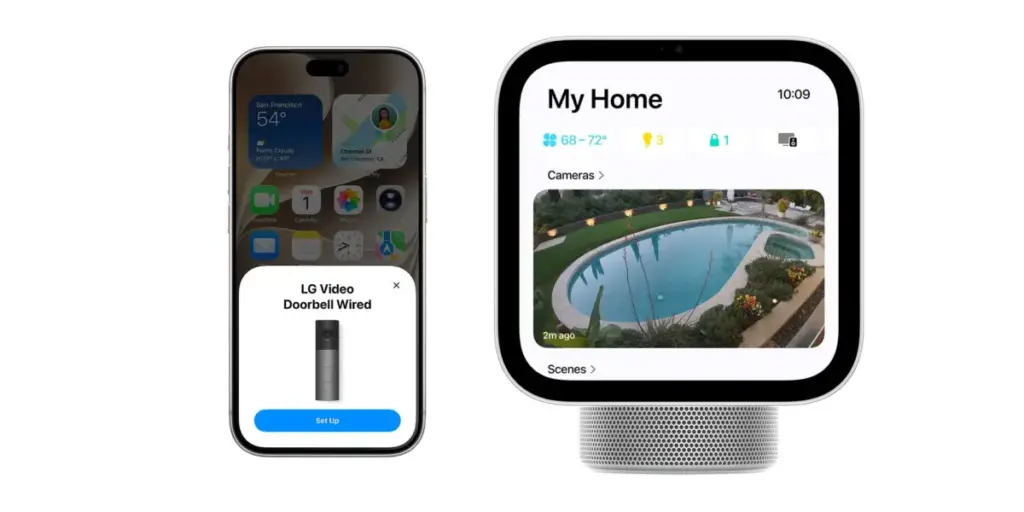
But for the non-geek, the value proposition isn’t found in the hardware specs—it is found in the setup. Apple has applied the same philosophy to the Home Collection that it applied to the AirPods. Before AirPods, pairing Bluetooth headphones was a clunky process of digging through settings menus and hoping devices would "see" each other. AirPods changed that by making pairing as simple as opening a lid near an iPhone.
 Smart Home & IoT Solutions
Apple Intelligence in the Home: New AI Security Features Require Top-Tier iCloud+ Subscription
As the development cycle for Apple’s upcoming software ecosystem continues, the release...
 Smart Home & IoT Solutions
Apple Targets 2027 for Launch of Dedicated Home Security and Monitoring Service
For years, Apple’s presence in the smart home market has been characterized...
 Smart Home & IoT Solutions
Apple Gates Advanced AI Home Security Features Behind Premium 2TB iCloud Subscription
As the technology industry continues its aggressive pivot toward artificial intelligence, the...






