
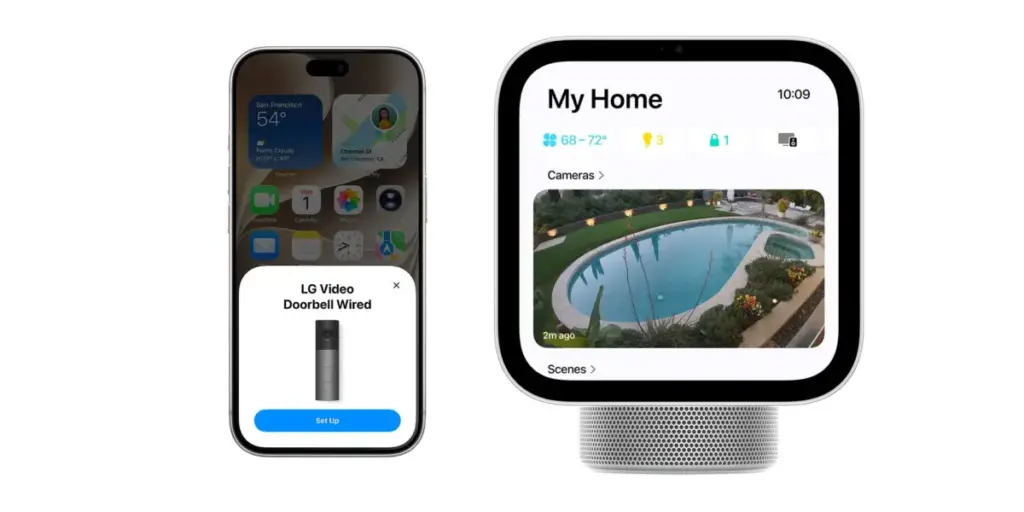

The Apple Home Collection brings this "near-field" simplicity to the smart home. Reports from early hands-on demonstrations suggest that configuring these new devices is virtually instantaneous. Ajay Kumar of CNET observed this firsthand, noting how an Apple representative was able to pair and register a new device while maintaining a casual conversation, never once needing to dive into complex sub-menus or troubleshoot a connection.
This "AirPods-like" experience is managed entirely through the Apple Home app and the new HomeView interface. By bringing a device close to an iPhone, the setup process is triggered automatically. For a "normie" who has been intimidated by the prospect of assigning IP addresses or scanning finicky QR codes on the back of a mounted wall switch, this level of simplicity is the ultimate feature. It removes the psychological barrier to entry that has kept smart home technology relegated to a niche market.
Bridging the Gap to Mass-Market Adoption
We should not underestimate the impact of removing friction. In the tech bubble, we often judge a product by what it can do. In the mass market, products are judged by how easy they are to use. There is a vast population of consumers who find the idea of a smart home appealing—they want the security of a video doorbell and the convenience of automated lighting—but they have been burned by "smart" tech that turned out to be more work than the "dumb" tech it replaced.
The Apple Home Collection is not designed to win over the person who has already wired their entire house with Home Assistant and custom Zigbee sensors. It is designed for the person who sees a smart doorbell at a friend’s house, likes the idea, but doesn’t want to spend their Saturday afternoon acting as a tech support specialist for their own front door.
By partnering with established hardware experts like LG and Schneider, Apple is ensuring that the physical hardware is robust, while Apple itself handles the software layer that has historically been the weak point of the smart home experience. This collaboration allows for a level of integration that third-party manufacturers, working in isolation, have rarely achieved.
If this new approach succeeds, it could represent the next major step in the evolution of the home. When technology becomes invisible—when it "just works" without requiring the user to understand the underlying protocols—it ceases to be a "gadget" and starts to become an essential part of the modern household. The Apple Home Collection may be more expensive, and it may not offer "new" features to the enthusiast, but by making the smart home accessible to everyone, it may finally move the industry out of the geek bubble and into the mainstream.
 Smart Home & IoT Solutions
Apple Poised to Enter Smart Home Display Market with Design Inspired by Iconic iMac G4
In a move that signals a significant shift in its hardware strategy,...
 Smart Home & IoT Solutions
Report: Apple ‘HomeView’ smart home hub will ship in November, come in four colors, A18 chip
The HomeView is expected to be the centerpiece of a major hardware...
 Smart Home & IoT Solutions
Apple Ties New AI-Powered Home Security Features to Premium 2TB iCloud+ Subscription Tier
As Apple continues to integrate its sophisticated "Apple Intelligence" suite across its...






