
As the global demand for data storage continues to skyrocket, driven largely by the insatiable needs of artificial intelligence and high-performance computing, the industry is approaching a fundamental breaking point in how it protects that information. VAST Data, a leader in AI storage infrastructure, has issued a stark warning regarding the future of high-capacity storage: the era of petabyte-scale SSDs is rapidly approaching, and the traditional data protection methods that have served the industry for decades are no longer sufficient to ensure the safety of modern datasets.
At the heart of this concern is the sheer scale of upcoming storage deployments. In a detailed analysis prepared for Supercomputing 2026 (SC26), VAST Data presented the results of a massive simulation involving a 900-petabyte (PB) system. The findings were sobering. According to the company’s modeling, such a system, if managed by today’s standard parallel file systems and traditional RAID (Redundant Array of Independent Disks) configurations, would face a 1-in-11 chance of experiencing catastrophic data loss over a ten-year period.
This statistical vulnerability represents a significant departure from the historical "five nines" (99.999%) of reliability that enterprise and research institutions have come to expect. The shift is being driven by a physical reality of storage hardware: while drive capacities are increasing at an exponential rate, the bandwidth available to rebuild those drives following a failure is not keeping pace. This creates a widening window of vulnerability that threatens the integrity of the world’s most massive data repositories.
The Mathematics of the Rebuild Crisis
The primary issue identified by VAST Data stems from the relationship between drive capacity and recovery time. In a traditional RAID environment, when a single drive fails, the system must read data from the remaining healthy drives and calculate the missing information to write it onto a replacement drive. For decades, this process was relatively swift, occurring in a matter of hours.
However, as drives move toward the petabyte threshold, the "rebuild window" expands significantly. A drive that holds hundreds of terabytes or a full petabyte of data takes much longer to reconstruct than a 15-terabyte drive, simply because the physical interfaces and internal controllers can only move data so fast. During this extended rebuild period, the entire storage array is in a degraded state. If a second or third drive fails before the first rebuild is complete, the system can reach a point of "unrecoverable data loss."
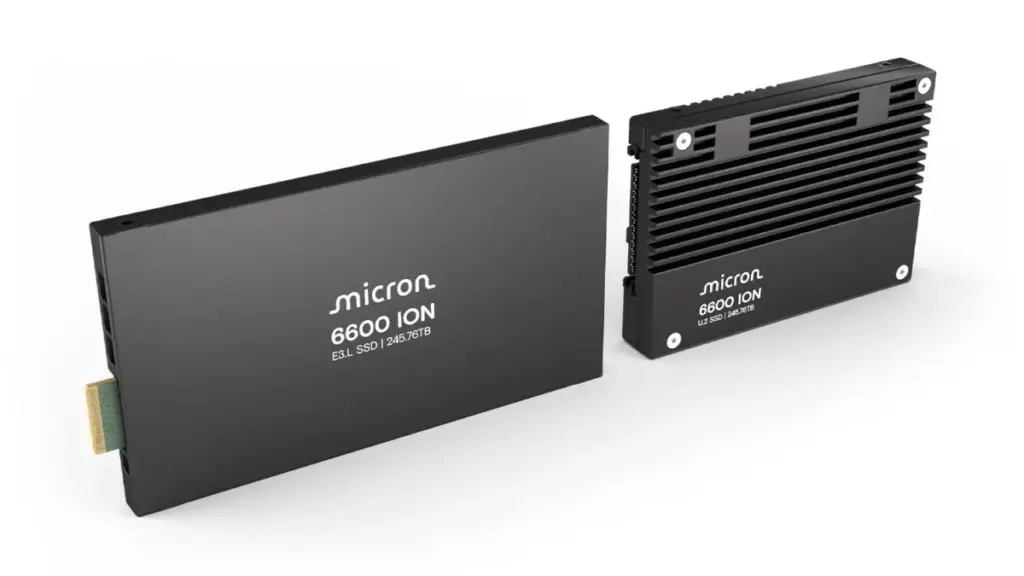
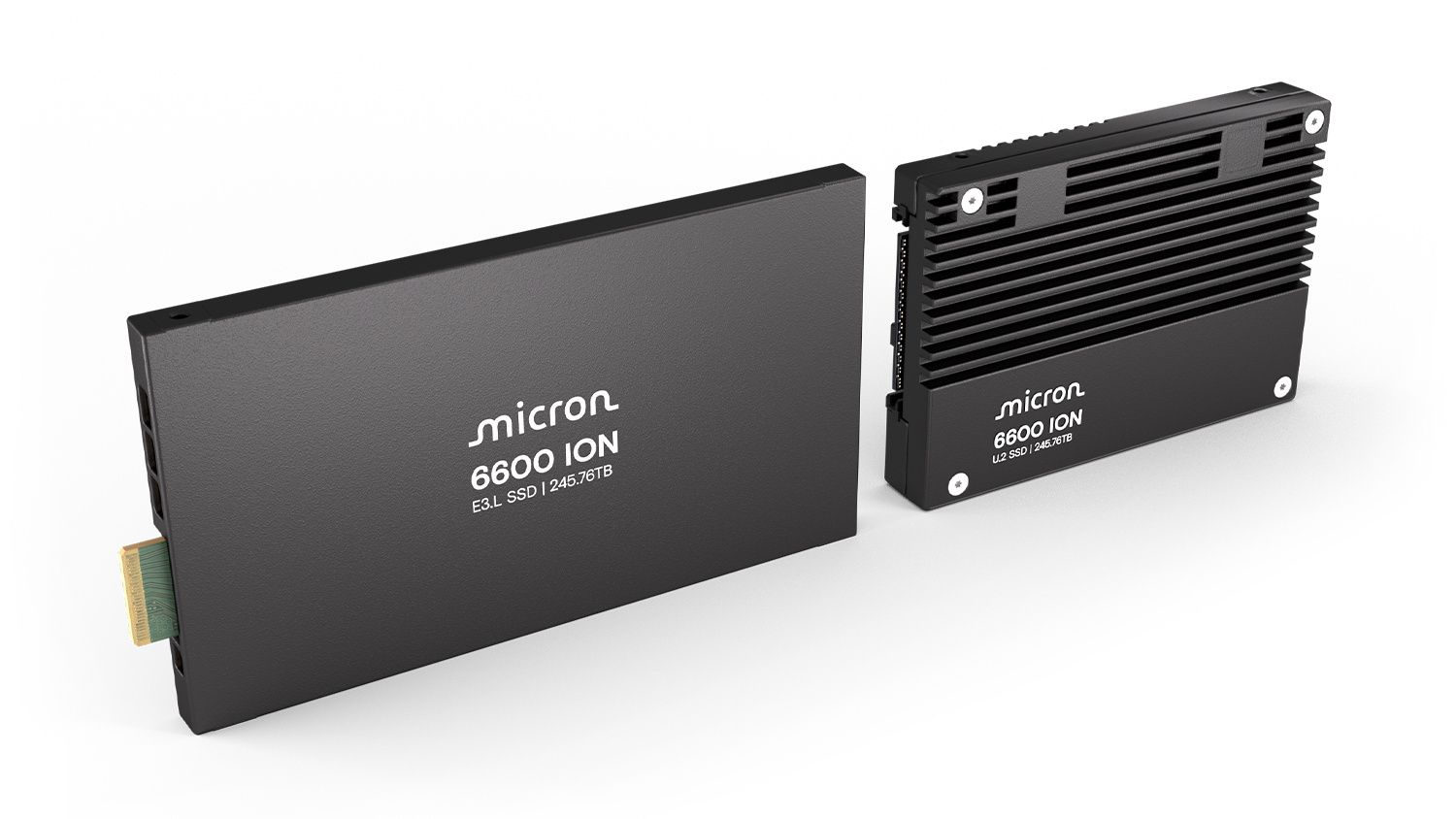
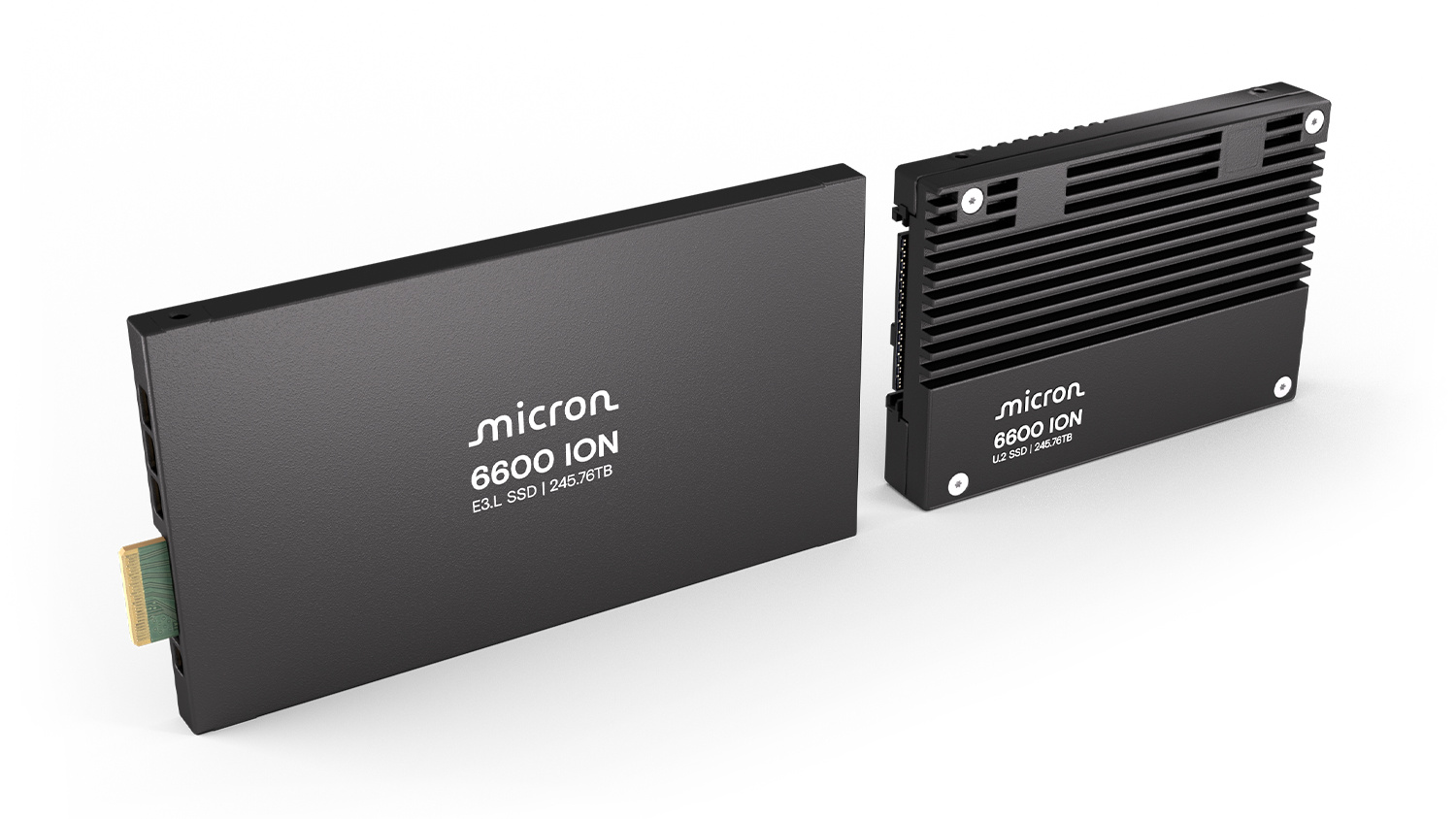
VAST Data’s simulation suggests that with the next generation of ultra-high-capacity SSDs—such as the 245TB Micron 6600 ION and its eventual successors—the probability of multiple concurrent failures becomes a statistical certainty rather than a remote possibility. When dealing with 900 petabytes of information, the sheer number of components involved increases the likelihood that a second failure will occur while the system is still struggling to recover from the first.
The Power Constraint Paradox
One might ask why data center operators would move toward such massive, high-capacity drives if they introduce such significant risks. The answer lies in the increasingly restrictive power and cooling budgets of modern data centers. As organizations rush to build out AI clusters, they are finding that available electricity is often the hardest resource to acquire.
VAST Data’s analysis highlights a dramatic disparity in power efficiency between high-density and low-density storage. To build a 900 PB system using today’s standard 15 TB enterprise SSDs, an operator would require a massive amount of physical hardware, including thousands of servers and drive enclosures. Such a configuration would draw approximately 5.6 megawatts (MW) of power—enough to provide electricity to thousands of homes.
In contrast, a system of the same capacity built with future petabyte-scale SSDs would draw only about 400 kilowatts (kW). This represents a more than 14-fold reduction in power consumption. For many sites that are strictly power-constrained, the move to high-density drives is not a choice but a necessity for survival. The industry is effectively being forced into a trade-off: accept the lower power consumption and smaller physical footprint of massive drives, but find a new way to mitigate the heightened risk of data loss that comes with them.
Rethinking Data Protection: Erasure Coding and Parity
To address the looming reliability gap, VAST Data is advocating for a fundamental shift away from traditional RAID and toward advanced, system-wide erasure coding. While RAID has long been the standard for local data protection within a single server or enclosure, it lacks the "global" perspective required to manage the risks of a 900 PB environment.
Erasure coding is a method of data protection in which data is broken into fragments, expanded and encoded with redundant data pieces, and stored across a set of different locations or storage nodes. VAST Data’s recommendation for the next generation of storage is the implementation of at least three parity strips (an n+3 configuration) applied across the entire system rather than just a local cluster of drives.
By using three parity strips, a system can withstand the simultaneous failure of three drives without losing any data. This extra layer of redundancy is critical because it provides the necessary "breathing room" for the system to complete its lengthy rebuild processes. In the VAST Data model, moving to this more robust erasure coding scheme significantly reduces the 1-in-11 odds of data loss, bringing the system back into the realm of acceptable enterprise reliability.
Furthermore, VAST argues that this protection must be "system-wide." In older parallel file systems, data protection was often siloed. If a specific "brick" or "node" of storage failed, the rebuild was limited to the resources within that specific unit. Modern architectures, like the VAST Data Platform, allow for every node in the entire 900 PB system to participate in the rebuild process. This massive parallelism allows the system to pour tremendous amounts of aggregate bandwidth into a rebuild, shortening the window of vulnerability as much as physically possible.
The Evolution of Parallel File Systems
The transition VAST Data is describing marks a turning point for parallel file systems, which have traditionally been the backbone of supercomputing and large-scale research. For years, these systems prioritized raw performance and throughput above all else, often relying on the underlying hardware to handle reliability.
However, as we enter the era of the "AI Factory," where datasets are used to train massive large language models and run complex simulations, the value of the data itself has increased. A loss of data in a 900 PB system isn’t just a technical failure; it represents the loss of millions of dollars in compute time and potentially years of research.
The industry is currently seeing a surge in high-capacity hardware that makes these discussions urgent. The Micron 6600 ION, which offers 245TB in a single U.2 or E3.L form factor, is a harbinger of the petabyte drives to come. These drives are designed specifically for the read-intensive workloads of AI, offering the density required to fit massive amounts of data into a single rack.
As these drives become the standard, the software layer—the file system itself—must become more "failure-aware." VAST Data’s position is that the file system can no longer be a passive observer of the hardware; it must actively manage the placement of data and the mathematics of parity to ensure that the density gains of modern SSDs do not come at the cost of the data’s existence.
Looking Toward Supercomputing 2026
The presentation of these findings at Supercomputing 2026 serves as a call to action for the HPC and AI communities. The transition from 15 TB drives to petabyte-scale SSDs is expected to be one of the most significant architectural shifts in the history of enterprise storage.
The challenge for organizations in the coming years will be balancing the need for massive capacity and power efficiency with the absolute requirement for data integrity. VAST Data’s simulation provides a roadmap for this transition, suggesting that while the risks are real and statistically significant, they are not insurmountable. By moving toward system-wide erasure coding and embracing more resilient parity schemes, the industry can leverage the benefits of petabyte SSDs while avoiding the 1-in-11 gamble that traditional RAID would impose.
As data centers continue to evolve into power-hungry hubs of AI innovation, the focus is shifting from how much data can be stored to how safely it can be kept. The findings from VAST Data suggest that the next decade of storage will be defined not just by the size of the drives, but by the intelligence of the systems that protect them.
 Hardware Reviews & PC Building
Judge denies motion to dismiss DRAM price-fixing lawsuit against Micron, Samsung, and SK hynix — says chipmakers…
The core of the defendants’ argument for dismissal rested on the claim...
 Hardware Reviews & PC Building
Malaysia to Introduce Mandatory GPU Disclosure and Power Usage Penalties for Data Center Operators
In a significant move to tighten oversight of its burgeoning digital infrastructure...
 Hardware Reviews & PC Building
30 must-have PC tool gifts for hobbyists and makers — essential bench upgrades for enthusiasts with a project,…
The AI boom has created an insatiable demand for high-performance silicon, particularly...







