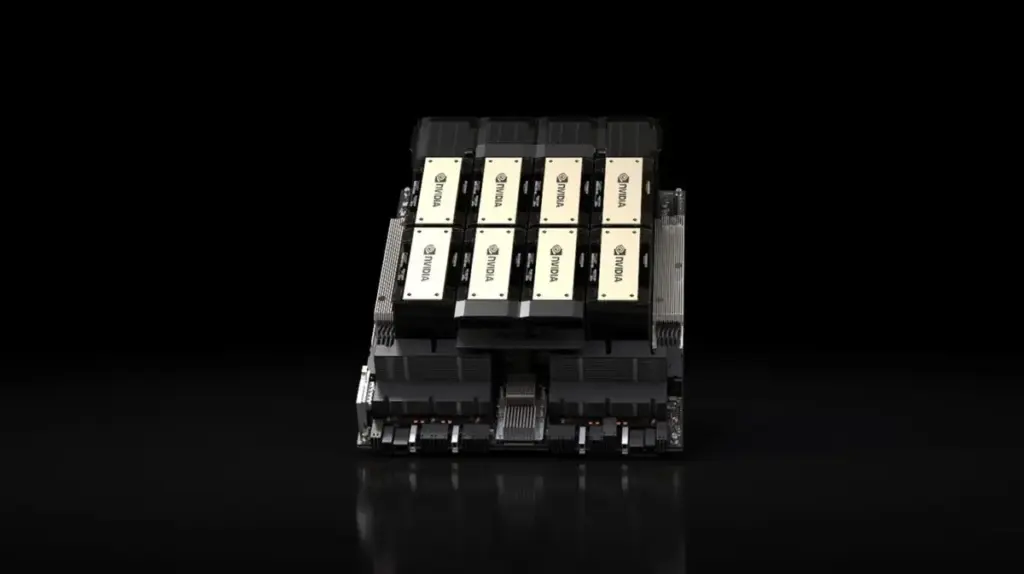
In a significant move to tighten oversight of its burgeoning digital infrastructure sector, Malaysia is preparing to introduce a new legislative framework that will require data center operators to provide detailed disclosures regarding their imports of artificial intelligence (AI) accelerators and their actual power consumption. The proposed regulations aim to address two critical challenges currently facing the nation: the potential diversion of restricted high-end hardware to countries under international trade sanctions, such as China, and the inefficient allocation of the national power grid’s capacity.
The announcement was made by the Minister of Investment, Trade and Industry, Datuk Seri Johari Abdul Ghani, who outlined the government’s intent to bring more transparency to the rapidly growing data center industry. By mandating the reporting of high-performance hardware imports—specifically graphics processing units (GPUs) and other AI accelerators—Malaysia seeks to ensure that these strategic assets are used for domestic economic development rather than being funneled into illicit global supply chains. Simultaneously, the government plans to implement financial penalties for data center operators who reserve large amounts of electricity capacity but fail to utilize it, a practice that has begun to strain the country’s energy planning.
This legislative push comes at a time when Malaysia is positioning itself as a premier destination for global technology investment. The country has seen a massive influx of capital from major cloud providers and data center developers, particularly in regions like Johor and the Klang Valley. However, this growth has brought with it a set of complex geopolitical and logistical responsibilities that the government now believes require a more robust legal foundation.
Combatting the Re-export of Restricted Technology
A primary driver behind the proposed law is the need to maintain Malaysia’s reputation as a reliable and compliant partner in the global semiconductor and technology trade. As the United States continues to tighten export controls on advanced AI chips to prevent them from reaching strategic competitors, neutral hubs like Malaysia have come under increased scrutiny. Minister Johari Ghani acknowledged that authorities have identified instances where companies have exploited Malaysia’s open investment environment to bypass these international restrictions.
According to the minister, some entities have been renting space within Malaysian data centers as a front for their operations. These companies legally import high-end GPUs into the country, citing local data center projects as the destination. However, once the hardware is cleared by customs and delivered to these facilities, it is reportedly being packaged and shipped abroad in clandestine smuggling operations. This practice, often referred to as "transshipment" or "diversion," allows restricted technology to reach markets that are otherwise barred from purchasing it directly from manufacturers like Nvidia or AMD.
To combat this, the Malaysian Digital Ministry is currently conducting a thorough review of existing legislation. The goal is to determine how local authorities can be empowered to take direct legal action against entities found to be re-exporting processors that are subject to international export bans. By requiring operators to disclose exactly what hardware is being installed in their racks, the government hopes to create a verifiable paper trail that ensures AI accelerators imported into Malaysia remain within the country to serve the local digital economy.
The minister emphasized that the government’s priority is domestic utilization. Malaysia is keen to foster its own AI ecosystem, encouraging local startups, research institutions, and established enterprises to leverage advanced computing power. When high-end chips are diverted elsewhere, it not only risks diplomatic friction with major trading partners but also deprives the local economy of the very tools needed to drive the next generation of industrial innovation.
 Hardware Reviews & PC Building
ASUS TUF Gaming Monitor Saves Player’s Life by Deflecting Stray Bullet During Late-Night Session
In the world of high-stakes competitive gaming, the term "clutch" is typically...
 Hardware Reviews & PC Building
Save up to $800 on Acer’s ultra-slim RTX 5070 Ti gaming laptop — pay $2225 for the 16GB RAM model or upgrade…
The headline of this promotion is a multi-tier discount structure that targets...
 Hardware Reviews & PC Building
Digital Fly Brain Achieves 20 Percent Win Rate in Balatro Following Breakthrough Google Neural Mapping
In the rapidly evolving landscape of artificial intelligence and computational neuroscience, the...