
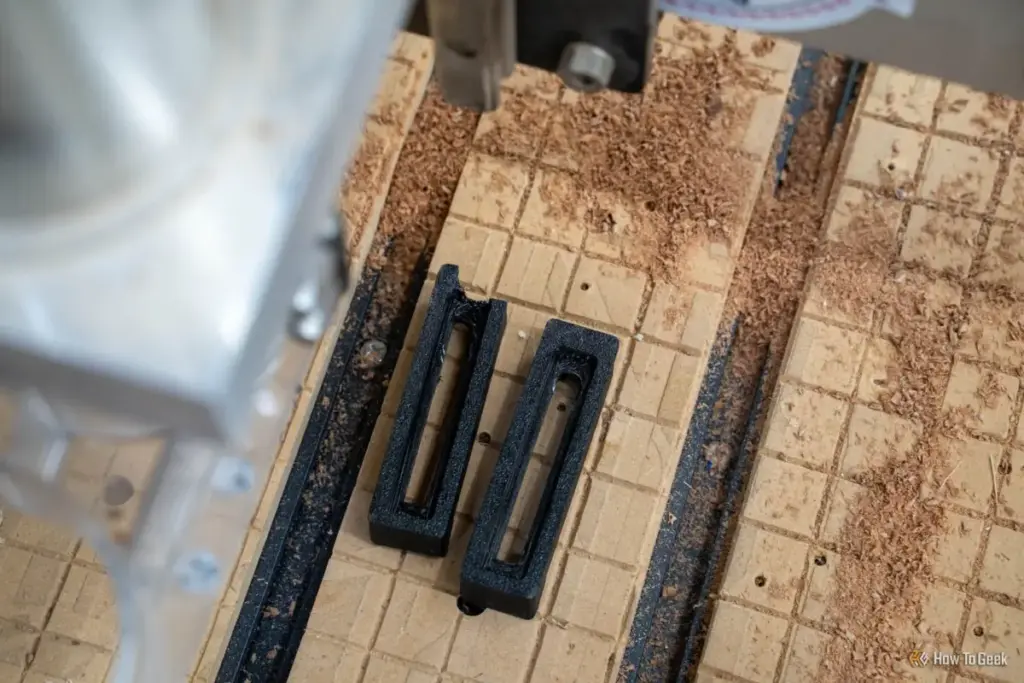
In the modern landscape of additive manufacturing, the primary narrative often revolves around the creation of permanent objects—durable tools, intricate aesthetic models, or long-lasting consumer products. However, for veteran technology journalist and maker Patrick Campanale, the true value of a 3D printer lies not in what it preserves, but in what it allows him to destroy. After more than a decade covering the intersection of gaming, hardware, and small-business manufacturing, Campanale has found that his most essential 3D-printed contribution to his workshop is a simple, sacrificial plastic clamp.
This shift in perspective highlights a growing trend among hobbyists and professional makers alike: the use of 3D printing to create "sacrificial" or "throwaway" components that protect more expensive machinery. In Campanale’s case, the integration of 3D printing into his woodworking and CNC (Computer Numerical Control) machining workflow has solved a persistent and costly problem that has plagued woodworkers for generations.
The Conflict of Precision: Why Metal and CNC Machining Often Clash
To understand the utility of a 3D-printed clamp, one must first understand the delicate and often violent environment of a CNC workshop. CNC machines are high-precision robots that use spinning cutting tools, known as bits or end mills, to carve designs into various materials. While Campanale’s machine is capable of handling metal, his primary passion lies in woodworking—a hobby he has refined alongside a career that began in 2010 within the Palm/webOS ecosystem and evolved through years of high-end custom PC manufacturing.
The challenge in CNC machining is "workholding"—the process of securing a piece of wood so firmly that it does not move under the immense pressure of a bit spinning at 20,000 RPM. Traditionally, this is done using metal clamps or by screwing the workpiece directly into the "spoilboard" (the sacrificial base of the machine). However, these traditional methods carry a significant risk. If there is a mistake in the software code or a slight error in the machine’s "zeroing" process, the spinning bit may collide with the clamp.
When a high-speed carbide or steel bit hits a metal clamp, the result is almost always catastrophic for the tool. The bit, which can cost anywhere from twenty to over a hundred dollars, typically snaps or becomes instantly dull. This not only incurs a direct financial loss but also halts production, requiring the operator to recalibrate the entire machine. For Campanale, who manages a high-output workflow that includes YouTube video production and custom builds, these interruptions were more than just an annoyance; they were a systemic inefficiency.
The Evolution of the Sacrificial Part
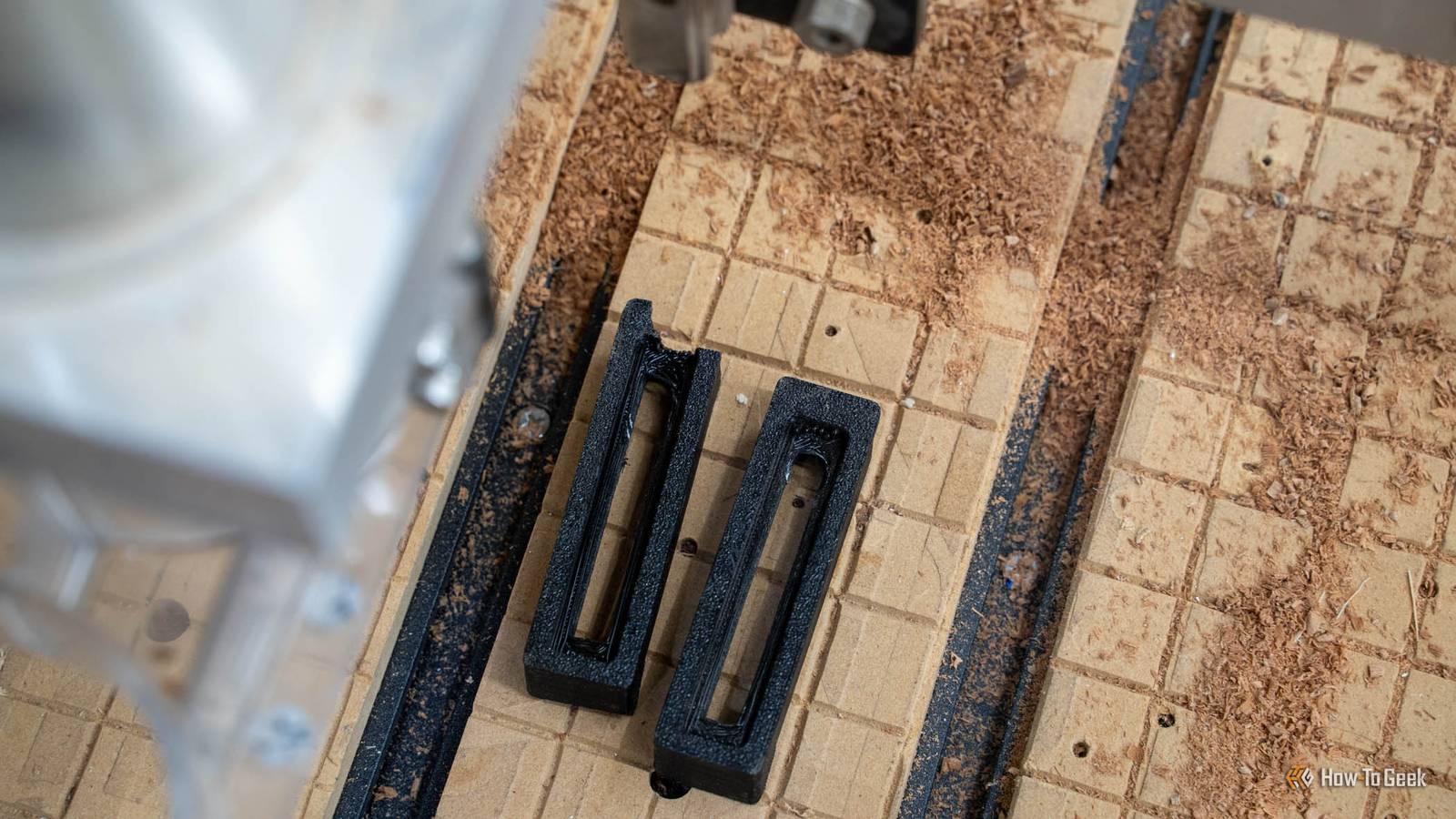
The realization that metal was the enemy of his precision tools led Campanale to explore plastic alternatives years ago. The logic was simple: if a CNC bit strikes a plastic clamp, the bit—being significantly harder than the plastic—will simply cut through the clamp without sustaining damage. The clamp is ruined, but the expensive bit and the machine’s calibration remain intact.
Initially, Campanale relied on commercially available injection-molded plastic clamps. While these served the primary purpose of protecting his end mills, they introduced a new set of logistical and financial hurdles. Despite being "cheap" in a relative sense, the cost of constantly replacing injection-molded parts began to add up. Furthermore, relying on retail availability meant that a particularly bad day in the shop could exhaust his supply of clamps, forcing him to wait for shipping before he could resume work.
"Buying injection-molded clamps got annoying really fast," Campanale noted, reflecting on the period before he integrated 3D printing into his shop. The transition to 3D printing transformed these clamps from a consumable retail product into an on-demand resource.
The Economics of On-Site Manufacturing
The primary advantage of 3D printing in this context is the radical reduction in the "cost per failure." When a 3D-printed clamp is "chewed up" by a CNC bit, the financial impact is measured in pennies rather than dollars. Using standard filaments like PLA (Polylactic Acid) or PETG (Polyethylene Terephthalate Glycol), a single clamp uses a negligible amount of material.
This economic shift changes the psychological approach to the craft. Instead of viewing a collision as a costly mistake, it becomes a minor, easily rectified incident. Campanale has optimized this process by batch-printing his workholding solutions. By filling a 3D printer’s build plate with a dozen clamps and running the machine overnight, he ensures that his workshop is always stocked with replacements.
"The filament needed for a clamp was pennies," he explained. "I could just print a dozen at a time and then have them all in the shop ready to put into service at a moment’s notice."

Beyond the material cost, the time savings are equally significant. In the world of modern "just-in-time" delivery, even the fastest shipping cannot compete with a machine located in one’s own two-car garage. A single clamp can be produced in approximately 15 to 20 minutes. For a maker like Campanale, who also serves as a media director at his local church and maintains an active presence in the tech journalism space, the ability to bypass the retail supply chain is invaluable.
Breaking the Limitations of Retail Design
Perhaps the most significant professional advantage of 3D printing sacrificial parts is the freedom of design. When a maker is tethered to retail products, they are limited by the dimensions, strengths, and mounting styles that manufacturers deem profitable to produce. If a specific project requires a low-profile clamp to allow for a shallow carving, but the only plastic clamps available on Amazon are bulky, the maker is forced to compromise.
3D printing removes these constraints. Campanale highlighted that many major CNC manufacturers, such as Carbide 3D, have embraced this shift by posting their proprietary clamp designs online for free. This allows users to print official parts at home, but it also serves as a jumping-off point for customization.
"I’m no longer limited by what’s available on Amazon," Campanale said. This autonomy allows him to experiment with different workholding philosophies. If a project requires a unique edge-clamp or a specialized hold-down for an irregular shape, he can design it in CAD (Computer-Aided Design) software and have a physical prototype ready for testing within the hour. If the design fails or is uncomfortable to use, the loss is inconsequential—just a few cents of extruded plastic.
This iterative freedom is a hallmark of the "Maker Movement," where the barrier between an idea and a functional tool has been almost entirely eroded. For Campanale, the 3D printer has evolved from a device used to create "toys and gadgets" into a critical piece of industrial infrastructure that supports his larger woodworking projects.
A Holistic Approach to the Modern Workshop
The story of the sacrificial CNC clamp is a microcosm of Patrick Campanale’s broader philosophy regarding technology and craftsmanship. With a background that spans from the early days of mobile app development to high-end PC overclocking, he views tools not as isolated objects but as part of an integrated ecosystem.
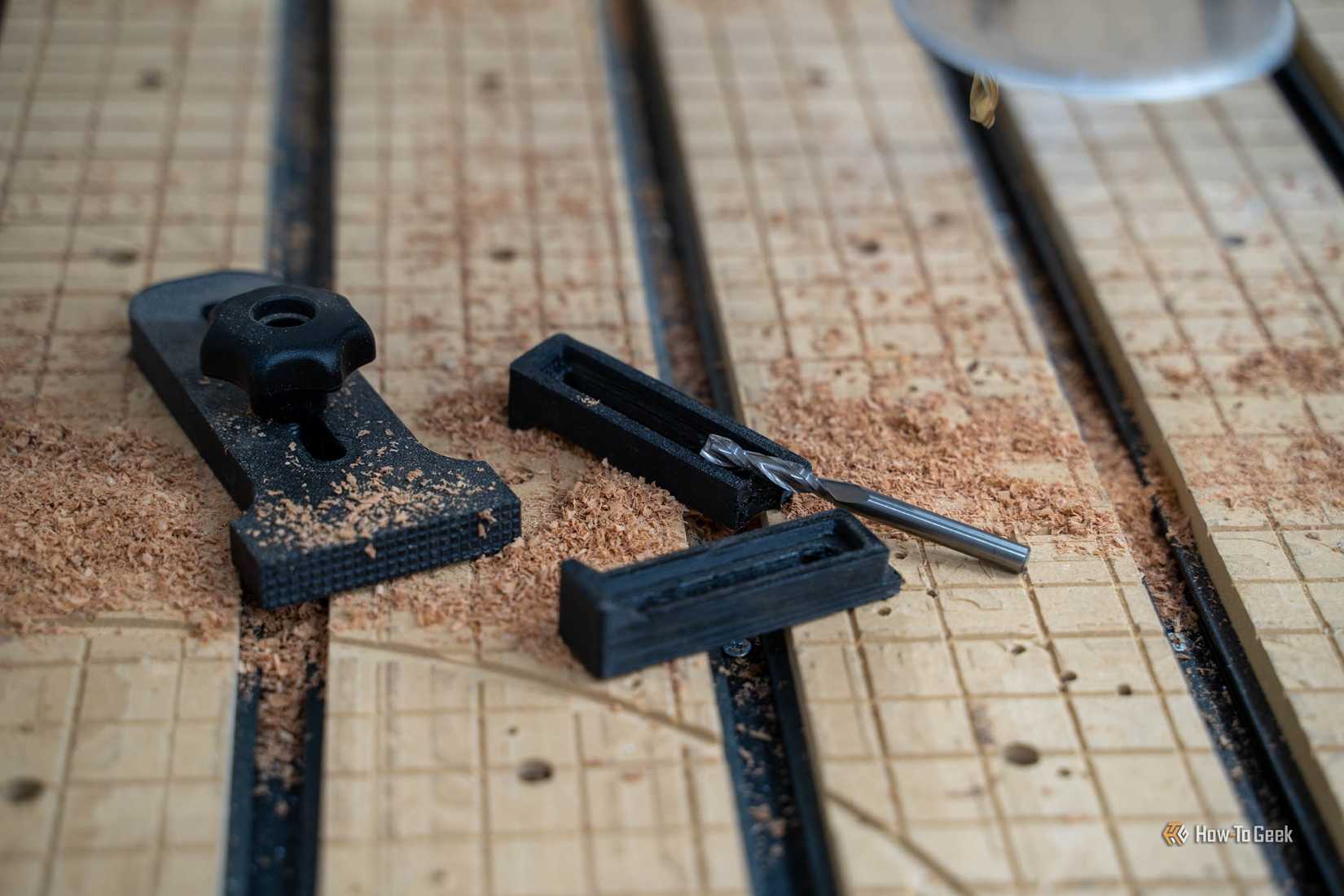
In his workshop, robots assist in the creation of organic wooden projects. CNCs and lasers provide the precision, while the 3D printer provides the support structures that make that precision possible. It is a synergy that reflects his decade-plus journey through the tech space—a journey that began with the Palm/webOS ecosystem and has led to the publication of over 14,000 articles on the latest technological advancements.
Ultimately, the most "useful" 3D print in Campanale’s arsenal is a testament to the practical side of innovation. It isn’t a complex mechanism or a flashy display piece; it is a simple, humble block of plastic that exists solely to be destroyed. By embracing the "sacrificial" nature of 3D printing, he has created a more resilient, cost-effective, and creative environment for his craft.
As 3D printing technology continues to become more accessible and materials become more specialized, the trend of printing functional, disposable shop aids is likely to grow. For makers like Campanale, the true power of the technology is found in the ability to fail cheaply, iterate quickly, and keep the more expensive "bits" of life spinning without interruption.
 Tech Tutorials & How-To Guides
The Lost Innovations of Physical Media: Why Blu-ray’s Advanced Features Still Outshine the Streaming Era
In the contemporary landscape of digital entertainment, the act of consuming a...
 Tech Tutorials & How-To Guides
Netflix Bolsters November Lineup with High-Stakes Thrillers and the Return of Fan-Favorite Dramas
As the final months of 2026 approach, Netflix is signaling that it...
 Tech Tutorials & How-To Guides
Essential Roadside Resilience: Why Modern Drivers are Turning to Portable Battery-Powered Solutions
The modern driving experience is often defined by a sense of seamless...







