
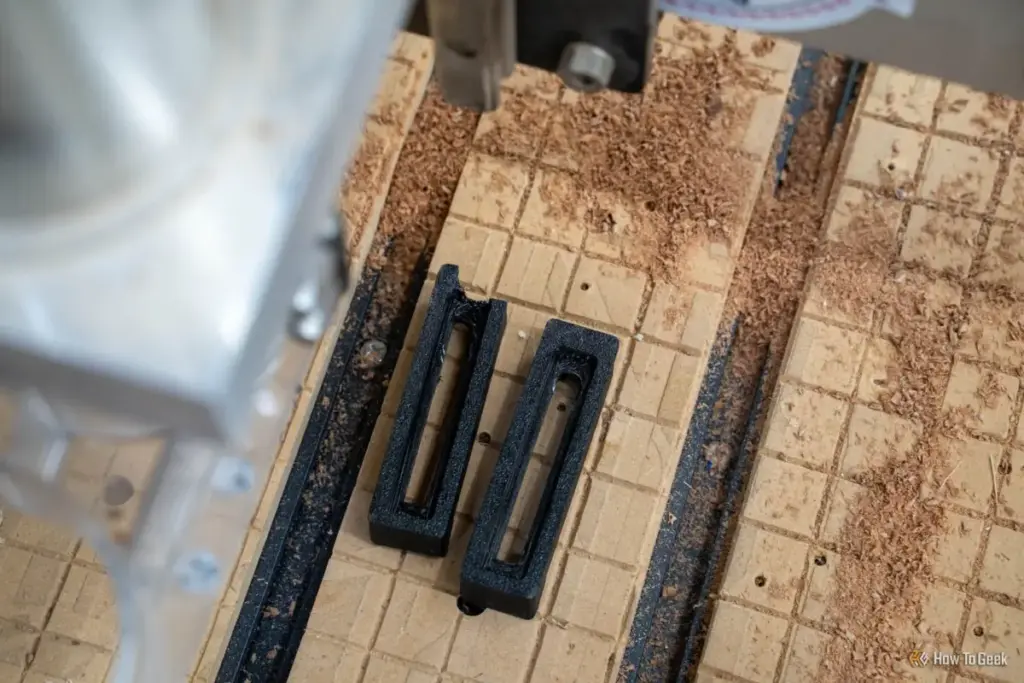
"Buying injection-molded clamps got annoying really fast," Campanale noted, reflecting on the period before he integrated 3D printing into his shop. The transition to 3D printing transformed these clamps from a consumable retail product into an on-demand resource.
The Economics of On-Site Manufacturing
The primary advantage of 3D printing in this context is the radical reduction in the "cost per failure." When a 3D-printed clamp is "chewed up" by a CNC bit, the financial impact is measured in pennies rather than dollars. Using standard filaments like PLA (Polylactic Acid) or PETG (Polyethylene Terephthalate Glycol), a single clamp uses a negligible amount of material.
This economic shift changes the psychological approach to the craft. Instead of viewing a collision as a costly mistake, it becomes a minor, easily rectified incident. Campanale has optimized this process by batch-printing his workholding solutions. By filling a 3D printer’s build plate with a dozen clamps and running the machine overnight, he ensures that his workshop is always stocked with replacements.
"The filament needed for a clamp was pennies," he explained. "I could just print a dozen at a time and then have them all in the shop ready to put into service at a moment’s notice."

Beyond the material cost, the time savings are equally significant. In the world of modern "just-in-time" delivery, even the fastest shipping cannot compete with a machine located in one’s own two-car garage. A single clamp can be produced in approximately 15 to 20 minutes. For a maker like Campanale, who also serves as a media director at his local church and maintains an active presence in the tech journalism space, the ability to bypass the retail supply chain is invaluable.
Breaking the Limitations of Retail Design
Perhaps the most significant professional advantage of 3D printing sacrificial parts is the freedom of design. When a maker is tethered to retail products, they are limited by the dimensions, strengths, and mounting styles that manufacturers deem profitable to produce. If a specific project requires a low-profile clamp to allow for a shallow carving, but the only plastic clamps available on Amazon are bulky, the maker is forced to compromise.
3D printing removes these constraints. Campanale highlighted that many major CNC manufacturers, such as Carbide 3D, have embraced this shift by posting their proprietary clamp designs online for free. This allows users to print official parts at home, but it also serves as a jumping-off point for customization.
 Tech Tutorials & How-To Guides
The Rise of the Personal Media Server: Why Users Are Swapping Streaming Subscriptions for Self-Hosted Control
The promise of the early streaming era was one of unprecedented convenience...
 Tech Tutorials & How-To Guides
Netflix Expands October Streaming Lineup With High-Stakes Sports Dramas and Darkly Humorous Animation
As the autumn chill settles in and the evening air turns crisp,...
 Tech Tutorials & How-To Guides
Netflix Expands November Catalog With a Diverse Mix of Licensed Hits and Psychological Thrillers
As the autumn chill settles in and the holiday season approaches, the...







