
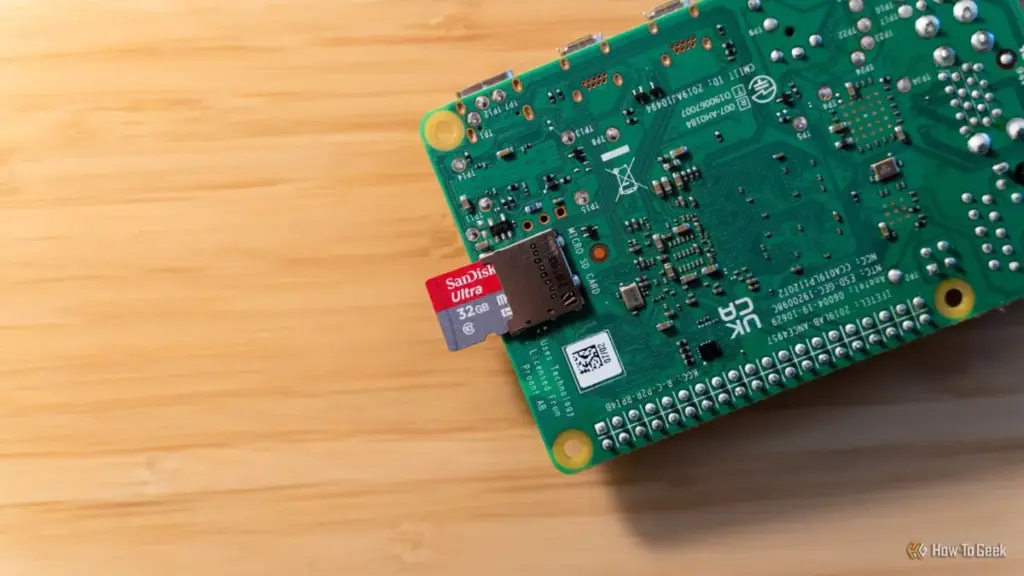
In the rapidly evolving landscape of modern technology, the boundary between consumer-grade hardware and professional-grade infrastructure has become increasingly blurred. At the heart of this shift is the Raspberry Pi, a credit-card-sized computer that has transcended its origins as an educational tool to become a cornerstone of the global "homelab" movement. For tech enthusiasts and small business owners alike, the weekend often represents an opportunity to reclaim digital independence from expensive, cloud-dependent subscription models.
Patrick Campanale, a tech industry veteran with over a decade of experience spanning the Palm/webOS era to high-end custom PC manufacturing, has long advocated for the utility of these low-power devices. With a background that includes extensive work in YouTube production, overclocking, and media direction for local community organizations, Campanale emphasizes that the Raspberry Pi is not merely a hobbyist’s toy but a robust engine for productivity. As the digital world leans more heavily into algorithmic feeds and recurring monthly fees, the push toward self-hosting—running one’s own services on local hardware—has moved from a niche interest to a practical necessity for those seeking data privacy and cost efficiency.
This weekend’s focus highlights three distinct projects that demonstrate the versatility of the Raspberry Pi: streamlining administrative workflows with DocuSeal, securing personal information with Trilium Notes, and curating information through Miniflux. These projects represent a broader trend in the technology sector where users are choosing "sovereign" software—tools that the user owns, controls, and maintains without third-party interference.
Digital Document Management: DocuSeal as a Formidable Alternative to Enterprise SaaS
For many organizations, from small creative agencies to local non-profit groups, the process of obtaining signatures on legal documents is a persistent friction point. In the professional world, DocuSign has long been the industry standard, offering a seamless way to fill out and sign PDFs without the need for physical printing or scanning. However, the convenience of such enterprise-level Software as a Service (SaaS) platforms often comes with a significant financial burden, particularly for entities that require frequent document processing but lack the budget for high-tier subscriptions.

The emergence of DocuSeal provides a powerful, open-source solution to this problem. Campanale, who utilized the platform during his tenure as a youth pastor to manage parental permission waivers, notes that the shift to a self-hosted signing platform solves two problems simultaneously: it eliminates the risk of lost paperwork and removes the recurring costs associated with commercial platforms. In a creative or small business context, this translates to more efficient handling of invoices, project scopes, and liability forms.
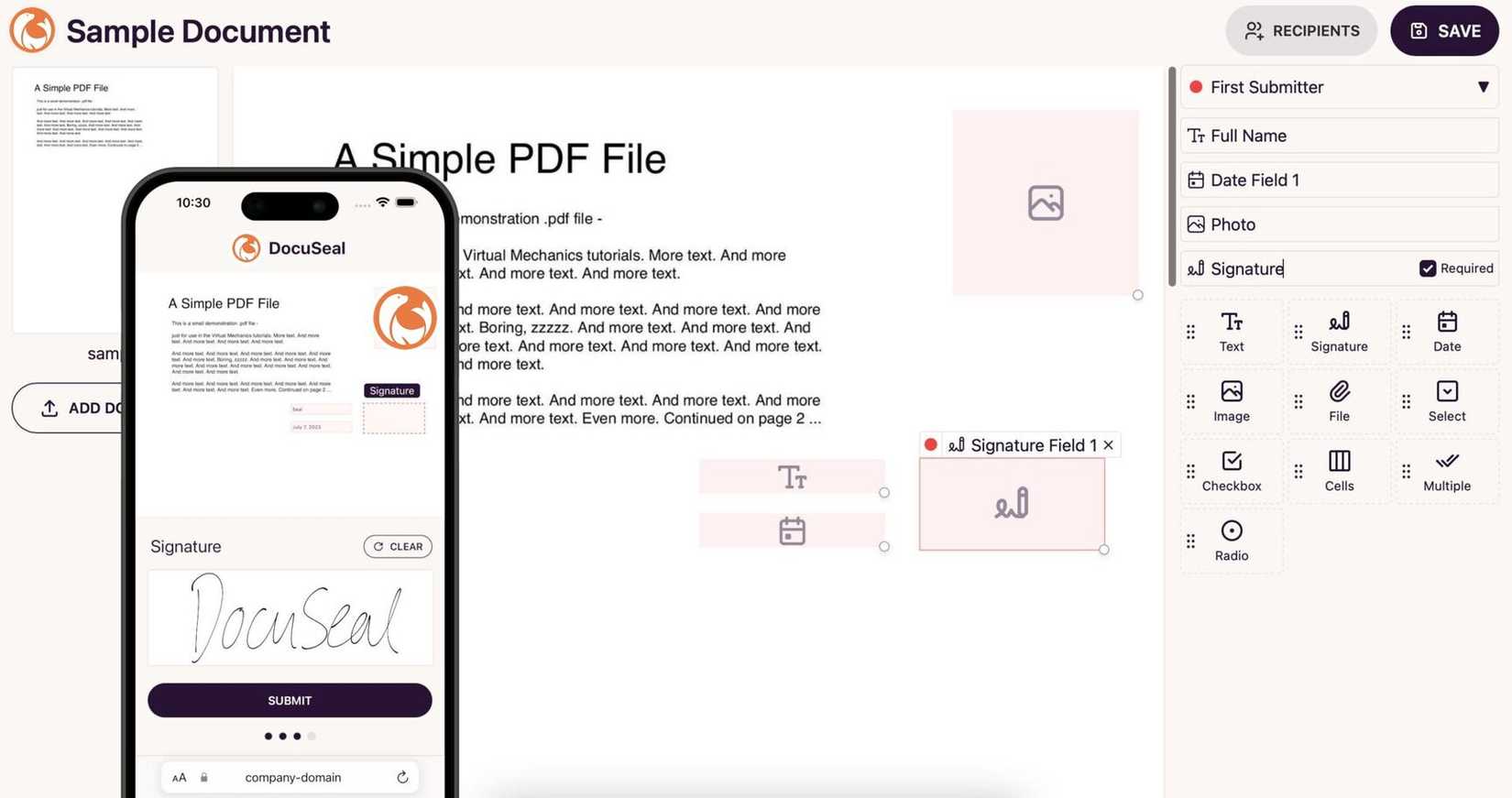
Deploying DocuSeal on a Raspberry Pi is made possible through Docker, a containerization technology that allows complex software to run in isolated environments with minimal configuration. By hosting the service locally, the user retains total control over the sensitive data contained within the documents. Instead of uploading a client’s personal information or a project’s financial details to a third-party cloud, the data stays within the user’s own network. The workflow remains modern and professional: a PDF is uploaded to the local server, signature and date fields are added via a web interface, and a secure link is sent to the recipient. The recipient can sign the document on any device, including a smartphone, without ever knowing the service is being powered by a small computer in a home office.
The technical requirements for such a setup are modest, requiring only a Raspberry Pi, reliable storage, and network access. This accessibility highlights a key shift in how small organizations can operate, allowing them to project the professional image of a much larger firm while maintaining the lean overhead of a grassroots operation.
Securing the "Second Brain": Building a Knowledge Base with Trilium Notes
The concept of a "Second Brain"—a digital repository for every thought, project, and piece of research a person accumulates—has gained significant traction in the productivity space. However, the most popular tools for this task, such as Notion or Evernote, are almost exclusively cloud-based. This reliance on the cloud introduces several vulnerabilities: the potential for service outages, the risk of data breaches, and the uncertainty of a provider’s long-term stability. If a cloud provider changes its terms of service or goes out of business, a user’s entire intellectual history could be at risk.
Trilium Notes offers a robust alternative for those who prefer to keep their data under their own roof. Designed as a hierarchical note-taking application, Trilium allows users to build a personal knowledge base that remains entirely offline if desired. For homelab enthusiasts, this is particularly valuable for housing technical documentation, troubleshooting logs, and network maps. Campanale points out that the primary advantage of Trilium is ownership; when the internet goes down, a locally hosted knowledge base remains fully accessible, ensuring that critical information is never out of reach.

The architecture of Trilium Notes supports advanced features that rival its commercial counterparts, including a complex note tree, internal linking for "wiki-style" navigation, and the ability to handle various attachments. For users who require access to their notes while away from home, the system can be securely exposed to the internet through a reverse proxy or tools like Cloudflare Tunnels. This hybrid approach offers the convenience of the cloud with the security of local hosting. By running Trilium on a Raspberry Pi, users can ensure their "Second Brain" is powered by a device that consumes less electricity than a standard LED lightbulb, making it an ideal candidate for an always-on information hub.
Combating Algorithm Fatigue: Reclaiming the News Cycle with Miniflux
In the current era of social media, the way individuals consume information is increasingly dictated by opaque algorithms. Platforms like X (formerly Twitter), Facebook, and even news aggregators often prioritize engagement over chronology, leading to a fragmented and often stressful user experience. This "algorithm fatigue" has led to a resurgence of interest in RSS (Really Simple Syndication), a technology that allows users to subscribe directly to content sources and receive updates in a clean, chronological list.
Miniflux stands out in the crowded field of feed readers due to its minimalist philosophy. It is a self-hosted, "opinionated" feed reader that strips away the noise of the modern web, providing a fast and distraction-free environment for reading. By running Miniflux on a Raspberry Pi, a user can create a centralized command center for all their information needs, from software release announcements to blog posts from niche industry experts.
One of the most powerful aspects of Miniflux is its ability to integrate with other tools like RSS-bridge, which can generate feeds for websites that do not natively support RSS, such as certain social media profiles. This allows a user to monitor specific accounts or keywords without ever having to log into a social media platform and be subjected to its curated feed. Campanale notes that this level of control is essential for maintaining "sanity" in a digital world designed to capture and hold attention through artificial means.
Because Miniflux is web-based, once it is deployed on a Raspberry Pi, it can be accessed from any device on the network. It supports bookmarking for later reading and advanced filtering to ensure that only the most relevant information reaches the user. This project epitomizes the "homelab" ethos: using simple, efficient technology to solve a complex modern problem, all while maintaining 100% control over the data and the experience.
The Raspberry Pi as the Modern Homelab Foundation
The transition of the Raspberry Pi from an educational curiosity to a foundational element of the homelab is a testament to the hardware’s evolution. With the release of more powerful iterations like the Raspberry Pi 4 and the Raspberry Pi 5, these devices now possess the RAM and processing power necessary to run multiple Docker containers simultaneously. This allows a single Pi to act as a document signer, a knowledge base, and a feed reader all at once, without a significant impact on performance.
As Campanale reflects on his years in the tech space—from the early days of mobile app development to his current work in high-end PC manufacturing and community service—the Raspberry Pi remains a standout tool due to its "ultra-low-power" profile. In an era of rising energy costs and environmental awareness, the ability to run a suite of professional services 24/7 for just a few dollars of electricity per year is a compelling proposition.
For those with a spare Raspberry Pi sitting in a drawer, the transition into self-hosting is more accessible than ever. The projects highlighted this weekend—DocuSeal, Trilium Notes, and Miniflux—serve as an entry point into a larger world of digital self-reliance. By taking the time to deploy these services, users do more than just save money on subscriptions; they take an active role in managing their digital lives, ensuring that their tools work for them, rather than for a distant corporation. As the "self-hosted" movement continues to grow, the Raspberry Pi stands ready as one of the most capable and efficient companions for the journey toward digital sovereignty.
 Tech Tutorials & How-To Guides
The Hidden Cost of DLSS: Why NVIDIA’s Software Lead No Longer Justifies the GeForce Price Premium
For over a decade, NVIDIA has cultivated a nearly impenetrable software ecosystem...
 Tech Tutorials & How-To Guides
To Boldly Go From Your Desktop: Celebrating 60 Years of Star Trek Through Modern Tech Hobbies
As the calendar turns to late 2026, the global science fiction community...
 Tech Tutorials & How-To Guides
The Unseen Ecosystem: Why Samsung’s Most Powerful One UI Features Remain Hidden to Most Users
In the hyper-competitive landscape of global smartphone manufacturing, Samsung Electronics has long...







