
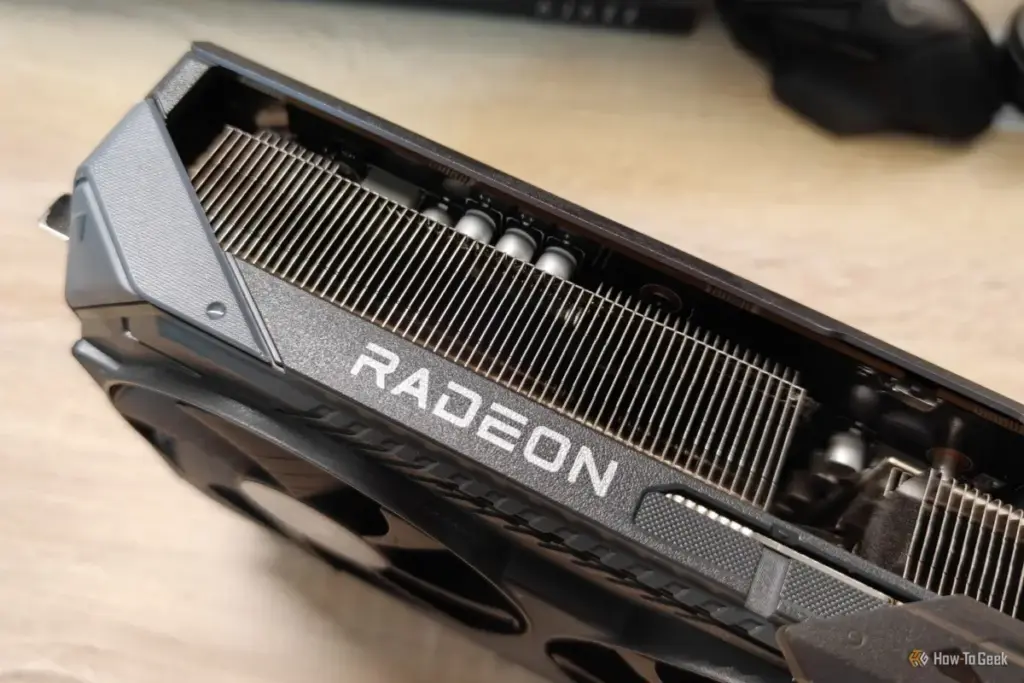
For over a decade, NVIDIA has cultivated a nearly impenetrable software ecosystem around its GeForce line of consumer graphics cards. From the early days of proprietary physics engines to the modern era of Deep Learning Super Sampling (DLSS), the "Green Team" has successfully positioned its hardware not just as a collection of silicon and fans, but as a gateway to an exclusive suite of features. Today, DLSS is often the centerpiece of the argument for choosing a GeForce GPU over its competitors. It is a powerful tool, capable of transforming a stuttering experience into a fluid one through the magic of AI-driven upscaling and frame generation.
However, as the GPU market enters a period of unprecedented pricing volatility and shifting hardware priorities, a growing consensus is emerging among enthusiasts and industry analysts: NVIDIA’s feature set, while technically superior, is no longer sufficient to bridge the widening chasm between its retail prices and those of its competitors. While many gamers continue to gravitate toward NVIDIA specifically to gain access to DLSS, a cold analysis of the current market suggests that this loyalty comes at a staggering cost. For the price of a mid-to-high-end GeForce card, consumers could often purchase a substantially more powerful AMD Radeon graphics card that offers superior raw rendering performance and significantly more Video RAM (VRAM)—the two most critical factors for long-term hardware longevity.
The Normalization of the NVIDIA GPU Premium
NVIDIA’s position as the "premium" choice is not a new phenomenon. For as long as the modern GPU market has existed, NVIDIA has generally commanded a higher price point than AMD (formerly ATI) or the more recent entrant, Intel. This price gap was historically justified by more stable drivers, better power efficiency, and a faster adoption of emerging industry standards.
Looking back at the landscape of the mid-2000s, the divide was often binary. During the era of the original Call of Duty 4: Modern Warfare, hardware limitations were frequently hard-coded. Many ATI Radeon users found themselves unable to launch the latest titles because their hardware lacked support for Shader Model 3.0, a standard that NVIDIA cards of the time handled with ease. These technical hurdles cemented a reputation that NVIDIA has spent twenty years reinforcing: that their hardware simply "works" better with the latest software.
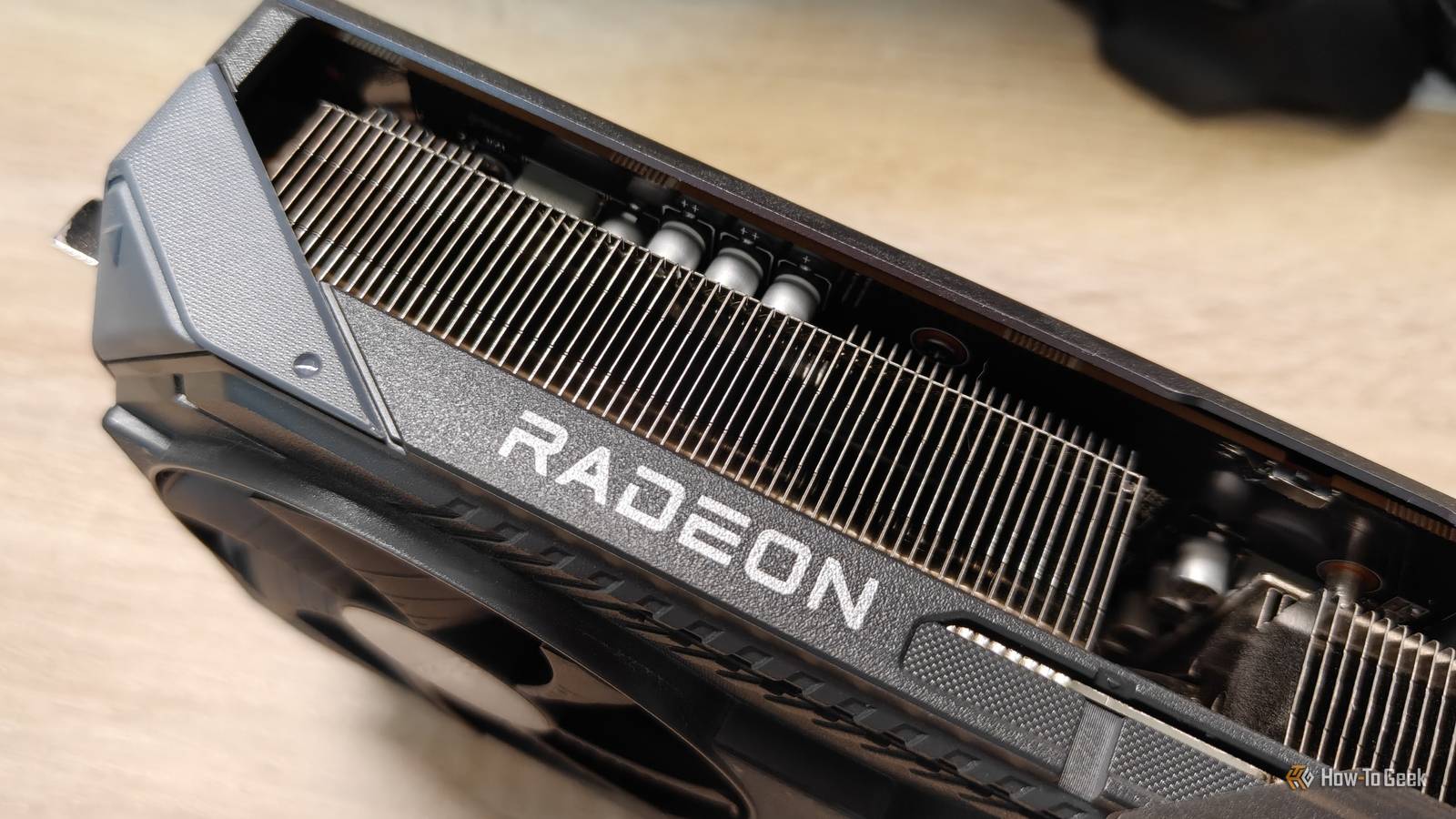
In the current market, that reputation has evolved into a dominant market share. Recent reports suggest that NVIDIA now controls roughly 90% of the discrete graphics card market. This dominance is further reflected in the Steam Hardware Survey, where GeForce cards occupy almost every top spot. Consumers have essentially voted with their wallets, signaling a willingness to pay a "badge premium" for access to the NVIDIA software stack. Whether it is the superior ray tracing performance of dedicated RT cores, the professional utility of CUDA for local AI workloads, or the ever-expanding features of DLSS, the market has accepted that NVIDIA features are worth a surcharge.
A Market Pushed to the Breaking Point
While the "NVIDIA tax" was once a manageable $50 to $100 difference, the launch of the RTX 5000 series alongside the AMD RX 9000 series has seen this premium explode. We are now well past the initial launch window, and the manufacturer’s suggested retail prices (MSRP) have become largely irrelevant due to a combination of high demand and a persistent shortage of high-speed memory modules.
At launch, the NVIDIA RTX 5070 Ti carried an MSRP of $749, a price that seemed competitive against the AMD RX 9070 XT’s $599 MSRP. On paper, the $150 difference was a justifiable trade-off for NVIDIA’s superior ray tracing and the DLSS 5.0 feature set. However, current retail realities have shattered that logic. Due to the aforementioned supply chain constraints, the RTX 5070 Ti is rarely found for its suggested price. Instead, retail listings have soared to approximately $1,150 for even the most basic models.
Conversely, while AMD’s RX 9070 XT has also seen price increases, they have been far more conservative. Currently retailing for around $800, the AMD card maintains a much closer relationship with its original value proposition. This means the original $150 price gap between these two competing models has more than doubled to $350. In a vacuum, $350 is the price of a high-end motherboard or a flagship-tier gaming CPU. When two cards perform similarly in traditional rasterization (the raw math of rendering a game), it becomes increasingly difficult to argue that software features alone are worth the price of an entire secondary component upgrade.
This trend is not isolated to the high-end segment; it permeates the entire product stack. From the entry-level to the enthusiast tier, NVIDIA cards are being sold at prices that assume the consumer places a near-infinite value on proprietary software, even when the underlying hardware is being outperformed by less expensive alternatives.

The Limits of DLSS and the Cost of "Fake" Frames
The core of NVIDIA’s marketing strategy is the idea that DLSS can make a weaker card perform like a stronger one. By using AI to upscale images from a lower internal resolution or by generating entirely new frames between rendered ones, NVIDIA promises a "free" performance boost. However, this boost is not truly free, and it cannot always compensate for a lack of raw hardware power.
The problem lies in the distinction between "generated" frames and "native" frames. Frame generation works most effectively when the base frame rate is already high. If a game is running at a native 60 frames per second (FPS), adding generated frames can make the motion look like 120 FPS. However, because those extra frames are interpolated by AI rather than being rendered from user input, they do not reduce input latency. A game running at 60 FPS with frame generation will still feel like 60 FPS to the player’s hands, even if it looks smoother to their eyes.
This is where the value proposition of AMD becomes undeniable. Instead of paying $1,150 for an NVIDIA card that relies on AI to hit high frame rates, a consumer can spend $800 on an AMD card that provides a much higher "native" frame rate. An AMD card rendering at a native 100 FPS will provide a more responsive, lower-latency gaming experience than an NVIDIA card rendering at 60 FPS and "faking" the rest to hit 120.
Furthermore, the visual cost of upscaling is often understated. While DLSS is currently the gold standard for image reconstruction—generally producing fewer artifacts than AMD’s FSR (FidelityFX Super Resolution)—it is still an approximation. High-speed movement can still result in ghosting, shimmering, or a loss of fine detail. When an AMD card is powerful enough to run a game at native resolution without upscaling, it bypasses these visual compromises entirely.
The disparity is most evident when comparing the RTX 5060 Ti 16GB to the RX 9070 XT. At current market prices, these cards often occupy the same price bracket, yet the AMD card is consistently 60% to 70% faster in raw performance at 1440p and 4K resolutions. In this scenario, the NVIDIA card isn’t just slightly behind; it is in an entirely different (and lower) performance class, despite costing the same. Even in ray tracing—NVIDIA’s traditional stronghold—the massive raw power of a higher-tier AMD card can often match or exceed the performance of a lower-tier NVIDIA card.
Reevaluating the "Default" Choice
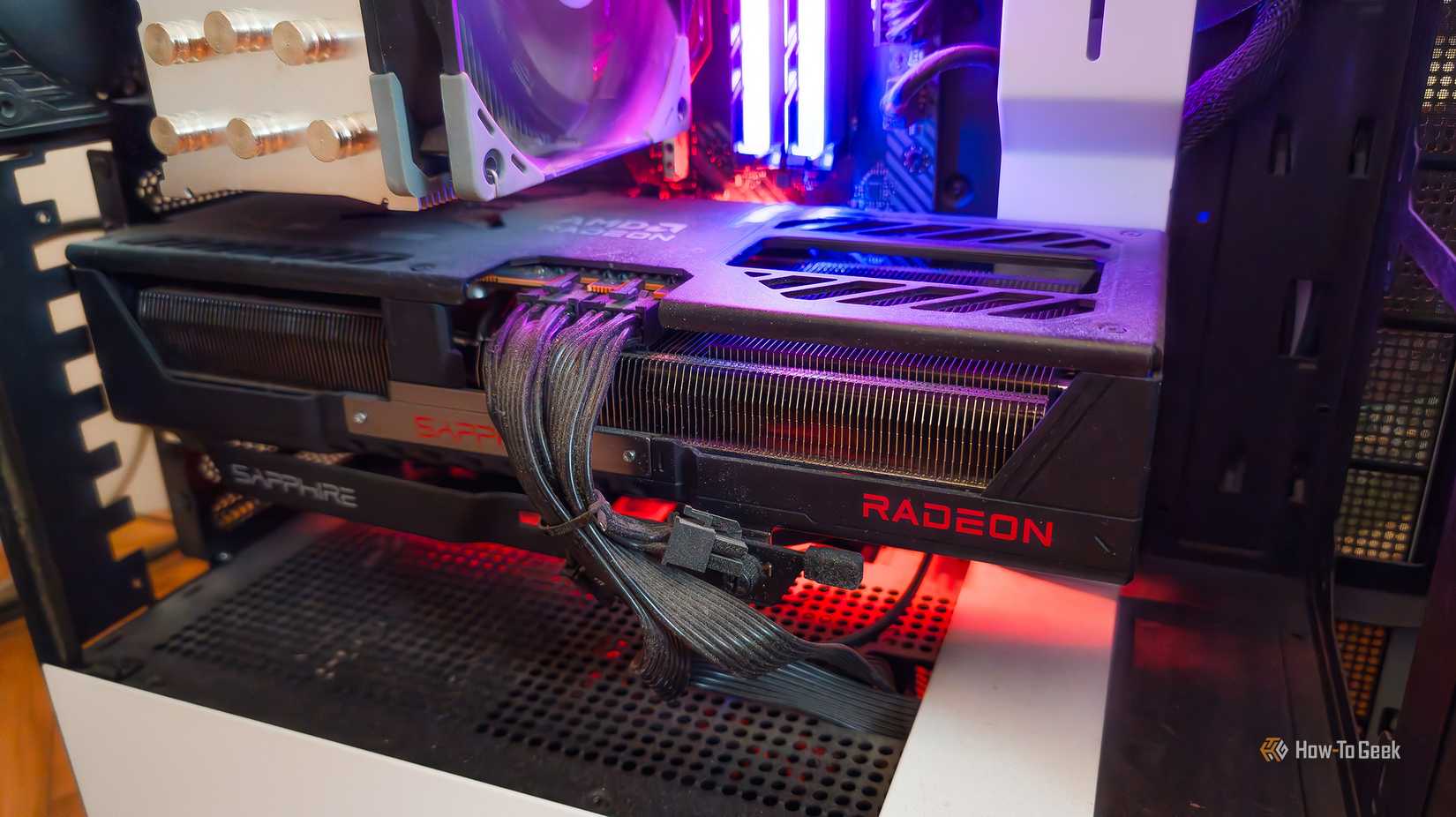
For years, the standard advice for PC builders was to buy NVIDIA unless they were on a strict budget. NVIDIA was the "safe" choice, the "premium" choice, and the "feature-complete" choice. But as we move deeper into 2026, that advice is becoming increasingly obsolete.
The argument for NVIDIA now rests almost entirely on niche use cases. If you are a professional or a hobbyist working with local AI models, the CUDA platform remains the industry standard, and NVIDIA is a requirement. If you have an unlimited budget and are purchasing the flagship RTX 5090 because you simply want the fastest card in existence regardless of cost, NVIDIA remains the only option.
However, for the vast majority of gamers—those looking for the best possible experience at a given price point—the "GeForce Tax" has become too high to ignore. AMD’s software suite, while still trailing slightly in AI-upscaling quality, has narrowed the gap significantly. AMD’s ROCm (Radeon Open Compute) is making strides in the AI space, and FSR Frame Generation has become a viable alternative for those who need it.
When the price difference between two competing GPUs is enough to fund a CPU upgrade or double your system’s RAM, the value of "software features" must be scrutinized. At today’s retail prices, NVIDIA cards are asking consumers to pay more for less hardware, relying on the magic of AI to hide the fact that they are being outpaced by the competition. For the sensible gamer, the choice is shifting: the "premium" experience is no longer about the logo on the box, but about the raw performance and longevity that only a better-priced piece of silicon can provide.
 Tech Tutorials & How-To Guides
Streaming This Weekend: Horror Prequels, Marvel Returns, and High-Stakes Political Dramas Lead the Lineup
As the calendar turns toward the midpoint of October, the entertainment landscape...
 Tech Tutorials & How-To Guides
Asustor Lockerstor 2 Gen2+ NAS Review: A High-Security Storage Solution for Power Users and Small Businesses
In the rapidly evolving landscape of network-attached storage (NAS), the market is...
 Tech Tutorials & How-To Guides
The Great Big-Box Battle: Evaluating the Power Tool Ecosystems of Ryobi, Craftsman, and Hyper Tough
For the modern homeowner or the burgeoning DIY enthusiast, the walk down...






