
At launch, the NVIDIA RTX 5070 Ti carried an MSRP of $749, a price that seemed competitive against the AMD RX 9070 XT’s $599 MSRP. On paper, the $150 difference was a justifiable trade-off for NVIDIA’s superior ray tracing and the DLSS 5.0 feature set. However, current retail realities have shattered that logic. Due to the aforementioned supply chain constraints, the RTX 5070 Ti is rarely found for its suggested price. Instead, retail listings have soared to approximately $1,150 for even the most basic models.
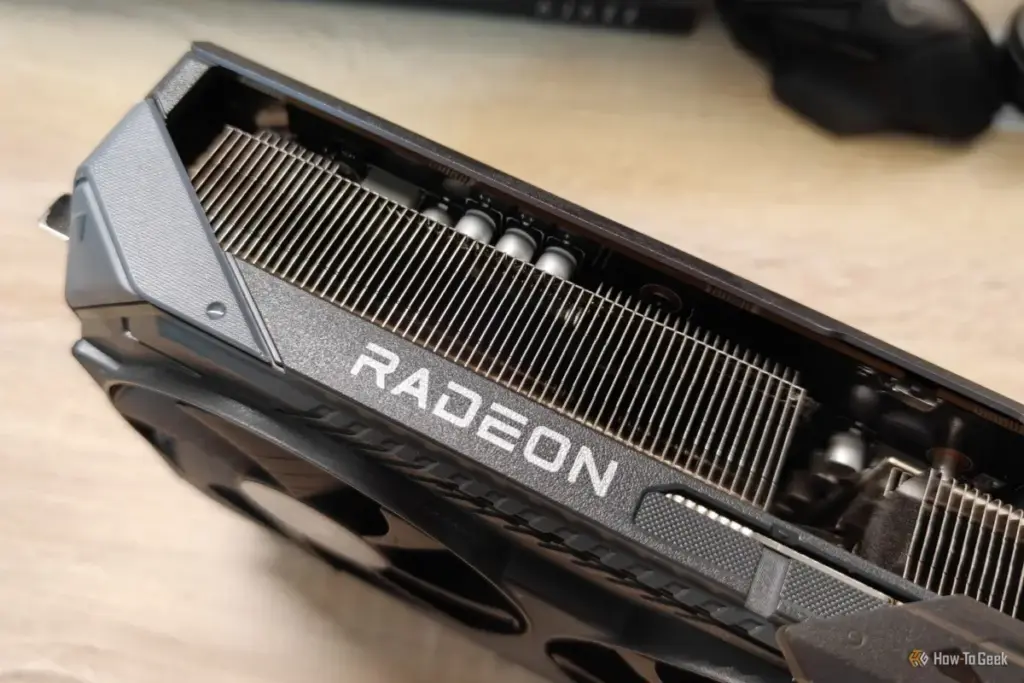
Conversely, while AMD’s RX 9070 XT has also seen price increases, they have been far more conservative. Currently retailing for around $800, the AMD card maintains a much closer relationship with its original value proposition. This means the original $150 price gap between these two competing models has more than doubled to $350. In a vacuum, $350 is the price of a high-end motherboard or a flagship-tier gaming CPU. When two cards perform similarly in traditional rasterization (the raw math of rendering a game), it becomes increasingly difficult to argue that software features alone are worth the price of an entire secondary component upgrade.
This trend is not isolated to the high-end segment; it permeates the entire product stack. From the entry-level to the enthusiast tier, NVIDIA cards are being sold at prices that assume the consumer places a near-infinite value on proprietary software, even when the underlying hardware is being outperformed by less expensive alternatives.

The Limits of DLSS and the Cost of "Fake" Frames
The core of NVIDIA’s marketing strategy is the idea that DLSS can make a weaker card perform like a stronger one. By using AI to upscale images from a lower internal resolution or by generating entirely new frames between rendered ones, NVIDIA promises a "free" performance boost. However, this boost is not truly free, and it cannot always compensate for a lack of raw hardware power.
The problem lies in the distinction between "generated" frames and "native" frames. Frame generation works most effectively when the base frame rate is already high. If a game is running at a native 60 frames per second (FPS), adding generated frames can make the motion look like 120 FPS. However, because those extra frames are interpolated by AI rather than being rendered from user input, they do not reduce input latency. A game running at 60 FPS with frame generation will still feel like 60 FPS to the player’s hands, even if it looks smoother to their eyes.
This is where the value proposition of AMD becomes undeniable. Instead of paying $1,150 for an NVIDIA card that relies on AI to hit high frame rates, a consumer can spend $800 on an AMD card that provides a much higher "native" frame rate. An AMD card rendering at a native 100 FPS will provide a more responsive, lower-latency gaming experience than an NVIDIA card rendering at 60 FPS and "faking" the rest to hit 120.
 Tech Tutorials & How-To Guides
Beyond the Slicer: Why MeshLab Remains the Essential Tool for Repairing Corrupt 3D Models
The world of 3D printing has evolved from a niche hobby for...
 Tech Tutorials & How-To Guides
The Limits of DNS Privacy: Why Changing Your Resolver Is Not a Total Cloaking Device
In the modern era of digital surveillance and data harvesting, internet users...
 Tech Tutorials & How-To Guides
A New Titan in Entertainment: Navigating the Skydance Merger and the Future of Streaming
The landscape of global media has undergone a seismic shift as the...







