
The promise of artificial intelligence within Information Technology Service Management (ITSM) has long been centered on the concept of radical simplification. For years, the narrative has suggested that AI would act as a release valve for overextended IT departments, automating away the mundane and allowing human agents to focus on high-level strategy. However, the reality emerging on the ground is significantly more nuanced. While AI is undeniably accelerating specific tasks and delivering on return-on-investment (ROI) goals, it is simultaneously introducing new layers of management, oversight, and operational "taxes" that threaten to offset the very time savings it provides.
This complex landscape is the primary focus of the SolarWinds 2026 State of ITSM Report. Drawing on a comprehensive survey of 844 IT professionals across North America, Europe, the Middle East, Africa, and the Asia-Pacific region, the report offers a sobering yet optimistic look at the current state of AI adoption. The central takeaway is clear: the value of AI is not inherent in the technology itself, but rather in how it is applied, maintained, and measured by the people and data structures supporting it. Far from being a "set-and-forget" solution, AI is proving to be a sophisticated tool that requires a fundamental shift in how service desks operate.
The ROI Paradox: Practical Gains vs. Fundamental Breakthroughs
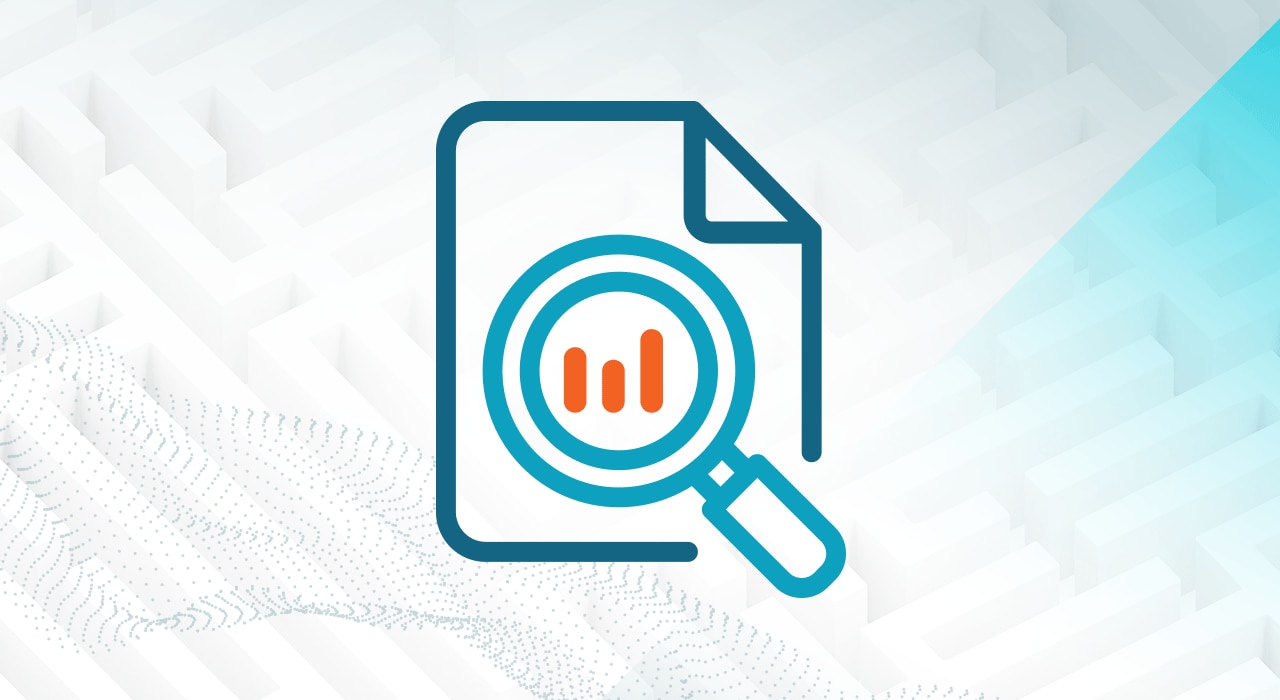
One of the most encouraging findings from the report is that AI is successfully meeting financial and operational expectations for the vast majority of organizations. According to the data, 84% of respondents say AI has either met or exceeded their ROI expectations. This is a significant milestone, particularly given the "hype cycle" that has surrounded generative AI over the last several years. It suggests that IT leaders have moved past the phase of idle experimentation and are now implementing AI in ways that produce tangible value.
However, the report also highlights a "breakthrough gap." While most see positive ROI, only 23% of respondents report that AI has significantly exceeded their expectations. This distinction is critical for understanding the current maturity level of AI in the service desk. Most organizations are seeing incremental improvements—practical gains in areas such as drafting initial ticket responses, summarizing complex incident histories, categorizing incoming requests, and surfacing relevant knowledge base articles for agents.
These are worthwhile improvements that reduce the friction of daily operations. Yet, as the report notes, these practical applications have not yet translated into the kind of outsized, transformative gains that fundamentally alter the economics or the end-user experience of service delivery. For the service desk of 2026, the challenge is no longer just adopting AI, but moving from these "headline metrics" of adoption toward specific service outcomes. The report suggests that instead of measuring how much AI is being used, leaders must focus on whether that usage leads to fewer escalations, stronger SLA compliance, and lower costs per ticket.
The Workload Contradiction: Saving Time While Increasing Effort
Perhaps the most surprising finding in the SolarWinds research is the disconnect between time saved on specific tasks and the overall workload of IT staff. On a task-by-task basis, AI is a proven time-saver. Respondents reported significant weekly gains across several core service desk functions. For instance, AI-driven issue detection and flagging saves an average of 3.3 hours per week. Responding to end-user requests is shortened by 3.0 hours, while triaging and categorizing tickets—a traditionally manual and tedious process—saves 2.9 hours.
Further efficiencies are found in the creation and uploading of knowledge base articles (2.9 hours), documenting and summarizing incidents (2.8 hours), and the actual resolution and remediation of issues (2.7 hours). These findings align with previous SolarWinds data. The 2024 State of ITSM Report noted that automation and self-service portals could reduce incident resolution times by several hours, while the 2025 analysis found that organizations using generative AI features saw average resolution times drop by nearly five hours—an 17.8% improvement.
Despite these clear wins, the 2026 report reveals a startling reality: 52% of respondents say their overall workload has actually increased since adopting AI. Another 19% report that their workload has remained the same. Combined, this means that 71% of IT professionals have seen no net reduction in their daily work volume despite the introduction of labor-saving technology.
This paradox can be explained by how IT departments utilize reclaimed time. Rather than creating idle capacity or allowing for headcount reductions, the time saved by AI is almost immediately reinvested. Service desks are using those extra hours to process a higher volume of requests, improve the quality of their documentation, engage in proactive maintenance, and focus on strategic projects that were previously sidelined. While this represents progress and a more "proactive" IT stance, it requires leadership to have clear visibility into where this reclaimed time is going to avoid the perception that AI has failed to deliver efficiency.
The Human-in-the-Loop: Oversight as a New Workstream
The increase in workload is also driven by a new category of labor: AI oversight. The report clarifies that IT teams are not simply delegating work to AI and moving on to other tasks. Instead, they are taking on the role of supervisors for the technology. Forty-eight percent of respondents now spend significant time managing or maintaining AI tools, while 47% are tasked with reviewing and validating the output generated by AI.
In the context of a service desk, the stakes for accuracy are high. An AI-generated summary that misses a key technical detail or a categorization error that routes a critical server issue to the wrong department can actually slow down the resolution process rather than accelerate it. Consequently, human judgment remains a vital component of the workflow.
The report advises that service desks must intentionally design human review into their processes, particularly for workflows that carry high operational risk. The goal is to define exactly when AI can operate autonomously and when an agent’s approval is mandatory. This shift means that the role of the IT professional is evolving from "executor" to "auditor," requiring a different set of skills and a new allocation of time that must be accounted for in staffing models.
Budgeting for the "AI Maintenance Tax"
As AI becomes more integrated into the service desk, it is bringing with it a "maintenance tax" that many organizations failed to anticipate. The survey found that 83% of IT professionals spend at least three hours every week on AI maintenance, and nearly half—44%—spend six or more hours per week on these activities.
This maintenance work is multifaceted. It includes tuning prompts to ensure better accuracy, reviewing model outputs for bias or "hallucinations," coordinating with AI vendors on updates, and managing the integrations between AI tools and other ITSM systems. Furthermore, AI is only as good as the data it consumes. This means teams must spend time updating knowledge sources and addressing data gaps to ensure the AI remains reliable.
The report points out that while all service desk tools require maintenance—automation rules need periodic reviews and knowledge articles eventually go stale—the operating models for AI are still in their infancy. Many organizations have established processes for governing their self-service portals, but they have yet to build similar rigor around their AI deployments. To achieve sustainable value, the report suggests that AI maintenance must be a formal part of the IT roadmap, with assigned owners and defined review cycles.
Moving from Activity to Outcomes
The final key finding of the 2026 report highlights a correlation between how AI is measured and how the workload is perceived. Organizations that use an activity-oriented approach to measurement—counting things like the number of AI-generated summaries or the volume of automated categorizations—are 2.4 times more likely to report an increased workload compared to those using an outcome-oriented approach.
Activity metrics can be misleading. A service desk can process more tickets than ever before using AI, but if those tickets are not resolved effectively or if employee satisfaction is dropping, the "activity" does not represent true value. It merely represents a busier, more chaotic environment.
The report advocates for a shift toward outcome measures that reflect the actual experience of the end-user and the health of the business. These include metrics such as employee productivity, the number of prevented incidents, cost per ticket, and mean time to detect (MTTD). By focusing on these results, IT leaders can better evaluate whether AI is actually solving problems or just moving them around. For example, if AI is used for ticket triaging, the success should be measured by reassignment rates and time-to-assignment, rather than just the number of tickets triaged.
A Mature Era for AI in ITSM
The 2026 State of ITSM Report signals a transition into a more mature era of AI adoption. The initial excitement of "what AI can do" is being replaced by a pragmatic understanding of "what it takes to run AI." The trajectory of the last three years of SolarWinds research shows a clear evolution: the 2024 report established that automation and knowledge management provide the necessary foundation; the 2025 report proved that generative AI can significantly reduce resolution times; and now, the 2026 research clarifies that the next step is operational discipline.
Ultimately, the question for modern service desks is no longer whether AI has a place in ITSM. The question is whether the organization has the workflows, the data integrity, and the measurement frameworks to support it. As the report concludes, the most successful organizations will be those that manage the work around the AI as deliberately as they manage the technology itself. By recognizing the maintenance tax, planning for human oversight, and focusing on outcome-based metrics, IT leaders can ensure that AI serves as a true catalyst for efficiency rather than just another source of digital noise.
 Helpdesk & IT Service Management (ITSM)
The Trillion-Dollar ROI Challenge: Why AI Infrastructure Spending Must Spark a Global Innovation Revolution
As the global technology sector pivots toward an era defined by generative...
 Helpdesk & IT Service Management (ITSM)
SolarWinds Service Desk Unveils Major Updates to Workflow Automation, Microsoft Teams Integration, and Asset Management
In an era where IT Service Management (ITSM) is increasingly defined by...
 Helpdesk & IT Service Management (ITSM)
Bridging the Observability Gap: How Integrated Distributed Tracing Isolates Database Latency in Modern API Stacks
In the high-stakes environment of modern software reliability, not every performance crisis...







