
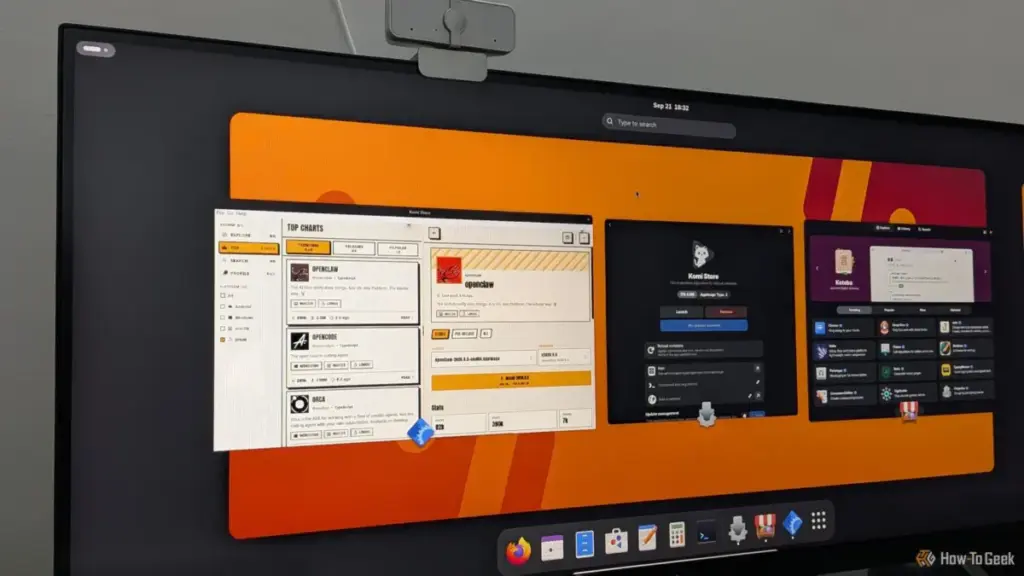
Release quality is another area where Fedora’s "move fast" mantra occasionally stumbles. Fedora 44, for instance, saw its release date slip by two weeks due to critical blocker bugs. Even after the delay, the Workstation installer shipped with a known issue where the installation process could hang indefinitely on machines with slower storage or processors. For a distribution that prides itself on being a premier choice for professionals, these lapses in the final "fit and finish" can be difficult to overlook.
Potential Paths Toward a Smoother Experience
The most frustrating aspect of Fedora’s shortcomings is that they are largely solvable without the project needing to abandon its core principles. Much of the friction could be mitigated through smarter defaults and more transparent communication during the setup process.
Currently, Fedora offers a toggle for "third-party repositories" during the initial setup, but this option is surprisingly limited, primarily covering Google Chrome and a restricted channel for Nvidia drivers. Expanding this prompt to include a clear explanation of the codec situation would go a long way. By offering a guided path to enable RPM Fusion with an honest description of the functionality it adds—such as hardware video acceleration—Fedora could save its users hours of troubleshooting without actually shipping patented code on the ISO itself.

Nvidia support is another area where Fedora could learn from its peers. Ubuntu has demonstrated for years that it is possible to detect a user’s GPU during installation, offer the correct proprietary driver, and handle the complexities of Secure Boot enrollment within a single, unified graphical flow. Fedora’s current process is technically functional, but it requires the user to understand kernel module signing and MOK enrollment—concepts that are far removed from the typical user’s experience of simply wanting to play a game or run a CUDA-based workload.
On the desktop side, the decision to prioritize Fedora’s own Flatpak remote over Flathub continues to cause confusion. Shipping Flathub unfiltered by default, while clearly labeling the origin of each package, would resolve the "OBS-style" conflicts and provide users with the most up-to-date software. Similarly, shipping AppIndicator support by default would ensure that the desktop behaves predictably for the vast majority of cross-platform applications that rely on tray icons.
There are, however, signs of progress. The upcoming Fedora 45, scheduled for release in late October, introduces several meaningful technical improvements. It brings the modern, web-based Anaconda installer to "Atomic" editions like Silverblue and Kinoite, providing a more reliable installation experience. The replacement of the aging kernel console with "kmscon" and the addition of "DRM Panic" for more descriptive crash screens show that Fedora is still innovating at the system level.
However, Fedora 45 also highlights the project’s double-edged sword: it will now enforce RPM signature checking by default. While this is a win for security, it means that installing the RPM Fusion release package via a simple command line will now fail until the user manually imports the signing key. This is a perfect example of a change that is technically sound but introduces yet another hurdle for the end-user—a hurdle that Fedora must learn to communicate effectively if it wants to maintain its broad appeal.
 Tech Tutorials & How-To Guides
The Untapped Power of the ESP32: Why Your Bluetooth Proxy Is Only Reaching a Fraction of Its Potential
In the rapidly evolving landscape of the modern smart home, the ESP32...
 Tech Tutorials & How-To Guides
The Hidden Cost of DLSS: Why NVIDIA’s Software Lead No Longer Justifies the GeForce Price Premium
For over a decade, NVIDIA has cultivated a nearly impenetrable software ecosystem...
 Tech Tutorials & How-To Guides
Beyond the Slicer: Why MeshLab Remains the Essential Tool for Repairing Corrupt 3D Models
The world of 3D printing has evolved from a niche hobby for...







