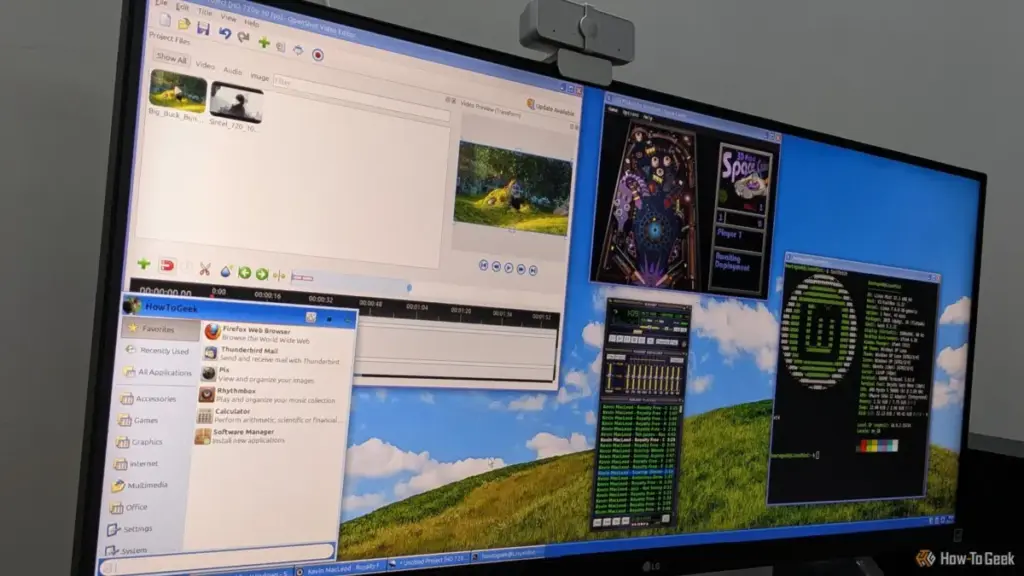
For years, this left fans of the game relegated to running unstable ports or using emulators. However, the Linux community has successfully hosted a reverse-engineered version of the original game, available on platforms like Flathub. This version is not a mere imitation; it is a faithful recreation that utilizes the original assets and logic. On a Linux desktop, Space Cadet Pinball runs natively, with the exact physics, sound effects, and "feel" of the Windows XP original. It serves as a reminder that in the open-source world, software is preserved by the passion of the community rather than the profit margins of a corporation.

Creating the Complete Retro Environment
The appeal of these applications is significantly enhanced when they are hosted within a desktop environment that mirrors the aesthetics of the past. One of the greatest strengths of Linux is its unprecedented level of customization, which allows a user to recreate the exact look of a classic Windows environment while maintaining the security and performance of a modern kernel.
Distributions like Linux Mint, particularly when using the Xfce or Cinnamon desktop environments, provide a familiar taskbar-and-start-menu paradigm. By applying custom themes—many of which are meticulously designed to replicate the "Luna" theme of Windows XP or the "Aero" look of Windows 7—users can create a cohesive experience.
Ghosh notes that his current setup involves Linux Mint Xfce Edition, modified with a custom Windows XP theme. In this environment, apps like AbiWord and OpenShot don’t just function well; they look like they belong. This setup provides a psychological comfort that modern Windows, with its forced updates, integrated advertising in the Start menu, and shifting UI languages, often fails to deliver.
The Philosophy of Software Preservation
The migration of these "Windows-style" experiences to Linux highlights a broader trend in the tech world. As mainstream operating systems move toward a "closed-garden" model, the responsibility for software preservation and user-centric design has shifted to the open-source community.
For users like Ghosh, the move to Linux wasn’t about leaving Windows behind so much as it was about finding where the spirit of Windows had gone. By choosing AbiWord over Word, OpenShot over Clipchamp, and community-maintained pinball over modern mobile-style ports, users are making a statement about what they value: speed, simplicity, and the right to own the tools they use.
As Windows 11 continues to evolve toward a more cloud-centric and AI-integrated future, the divide between the "modern" user and the "classic" enthusiast will likely grow. For the latter, the path to the past ironically leads straight through the most flexible and forward-thinking platform available today: Linux. Through the efforts of open-source developers, the "Golden Age" of the PC isn’t just a memory; it’s a functional, daily-driver reality for anyone willing to make the switch.
 Tech Tutorials & How-To Guides
Beyond the Slicer: Why MeshLab Remains the Essential Tool for Repairing Corrupt 3D Models
The world of 3D printing has evolved from a niche hobby for...
 Tech Tutorials & How-To Guides
Paramount+ Expands Library with Major October Update as Spooky Season Begins
As the calendar turns to October and the first chill of autumn...
 Tech Tutorials & How-To Guides
Digital Ghosts: The Iconic Windows Applications That Defined an Era of Computing
The landscape of personal computing is one of constant, ruthless evolution. Over...