
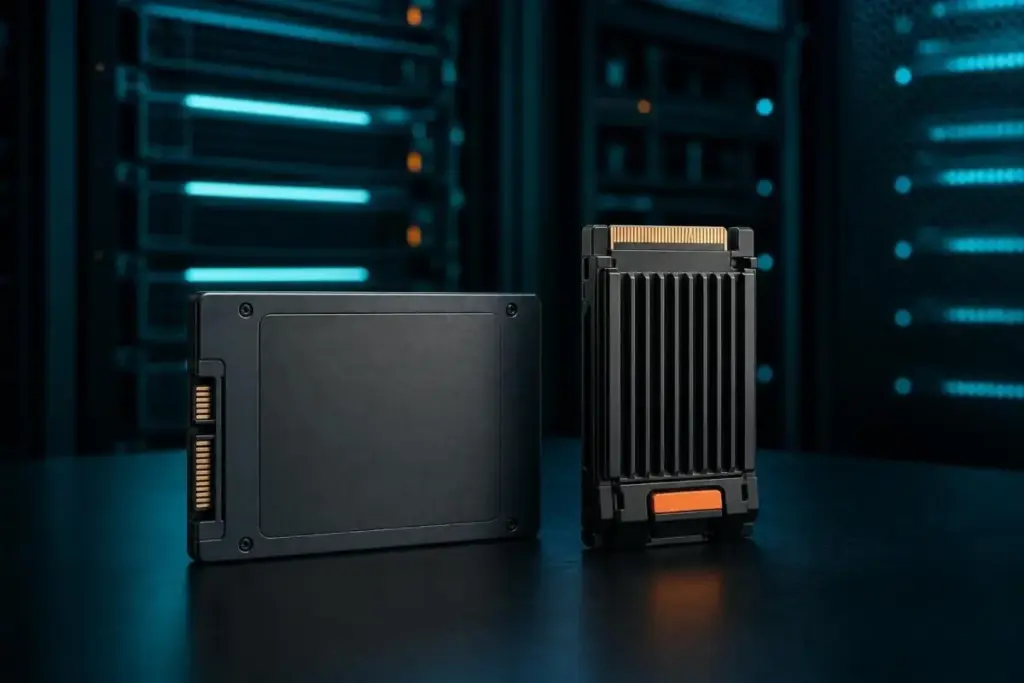
It is important to note that the physical shape of the drive, known as the form factor, does not always dictate its speed. The M.2 form factor, which looks like a small stick of gum, can support either the older SATA interface or the newer NVMe protocol. Conversely, the traditional 2.5-inch brick shape is still common for SATA drives in legacy systems. Understanding that M.2 is a physical connector rather than a speed rating is vital for ensuring hardware compatibility.
Reliability is measured through endurance ratings, typically expressed as Total Bytes Written (TBW). This figure represents the total amount of data that can be written to the drive over its lifetime before the warranty expires. However, these numbers are not absolute. A datasheet for a Micron 6550 ION SSD, for example, might list an endurance of 112,000TB for large 128KB random writes, but that figure could drop to 28,000TB if the workload consists of smaller 4KB writes. This discrepancy highlights the importance of matching a drive’s endurance rating to the specific type of work it will be doing.
The Persistent Role of the Hard Disk Drive
Despite the overwhelming speed advantages of SSDs, the traditional Hard Disk Drive (HDD) has not been rendered obsolete. The comparison between SSDs and HDDs remains the only genuine "either-or" choice in the storage world. SSDs are circuit-based and incredibly fast, with Pure Storage claiming they can be up to 14 times faster than their mechanical counterparts. However, HDDs, which store data on spinning magnetic platters, still hold a commanding lead in cost per gigabyte.
For many organizations, the solution is not to choose one or the other, but to implement a hybrid storage strategy. In this model, SSDs are used for "hot" data—operating systems, applications, and active databases—where low latency and high IOPS (Input/Output Operations Per Second) are required. HDDs are reserved for "cold" data, such as long-term archives and bulk backups, where the sheer volume of storage matters more than the speed of access.
Final Considerations for the Modern Buyer
The industry consensus is clear: the question is no longer "Flash vs. SSD," but rather which specific configuration of SSD technology meets the demands of a given workload. When evaluating storage options, the primary focus should be on the NAND type (SLC, TLC, or QLC), the interface (SATA vs. NVMe), the form factor, and the endurance rating.
Industry experts advise that headline speed and endurance figures should be viewed with a healthy degree of skepticism. These numbers often reflect best-case scenarios measured under specific laboratory conditions, such as certain block sizes or queue depths. Before committing to a large-scale purchase, the most reliable approach is to test a drive against the specific read/write patterns of the intended environment. By looking past the marketing jargon and focusing on the underlying architecture of the controller and the NAND, buyers can ensure they are investing in hardware that will remain stable and performant throughout its lifecycle.
 Enterprise Tech & Infrastructure
From Theory to Engineering: Quantum Computing Reaches a Commercial Tipping Point as Industry Giants Prepare for a Hybrid Future
The long-anticipated transition of quantum computing from a theoretical pursuit of physics...
 Enterprise Tech & Infrastructure
Quantinuum Charts a Full-Stack Course Toward Fault-Tolerant Quantum Computing
The cadence of breakthroughs in the quantum computing sector has reached a...
 Enterprise Tech & Infrastructure
Top Enterprise Hard Drives of 2023: Navigating Reliability, Performance, and Capacity in Modern Data Infrastructure
In the contemporary landscape of digital transformation, the backbone of any organization’s...







