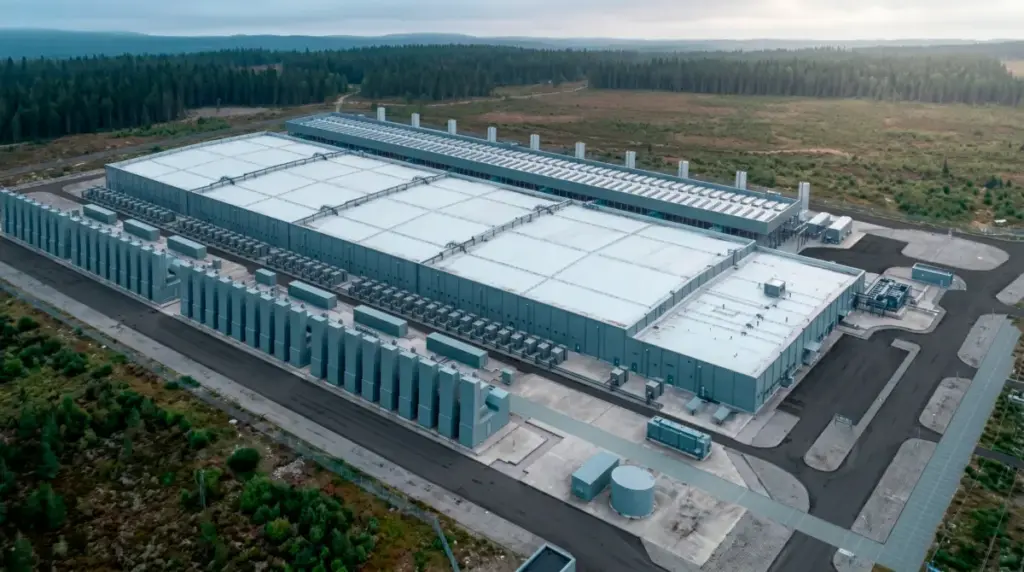
For years, the world’s largest technology companies—often referred to as hyperscalers—have operated under a veil of extreme discretion when it comes to their physical infrastructure. The process of selecting, planning, and constructing the massive data centers that power the global internet was frequently shrouded in non-disclosure agreements (NDAs) and cryptic code names. However, that era of corporate secrecy appears to be coming to an end. In a significant shift in strategy, Google and Meta have recently signaled their intention to adopt more open communication practices, following in the footsteps of pioneers like Microsoft and Amazon Web Services (AWS).
This pivot is not merely a change in public relations philosophy but a pragmatic response to a growing wave of community resistance. As the demand for artificial intelligence and cloud computing necessitates a rapid expansion of physical hardware, the hyperscalers are finding themselves increasingly at odds with the citizens and local governments in the regions where they wish to build. From concerns over massive electricity consumption to fears regarding local water security, the friction between big tech and local communities has reached a boiling point. By abandoning the NDAs that have long been a staple of their site selection processes, these companies are attempting to de-escalate conflicts before they result in costly project delays or total moratoriums.
Google and Meta say they will open up as Microsoft and AWS did before them
The trend toward greater transparency gained significant momentum earlier this month when Amazon Web Services unveiled its new Data Center Commitment. This framework represents a formal acknowledgment that the company’s physical footprint requires a more collaborative relationship with the communities it inhabits. Among the core tenets of this commitment is a pledge to disclose more granular information regarding the energy and water consumption of its facilities. Perhaps more significantly, Amazon indicated it would consider a moratorium on requesting government officials to sign NDAs during the early stages of planning applications.
This move by Amazon is a direct response to the "twitchy" atmosphere surrounding data center development. In many jurisdictions, local officials were previously required to sign strict confidentiality agreements before even learning the identity of the company proposing a multi-billion-dollar project. This often left residents feeling sidelined and suspicious, as major infrastructure changes were negotiated behind closed doors. Amazon’s shift suggests that the company now views transparency as a necessary component of its long-term growth strategy rather than a hurdle to be avoided.
Meta, the parent company of Facebook and Instagram, has also found itself in the crosshairs of public criticism. The company recently announced it was conducting a comprehensive review of its use of NDAs in the wake of a controversial project in Louisiana. Known during its planning stages by the code name "Hyperion," the proposed data center in Richland Parish became a lightning rod for criticism due to the intense secrecy surrounding its development. Local stakeholders and transparency advocates argued that the use of NDAs prevented a meaningful public dialogue about the project’s impact on local resources and infrastructure. The backlash in Louisiana served as a wake-up call for Meta, which is now looking for ways to avoid similar public relations crises in future developments.
While Amazon and Meta are the latest to join this movement, Microsoft was an early pacesetter in the drive for transparency. In March, Microsoft took the industry by surprise by announcing it would "cease to use NDAs as a tool in its data center site selection and development." The company framed this decision as a way of "putting communities first," acknowledging that the traditional method of secretive site selection was no longer sustainable in an era of heightened environmental and social awareness. Google has since followed suit, aligning its policies with the new industry standard of openness.
The collective action of these four hyperscalers is a clear indication that the rise in organized protests against data center construction is beginning to have a tangible effect on corporate policy. For years, the tech industry operated under the assumption that the economic benefits of data centers—such as tax revenue and temporary construction jobs—would outweigh any local concerns. However, as the scale of these facilities has grown from modest warehouses to massive campuses requiring hundreds of megawatts of power, the trade-offs have become more difficult for local populations to ignore.
One of the primary drivers of this increased scrutiny is the sheer volume of resources required to maintain the modern cloud, particularly with the advent of generative artificial intelligence. AI workloads are significantly more power-intensive than traditional cloud services, leading to a surge in electricity demand. According to industry analysts at Gartner, data center electricity consumption is projected to grow by as much as 26% by 2026. This rapid growth is placing an unprecedented strain on aging power grids, leading to fears of increased utility costs for residents and even potential blackouts in regions with high concentrations of data centers, such as Northern Virginia or parts of Ireland.
Beyond electricity, water consumption has emerged as a major flashpoint. Data centers require vast amounts of water for cooling purposes to prevent servers from overheating. In regions prone to drought or water scarcity, the arrival of a facility that consumes millions of gallons of water per day can be seen as a direct threat to the local agricultural sector and domestic water supply. To address these objections head-on, hyperscalers have begun launching initiatives aimed at drastically reducing their water footprint. Amazon, for instance, has claimed that its data centers are seven times more water-efficient than the industry average, often utilizing recycled water or "free cooling" techniques that rely on outside air rather than liquid evaporation.
Despite these efforts, the path forward remains fraught with challenges. We have already seen major projects being delayed or stalled entirely as local governments buckle under the pressure of community opposition. In some instances, jurisdictions have implemented formal moratoriums on new data center construction until more robust environmental protections can be put in place. These delays represent a significant risk to the hyperscalers, who are currently locked in a high-stakes arms race to build out the infrastructure necessary to lead the AI revolution.
The transition away from NDAs is an attempt to rebuild the trust that was eroded during years of secretive operations. By being more open about their plans from the outset, tech companies hope to engage in a more constructive dialogue with residents. This involves not only sharing data on resource use but also being more transparent about the long-term benefits and drawbacks of a project. It allows for a more honest discussion about how a data center might impact local traffic, noise levels, and the aesthetic character of a community.
However, it remains unclear whether these efforts to be more open will be enough to assuage the deep-seated anger and skepticism directed at new data center plans. For many critics, the issue is not just a lack of transparency but the fundamental scale of the industry’s resource consumption. Even with the most efficient cooling systems and a commitment to using renewable energy sources, the sheer physical presence of these "data factories" can be overwhelming for small communities.
The hyperscalers are also facing a "green-washing" critique. While companies like Google and Microsoft are major investors in renewable energy projects, such as wind and solar farms, the intermittent nature of these energy sources often means that the data centers still rely on the traditional fossil-fuel-heavy grid during peak times or when the sun isn’t shining. As the public becomes more sophisticated in its understanding of corporate sustainability claims, the hyperscalers will likely face even more pressure to prove that their operations are truly compatible with local and global climate goals.
The move to end NDAs marks a definitive end to the "wild west" era of data center expansion. As the physical infrastructure of the internet becomes as vital—and as visible—as highways or power plants, the companies behind them are being forced to accept the responsibilities that come with being a public utility. The coming years will determine if this new-found transparency is a genuine shift in corporate values or a tactical maneuver designed to keep the bulldozers moving. For now, the backlash against the hyperscalers has proven to be too great to ignore, forcing the world’s most powerful companies to finally step out of the shadows and speak directly to the people whose backyards they wish to inhabit.
 Small Business IT & Cloud Computing
Precision Over Volume: Specialized AI Expertise Commands Premium Salaries in a Shifting Tech Job Market
The landscape of information technology recruitment is undergoing a fundamental transformation. For...
 Small Business IT & Cloud Computing
Meta Partners with NEC and Sumitomo to Build Petal, the World’s Highest-Capacity Undersea Cable Connecting the US and France
In a significant move to bolster the backbone of the global internet,...
 Small Business IT & Cloud Computing
Otter.ai Transitions to Agentic Workflow Automation with New ‘Work’ Mode and Deep Third-Party Integrations
The landscape of workplace productivity is undergoing a fundamental shift as artificial...