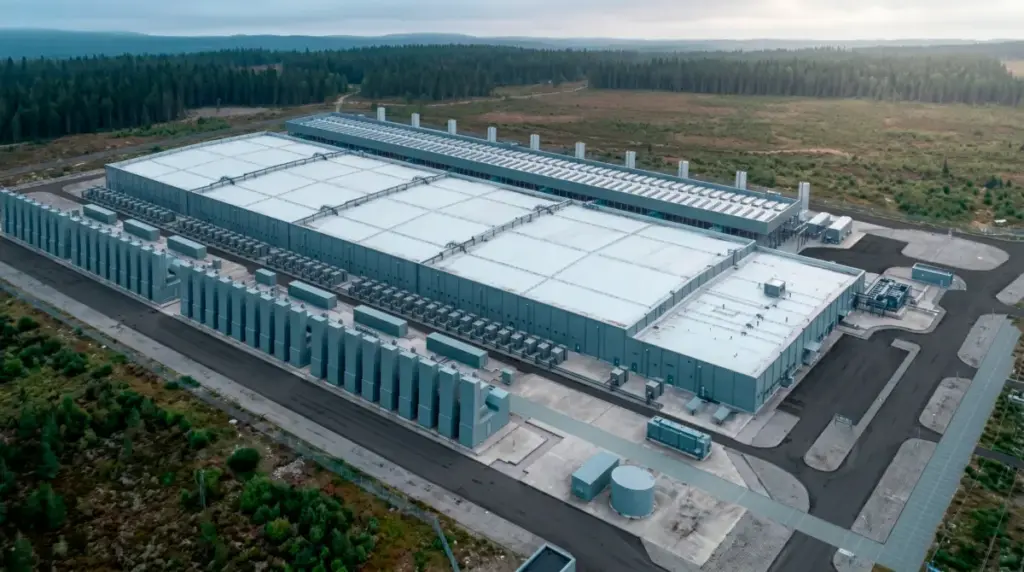
While Amazon and Meta are the latest to join this movement, Microsoft was an early pacesetter in the drive for transparency. In March, Microsoft took the industry by surprise by announcing it would "cease to use NDAs as a tool in its data center site selection and development." The company framed this decision as a way of "putting communities first," acknowledging that the traditional method of secretive site selection was no longer sustainable in an era of heightened environmental and social awareness. Google has since followed suit, aligning its policies with the new industry standard of openness.
The collective action of these four hyperscalers is a clear indication that the rise in organized protests against data center construction is beginning to have a tangible effect on corporate policy. For years, the tech industry operated under the assumption that the economic benefits of data centers—such as tax revenue and temporary construction jobs—would outweigh any local concerns. However, as the scale of these facilities has grown from modest warehouses to massive campuses requiring hundreds of megawatts of power, the trade-offs have become more difficult for local populations to ignore.
One of the primary drivers of this increased scrutiny is the sheer volume of resources required to maintain the modern cloud, particularly with the advent of generative artificial intelligence. AI workloads are significantly more power-intensive than traditional cloud services, leading to a surge in electricity demand. According to industry analysts at Gartner, data center electricity consumption is projected to grow by as much as 26% by 2026. This rapid growth is placing an unprecedented strain on aging power grids, leading to fears of increased utility costs for residents and even potential blackouts in regions with high concentrations of data centers, such as Northern Virginia or parts of Ireland.
Beyond electricity, water consumption has emerged as a major flashpoint. Data centers require vast amounts of water for cooling purposes to prevent servers from overheating. In regions prone to drought or water scarcity, the arrival of a facility that consumes millions of gallons of water per day can be seen as a direct threat to the local agricultural sector and domestic water supply. To address these objections head-on, hyperscalers have begun launching initiatives aimed at drastically reducing their water footprint. Amazon, for instance, has claimed that its data centers are seven times more water-efficient than the industry average, often utilizing recycled water or "free cooling" techniques that rely on outside air rather than liquid evaporation.
Despite these efforts, the path forward remains fraught with challenges. We have already seen major projects being delayed or stalled entirely as local governments buckle under the pressure of community opposition. In some instances, jurisdictions have implemented formal moratoriums on new data center construction until more robust environmental protections can be put in place. These delays represent a significant risk to the hyperscalers, who are currently locked in a high-stakes arms race to build out the infrastructure necessary to lead the AI revolution.
 Small Business IT & Cloud Computing
Microsoft Unveils Unified Copilot ‘Super App’ to Streamline Enterprise AI Orchestration and Governance
Microsoft has officially launched its highly anticipated Copilot “super app,” marking a...
 Small Business IT & Cloud Computing
Precision Over Volume: Specialized AI Expertise Commands Premium Salaries in a Shifting Tech Job Market
The landscape of information technology recruitment is undergoing a fundamental transformation. For...
 Small Business IT & Cloud Computing
Otter.ai Transitions to Agentic Workflow Automation with New ‘Work’ Mode and Deep Third-Party Integrations
The landscape of workplace productivity is undergoing a fundamental shift as artificial...