
For those who inhabit the world of technology reporting and enthusiast forums, it is often easy to lose sight of the fact that we exist within a specialized bubble. For the "geeks" among us, smart home technology is a familiar landscape. Many have spent more than a decade—and in some cases, several decades, dating back to the early days of X10 industry standards—tinkering with automated lighting, networked sensors, and programmable thermostats. Within this circle, the complexities of networking and the nuances of device compatibility are seen as minor hurdles or even part of the hobby itself.
However, the recent unveiling of the Apple Home Collection, a new suite of smart home accessories developed in collaboration with industry giants LG and Schneider Electric, has sparked a wave of skepticism among this tech-literate crowd. Critics have pointed to the significantly higher price points of these devices, noting that they do not appear to offer revolutionary new features that aren’t already available via cheaper alternatives. Why, they ask, would anyone pay a premium for a smart doorbell or a light switch when the market is already saturated with functional, low-cost options?
The answer, it seems, lies in the "bubble effect." While the enthusiast looks at the hardware specifications and the price tag, the average consumer looks at the friction. By focusing on the "onboarding" experience rather than just the feature list, Apple may have finally found the key to moving smart home technology out of the enthusiast’s garage and into the average person’s living room.
HomeKit was a start, but not enough
To understand why the Apple Home Collection is being positioned as a game-changer, one must look back at the evolution of the industry. In the earliest iterations of home automation, the barrier to entry was immense. Setting up a smart device often required a working knowledge of soldering, basic programming, and complex wiring. As the technology matured, it became more accessible through the introduction of wireless protocols and smartphone control, but the user experience remained fragmented.
In those middle years, configuring a new device was far from a "plug-and-play" affair. Consumers were forced to manage a digital graveyard of companion apps—one for their lightbulbs, another for their locks, and a third for their security cameras. Each manufacturer required its own account, its own cloud service, and its own unique setup process.
Apple’s introduction of HomeKit was intended to be the definitive solution to this fragmentation. The vision was elegant: a single app—the Home app—to rule them all. The HomeKit badge on a product box was meant to be a guarantee of security and compatibility. It brought the power of Siri to household objects, allowing users to control their environment with simple voice commands.
Yet, the reality of HomeKit often fell short of its lofty goals. In practice, many HomeKit-enabled devices still required initial configuration through a third-party app before they would even appear in Apple’s ecosystem. The setup processes were frequently temperamental, requiring users to scan tiny QR codes in dimly lit corners or troubleshoot 2.4GHz versus 5GHz Wi-Fi interference. For many, the experience of setting up a "smart" home felt more like acting as an unpaid network engineer than a homeowner enjoying a modern convenience. Furthermore, because Apple’s security requirements were so stringent, many manufacturers opted out, leading to a market where Amazon Alexa and Google Home ecosystems enjoyed significantly more commercial support and a wider variety of hardware.
Matter and Thread helped
The industry recognized this stagnation, leading to the development of the Matter and Thread standards. These protocols represented a rare moment of industry-wide cooperation, where Apple, Google, Amazon, and Samsung agreed on a common language for smart devices. The goal was to ensure that a device bought today would work with any ecosystem tomorrow, theoretically simplifying the manufacturing process and the consumer experience.
Matter, in particular, was designed to streamline the setup process and improve reliability. By creating a standardized way for devices to communicate locally without relying on the cloud, it addressed some of the latency and privacy concerns that had plagued earlier smart home products. Thread provided a robust, low-power mesh network that allowed devices to talk to one another even if the central hub went offline.
While these standards were a massive leap forward for the industry’s infrastructure, their impact on the "normie" market remained limited. Even with Matter, the initial "handshake" between a new device and a home network could still be fraught with errors. For the person who just wants their front porch light to turn on at sunset, the technical nuances of a Thread border router are irrelevant; they simply want the technology to work without needing to consult a manual or a troubleshooting forum.
Apple Home Collection
This brings us to the current skepticism surrounding the Apple Home Collection. Tech enthusiasts have correctly noted that there are no groundbreaking new product categories here. The collection consists of familiar items: doorbells, smart plugs, and wall switches. For every item in the Apple Home Collection, there is an equivalent product available for half the price from a competitor.

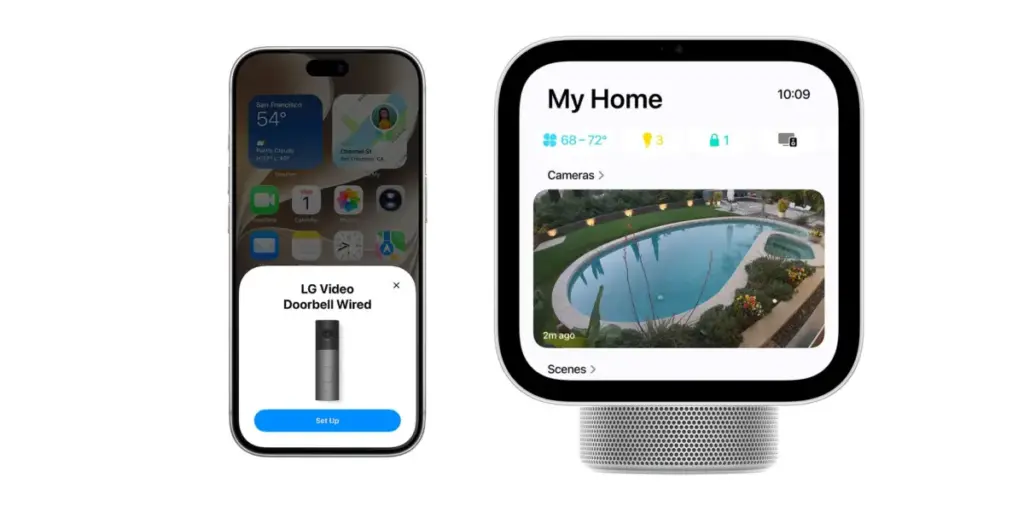
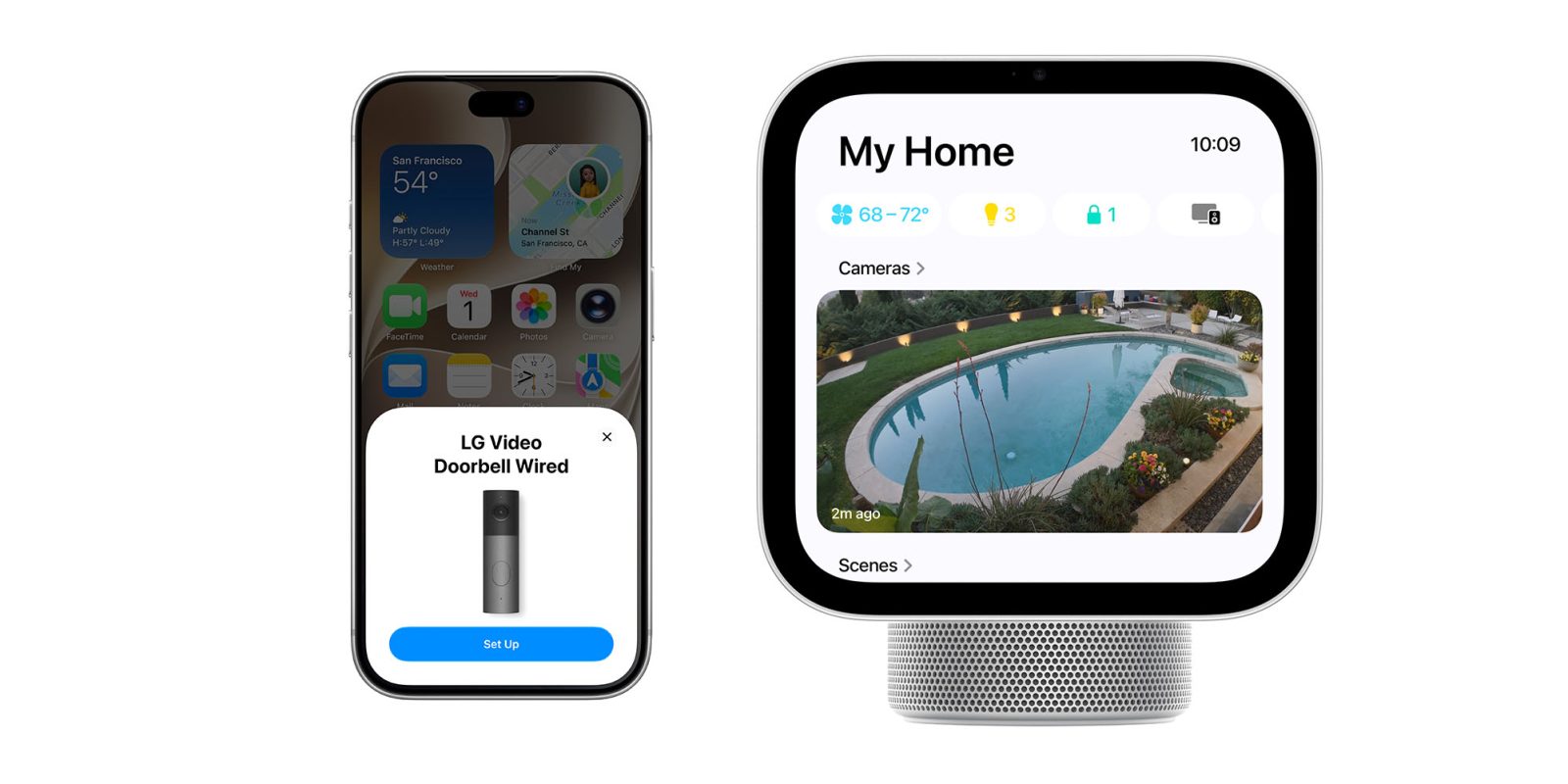
However, what the Apple Home Collection offers is not a new function, but a new feeling. The innovation here is the total removal of friction. Reports from those who have seen the hardware in action suggest that Apple has managed to replicate the "magic" of the AirPods pairing experience for the smart home.
When a user buys a new pair of AirPods, they don’t open a settings menu or search for a Bluetooth signal. They simply flip open the case near their iPhone, and a setup animation appears instantly. The Apple Home Collection brings this exact proximity-based pairing to home infrastructure. As Ajay Kumar of CNET observed during a recent demonstration, the process is so seamless that it can be completed mid-conversation.
Kumar described watching an Apple representative register a new device on both her iPhone and the "HomeView" interface—a new visual dashboard for the home—without even pausing her dialogue. There was no hunting for QR codes, no manual entry of Wi-Fi passwords, and no "searching for device" spinning wheels. It worked, as Kumar noted, with the intuitive ease that has become Apple’s hallmark in the mobile space.
This level of simplicity cannot be underestimated. While a tech enthusiast might scoff at paying an extra $50 for a light switch just to save five minutes of setup time, the "normie" consumer views that $50 as an insurance policy against frustration. For the vast majority of people, the fear of "breaking" their home network or being unable to finish a complex installation is a significant deterrent to buying smart technology. By making the setup process as simple as holding a phone near a wall switch, Apple is removing the final psychological barrier to entry.
The partnership with LG and Schneider Electric is also a strategic move to lend traditional household credibility to these digital products. By embedding Apple’s seamless connectivity into the hardware of companies that consumers already trust for their appliances and electrical systems, the "Apple Home Collection" ceases to be a collection of gadgets and begins to feel like a legitimate part of the home’s architecture.
For years, the smart home has been a promise that felt just out of reach for the average person—always one firmware update or one bridge-hub away from being truly useful. We may have finally reached the point where the technology is no longer a hobby for the few, but a utility for the many. If the Apple Home Collection succeeds, it won’t be because it did something new, but because it finally made the old things easy enough for everyone to use. For those who have been put off by the perceived complexity of the modern home, the "AirPods moment" for the smart home has arrived, and it may be the catalyst that finally brings home automation into the mainstream.
 Smart Home & IoT Solutions
Apple Intelligence Sparks Major Smart Home Overhaul as New HomePod and Apple TV Hardware Loom
For several years, Apple’s presence in the smart home market has been...
 Smart Home & IoT Solutions
Apple Prepares Major Smart Home Overhaul as Siri AI Integration Signals New Hardware Cycle
For several years, Apple’s ambitions in the smart home sector have appeared...
 Smart Home & IoT Solutions
Why the Apple Home Collection Represents a Watershed Moment for Mainstream Smart Home Adoption
In the fast-paced world of consumer electronics, it is often difficult for...







