
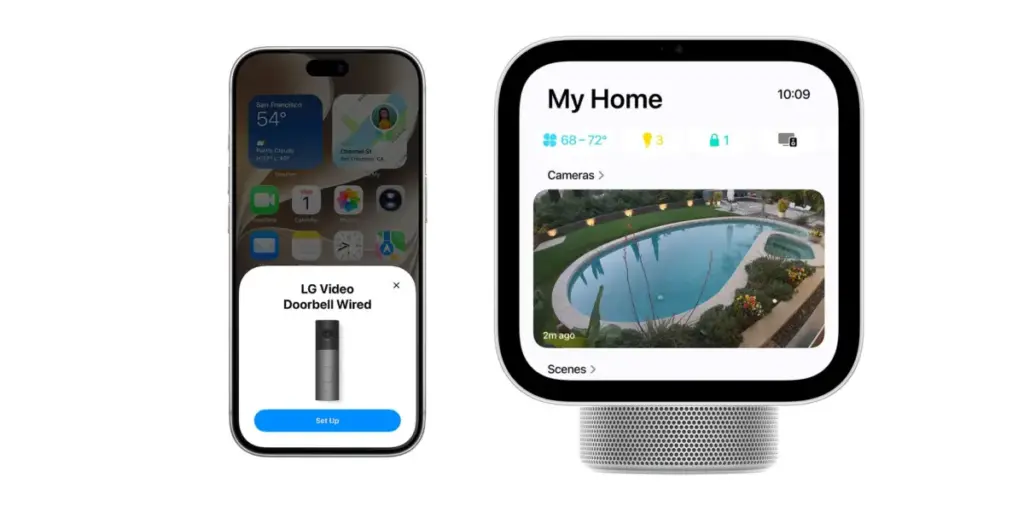
Yet, the reality of HomeKit often fell short of its lofty goals. In practice, many HomeKit-enabled devices still required initial configuration through a third-party app before they would even appear in Apple’s ecosystem. The setup processes were frequently temperamental, requiring users to scan tiny QR codes in dimly lit corners or troubleshoot 2.4GHz versus 5GHz Wi-Fi interference. For many, the experience of setting up a "smart" home felt more like acting as an unpaid network engineer than a homeowner enjoying a modern convenience. Furthermore, because Apple’s security requirements were so stringent, many manufacturers opted out, leading to a market where Amazon Alexa and Google Home ecosystems enjoyed significantly more commercial support and a wider variety of hardware.
Matter and Thread helped
The industry recognized this stagnation, leading to the development of the Matter and Thread standards. These protocols represented a rare moment of industry-wide cooperation, where Apple, Google, Amazon, and Samsung agreed on a common language for smart devices. The goal was to ensure that a device bought today would work with any ecosystem tomorrow, theoretically simplifying the manufacturing process and the consumer experience.
Matter, in particular, was designed to streamline the setup process and improve reliability. By creating a standardized way for devices to communicate locally without relying on the cloud, it addressed some of the latency and privacy concerns that had plagued earlier smart home products. Thread provided a robust, low-power mesh network that allowed devices to talk to one another even if the central hub went offline.
While these standards were a massive leap forward for the industry’s infrastructure, their impact on the "normie" market remained limited. Even with Matter, the initial "handshake" between a new device and a home network could still be fraught with errors. For the person who just wants their front porch light to turn on at sunset, the technical nuances of a Thread border router are irrelevant; they simply want the technology to work without needing to consult a manual or a troubleshooting forum.
Apple Home Collection
This brings us to the current skepticism surrounding the Apple Home Collection. Tech enthusiasts have correctly noted that there are no groundbreaking new product categories here. The collection consists of familiar items: doorbells, smart plugs, and wall switches. For every item in the Apple Home Collection, there is an equivalent product available for half the price from a competitor.

However, what the Apple Home Collection offers is not a new function, but a new feeling. The innovation here is the total removal of friction. Reports from those who have seen the hardware in action suggest that Apple has managed to replicate the "magic" of the AirPods pairing experience for the smart home.
 Smart Home & IoT Solutions
Apple Ties New AI-Powered Home Security Features to Premium 2TB iCloud+ Subscription Tier
As Apple continues to integrate its sophisticated "Apple Intelligence" suite across its...
 Smart Home & IoT Solutions
Report: Apple ‘HomeView’ smart home hub will ship in November, come in four colors, A18 chip
While the announcement is imminent, consumers may have to wait a few...
 Smart Home & IoT Solutions
The Simplicity Revolution: Why the Apple Home Collection Marks a Turning Point for Smart Home Adoption
In the rapidly evolving world of consumer technology, it is often difficult...






