
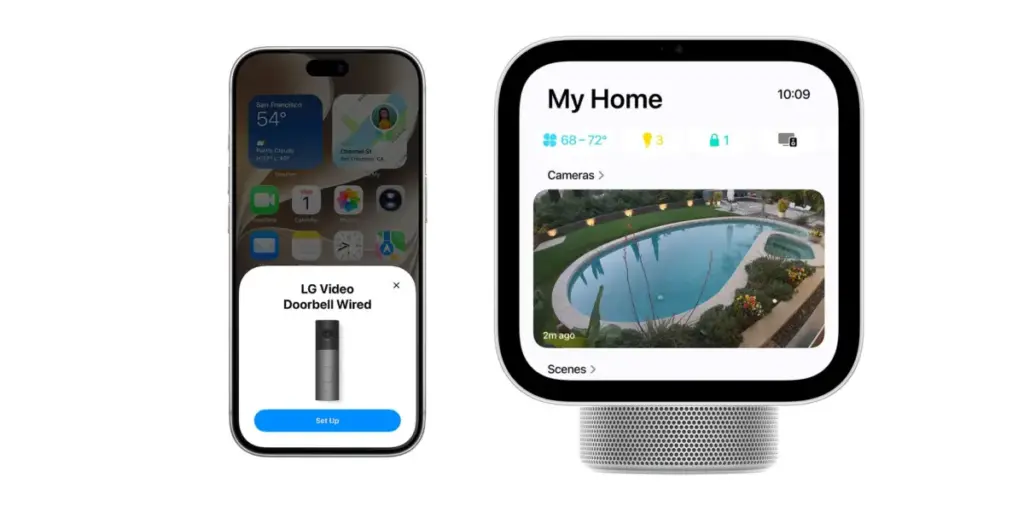
When a user buys a new pair of AirPods, they don’t open a settings menu or search for a Bluetooth signal. They simply flip open the case near their iPhone, and a setup animation appears instantly. The Apple Home Collection brings this exact proximity-based pairing to home infrastructure. As Ajay Kumar of CNET observed during a recent demonstration, the process is so seamless that it can be completed mid-conversation.
Kumar described watching an Apple representative register a new device on both her iPhone and the "HomeView" interface—a new visual dashboard for the home—without even pausing her dialogue. There was no hunting for QR codes, no manual entry of Wi-Fi passwords, and no "searching for device" spinning wheels. It worked, as Kumar noted, with the intuitive ease that has become Apple’s hallmark in the mobile space.
This level of simplicity cannot be underestimated. While a tech enthusiast might scoff at paying an extra $50 for a light switch just to save five minutes of setup time, the "normie" consumer views that $50 as an insurance policy against frustration. For the vast majority of people, the fear of "breaking" their home network or being unable to finish a complex installation is a significant deterrent to buying smart technology. By making the setup process as simple as holding a phone near a wall switch, Apple is removing the final psychological barrier to entry.
The partnership with LG and Schneider Electric is also a strategic move to lend traditional household credibility to these digital products. By embedding Apple’s seamless connectivity into the hardware of companies that consumers already trust for their appliances and electrical systems, the "Apple Home Collection" ceases to be a collection of gadgets and begins to feel like a legitimate part of the home’s architecture.
For years, the smart home has been a promise that felt just out of reach for the average person—always one firmware update or one bridge-hub away from being truly useful. We may have finally reached the point where the technology is no longer a hobby for the few, but a utility for the many. If the Apple Home Collection succeeds, it won’t be because it did something new, but because it finally made the old things easy enough for everyone to use. For those who have been put off by the perceived complexity of the modern home, the "AirPods moment" for the smart home has arrived, and it may be the catalyst that finally brings home automation into the mainstream.
 Smart Home & IoT Solutions
Controller for HomeKit Introduces Natural Language AI to Simplify Complex Smart Home Automations
The promise of the modern smart home has always been one of...
 Smart Home & IoT Solutions
Schlage Announces Launch Date for Sense Pro Smart Deadbolt, Bringing Ultra Wideband Precision to Apple Home Users
The landscape of residential security is undergoing a significant shift as traditional...
 Smart Home & IoT Solutions
Abode Expands Smart Home Ecosystem with New Apple Home-Compatible Outdoor and Garage Sensors
The landscape of DIY home security continues to evolve as homeowners seek...







