
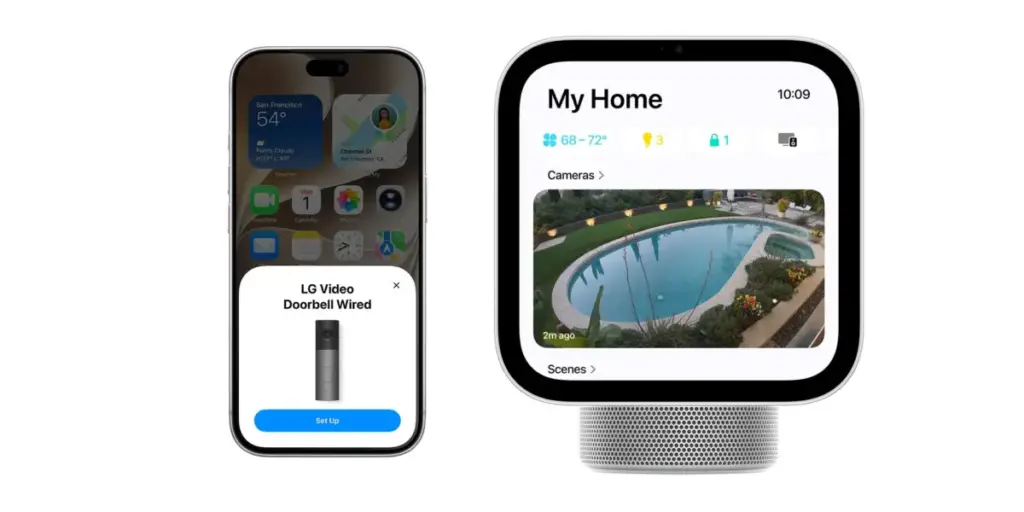
Apple is now bringing this exact philosophy to the smart home. Reports from early demonstrations, including those from CNET’s Ajay Kumar, suggest that the setup for an LG doorbell or a Schneider energy monitor within the Apple Home Collection is nearly instantaneous. Kumar noted that an Apple representative was able to pair and register a new device on both a phone and the new "HomeView" interface while maintaining a casual conversation. The process didn’t require a pause in the flow of the day; it was an background task that took seconds.

This "AirPods moment" for the smart home cannot be overstated. When a device is this easy to install, the perceived risk of a "tech headache" vanishes. For years, non-tech-savvy individuals have admired the smart homes of their more enthusiast-leaning friends, but they have been held back by the fear of complexity. They see the wires, the hubs, and the multiple apps, and they decide it isn’t worth the trouble.
By removing the need for third-party apps and making pairing as simple as holding a phone near a wall switch, Apple is addressing the final psychological barrier to mass adoption. The higher price point of the Apple Home Collection isn’t just for the hardware; it is a premium paid for the certainty that the device will work immediately and stay working within a familiar ecosystem.
This move also signals a shift in how Apple views the home. By partnering with established leaders like LG and Schneider, Apple is moving beyond the "gadget" phase of the smart home and into the "infrastructure" phase. These are brands that builders and contractors trust, and their inclusion in the Apple Home Collection suggests a future where smart capabilities are baked into the home from the ground up, rather than being tacked on as afterthoughts.
The enthusiast community may continue to debate the merits of these devices compared to more affordable, open-source alternatives. They will point to the lack of "pro" features or the closed nature of the ecosystem. But for the vast majority of people, the smart home is about to become a reality for the first time. When the complexity of the technology fades into the background, leaving only the convenience, the market doesn’t just grow—it transforms.
If the Apple Home Collection succeeds, it will not be because it invented a better light bulb or a sharper camera. It will be because it finally made the smart home feel like a natural extension of the iPhone experience: simple, reliable, and accessible to everyone. We have reached a point where the "leap" into home automation no longer feels like a jump into the unknown, but rather a simple step forward. For the millions of people who have been waiting on the sidelines of the smart home revolution, the door has finally been opened.
 Smart Home & IoT Solutions
Schlage Announces Launch Date for Sense Pro Smart Deadbolt, Bringing Ultra Wideband Precision to Apple Home Users
The landscape of residential security is undergoing a significant shift as traditional...
 Smart Home & IoT Solutions
Apple Poised to Enter Smart Home Display Market with New Hardware Inspired by Iconic iMac G4 Design
Apple is reportedly less than two weeks away from unveiling its most...
 Smart Home & IoT Solutions
Apple and LG Partner on Major Smart Home Expansion Featuring Cameras, Locks, and Thermostats
Apple is preparing a significant escalation in its ambitions for the connected...







