The technology industry has a tendency to operate within a vacuum, often populated by enthusiasts, early adopters, and those who find genuine joy in the granular details of hardware specifications and software configurations. For these "geeks," the smart home has been a playground for decades. From the early days of X10 industry standards to the more recent proliferation of Wi-Fi-enabled peripherals, the ability to control one’s environment through digital interfaces has become second nature. However, it is easy for those immersed in this world to forget that they live in a tech bubble, disconnected from the frustrations and hesitations of the average consumer.
Recently, the unveiling of the Apple Home Collection—a suite of smart home accessories developed in collaboration with industry giants like LG and Schneider Electric—has been met with a degree of skepticism from the enthusiast community. The prevailing critique suggests that these devices offer little in the way of "new" functionality while carrying significantly higher price tags than existing alternatives. Yet, this perspective may be missing the forest for the trees. By focusing on the "what" of the devices, critics are overlooking the "how." For the mass market, the barrier to entry has never been a lack of features; it has been the overwhelming friction of setup and maintenance.
HomeKit was a start, but not enough
To understand why the Apple Home Collection is a significant strategic move, one must look back at the trajectory of the smart home industry. In its infancy, automating a house was a hobbyist’s endeavor that required a working knowledge of electrical engineering and computer programming. Soldering irons and custom scripts were the tools of the trade. As the technology matured, it became more accessible through wireless protocols and smartphone integration, but it remained far from "plug-and-play."
Apple’s first major attempt to bring order to this fragmented landscape was the introduction of HomeKit. The vision was ambitious: a centralized framework where every device, regardless of the manufacturer, could be managed through a single "Home" app. HomeKit promised a layer of security and privacy that was often lacking in third-party ecosystems, and it brought the convenience of Siri voice control to the masses. The HomeKit label on a box was intended to be a seal of approval, guaranteeing that a device would work seamlessly within the Apple ecosystem.
However, the reality of HomeKit often fell short of its lofty promises. While it did consolidate control, the initial setup process remained a significant hurdle. Users frequently found themselves caught in a loop of downloading third-party "bridge" apps to perform firmware updates or initial configurations before a device would even appear in Apple’s Home app. For the average user, setting up a smart plug or a security camera often felt like an unpaid internship as a network engineer. Troubleshooting connectivity issues, managing different hubs, and navigating complex pairing processes meant that smart home technology remained a niche interest.
Furthermore, Apple’s strict hardware authentication requirements in the early years led to a slower rate of adoption among manufacturers. While Amazon’s Alexa and Google Home ecosystems expanded rapidly by prioritizing quantity and low cost, HomeKit remained a smaller, albeit more secure, garden. The convenience of buying a cheap, off-the-shelf bulb that "just worked" with a voice assistant often outweighed the privacy-centric but more cumbersome HomeKit experience.
Matter and Thread helped
The industry recognized this friction, leading to the development and launch of the Matter and Thread standards. Matter, an interoperability protocol backed by Apple, Google, Amazon, and the Connectivity Standards Alliance (CSA), was designed to ensure that smart home devices could work across different platforms without the need for proprietary bridges. Thread, a low-power mesh networking protocol, aimed to solve the reliability issues that often plagued Wi-Fi and Bluetooth-based devices.
These standards represented a massive leap forward for the industry. For the first time, a manufacturer could build a single device that was natively compatible with every major smart home ecosystem. For the consumer, Matter enabled a simpler setup process, typically involving the scanning of a QR code to bring a device online. This was a significant improvement, and it certainly helped move the needle toward mass-market accessibility.
Despite these advancements, the practical impact on the "non-geek" population was still somewhat limited. Even with Matter, the user experience could vary wildly between brands. The underlying complexity of home networking—routers, signal strength, and account linking—remained a ghost in the machine, ready to haunt users who just wanted their porch light to turn on at sunset. The industry had improved the "plumbing" of the smart home, but it had yet to perfect the user interface of the physical installation.
Apple Home Collection
This historical context brings us to the Apple Home Collection. The criticism that these devices do not represent "new" product categories is technically accurate. There are already dozens of smart doorbells, thermostats, and lighting systems on the market, many of which cost a fraction of the Apple-branded versions. However, this line of reasoning assumes that the average consumer makes purchasing decisions based on a feature-per-dollar spreadsheet.
For the "normie"—the person who wants the benefits of a smart home but has no interest in troubleshooting a mesh network—the Apple Home Collection offers a feature that is more valuable than any hardware spec: the elimination of friction.
The defining characteristic of the Apple Home Collection is a setup process that mimics the "magic" of AirPods. Since the introduction of the W1 chip, Apple has mastered the art of proximity pairing. When a user opens a new pair of AirPods near their iPhone, a card automatically slides up, asking if they would like to connect. There are no menus to navigate, no Bluetooth settings to toggle, and no codes to enter. It is an intuitive, delightful experience that has set the standard for consumer electronics.
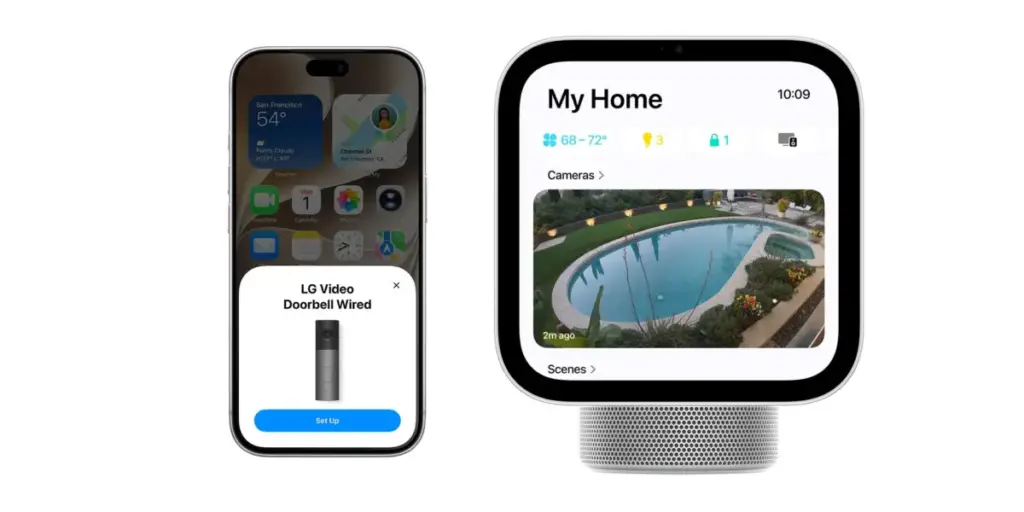
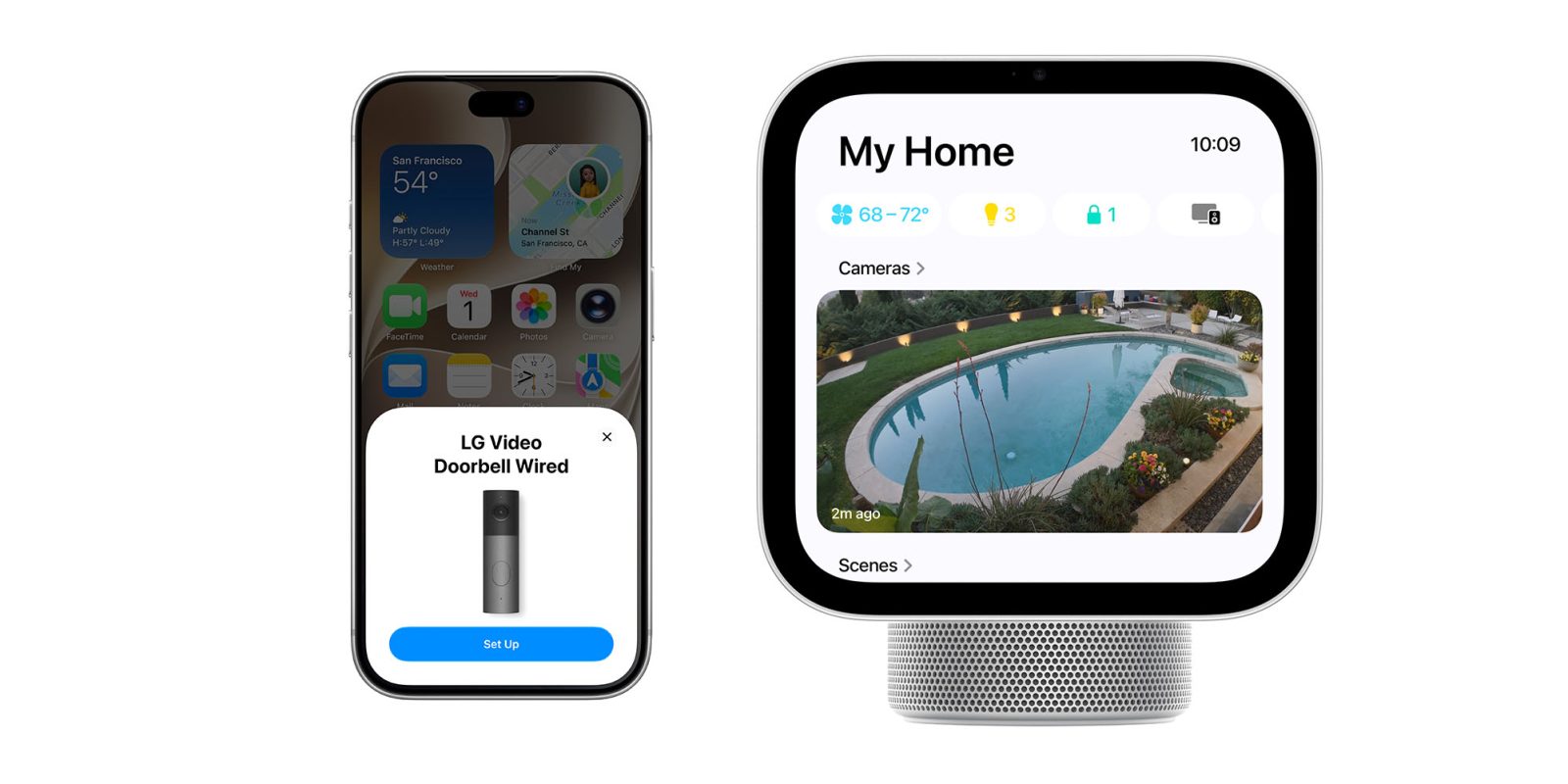
Apple is now bringing this exact philosophy to the smart home. Reports from early demonstrations, including those from CNET’s Ajay Kumar, suggest that the setup for an LG doorbell or a Schneider energy monitor within the Apple Home Collection is nearly instantaneous. Kumar noted that an Apple representative was able to pair and register a new device on both a phone and the new "HomeView" interface while maintaining a casual conversation. The process didn’t require a pause in the flow of the day; it was an background task that took seconds.

This "AirPods moment" for the smart home cannot be overstated. When a device is this easy to install, the perceived risk of a "tech headache" vanishes. For years, non-tech-savvy individuals have admired the smart homes of their more enthusiast-leaning friends, but they have been held back by the fear of complexity. They see the wires, the hubs, and the multiple apps, and they decide it isn’t worth the trouble.
By removing the need for third-party apps and making pairing as simple as holding a phone near a wall switch, Apple is addressing the final psychological barrier to mass adoption. The higher price point of the Apple Home Collection isn’t just for the hardware; it is a premium paid for the certainty that the device will work immediately and stay working within a familiar ecosystem.
This move also signals a shift in how Apple views the home. By partnering with established leaders like LG and Schneider, Apple is moving beyond the "gadget" phase of the smart home and into the "infrastructure" phase. These are brands that builders and contractors trust, and their inclusion in the Apple Home Collection suggests a future where smart capabilities are baked into the home from the ground up, rather than being tacked on as afterthoughts.
The enthusiast community may continue to debate the merits of these devices compared to more affordable, open-source alternatives. They will point to the lack of "pro" features or the closed nature of the ecosystem. But for the vast majority of people, the smart home is about to become a reality for the first time. When the complexity of the technology fades into the background, leaving only the convenience, the market doesn’t just grow—it transforms.
If the Apple Home Collection succeeds, it will not be because it invented a better light bulb or a sharper camera. It will be because it finally made the smart home feel like a natural extension of the iPhone experience: simple, reliable, and accessible to everyone. We have reached a point where the "leap" into home automation no longer feels like a jump into the unknown, but rather a simple step forward. For the millions of people who have been waiting on the sidelines of the smart home revolution, the door has finally been opened.
 Smart Home & IoT Solutions
Apple Developing Integrated Home Security and Monitoring Service for 2027 Launch
Apple is reportedly preparing a significant expansion of its smart home ecosystem,...
 Smart Home & IoT Solutions
Schlage Announces Launch Date for Sense Pro Smart Deadbolt, Bringing Ultra Wideband Precision to Apple Home Users
The landscape of residential security is undergoing a significant shift as traditional...
 Smart Home & IoT Solutions
Apple Partners with LG for Strategic Smart Home Expansion Featuring New Cameras and Sensors
In a significant move to revitalize its presence in the domestic technology...