
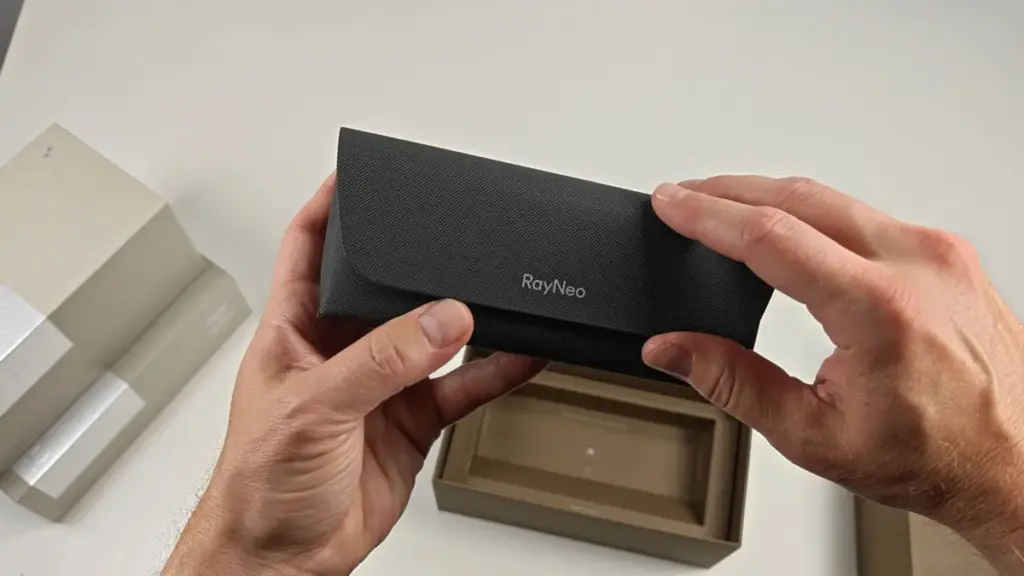
The landscape of augmented reality and wearable displays is moving at a breakneck pace, with manufacturers iterating on hardware faster than almost any other sector in consumer electronics. Just months after the release of the RayNeo Air 4 Pro, RayNeo has returned to the spotlight with the launch of the RayNeo GT. This new entry into the market is not just a minor refresh; it represents a strategic pivot toward addressing the most common pain points of early adopters—comfort, visual clarity, and spatial stability—while maintaining a highly aggressive $299 price point.
The $300 segment has quickly become the primary battleground for smart glasses, a space where companies must balance high-end display technology with the physical constraints of a device meant to be worn on the face for hours at a time. With the RayNeo GT, the company appears to be doubling down on the "GT" branding, implying a focus on performance and long-distance comfort, much like the grand tourer automobiles that share the moniker.
A Refined Approach to Wearable Design
One of the most immediate improvements in the RayNeo GT is its physical footprint. In the world of head-mounted displays, every gram counts toward long-term usability. RayNeo has managed to shave 8 grams off the weight compared to the previous Air 4 Pro. While 8 grams might seem negligible in a handheld device, in the context of eyewear, it significantly reduces the pressure on the bridge of the nose and the tops of the ears, which are the primary fatigue points for users.
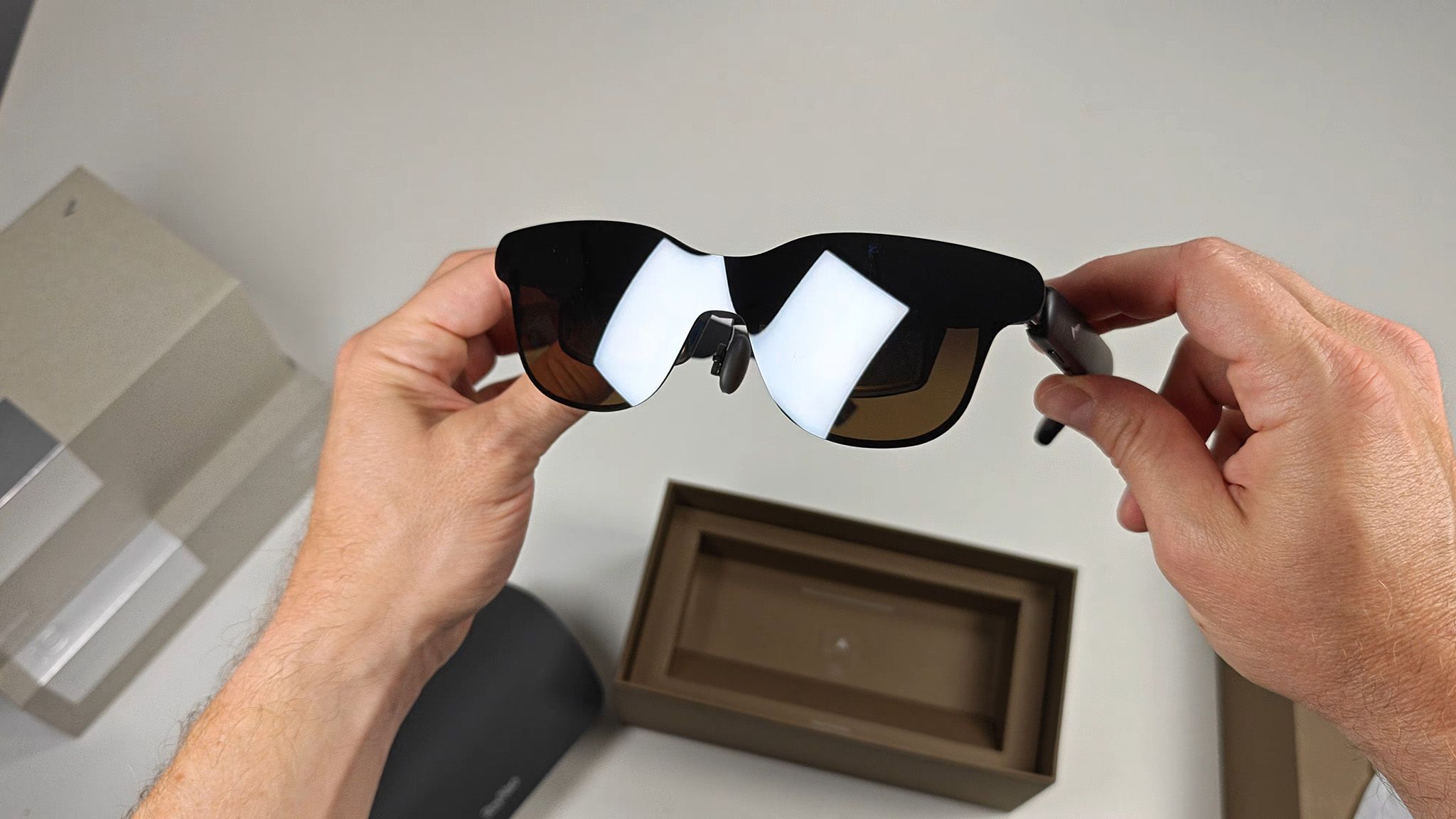
Beyond simple weight reduction, RayNeo is tackling a fundamental optical hurdle that has plagued the industry: Interpupillary Distance (IPD). Most smart glasses on the market utilize a "one-size-fits-most" approach, which often results in blurred edges or eye strain for users whose eyes are closer together or further apart than the average. To combat this, the RayNeo GT is being offered in three distinct IPD sizes.
The "Small" variant is tailored for those with an IPD of 63mm or lower, the "Medium" covers the standard 64mm to 67mm range, and the "Large" model is designed for users with an IPD of 68mm or higher. This level of customization is rare at this price tier and ensures that the micro-OLED displays are perfectly aligned with the user’s pupils, providing a crisp image across the entire 47-degree Field of View (FoV).
Complementing this hardware-level customization is the ability to adjust the virtual screen size within the glasses’ software. This allows users to scale their content to their preference, whether they want a massive cinematic experience for movies or a more compact, focused display for productivity tasks. The physical fit is further enhanced by an adjustable nosepiece and the inclusion of temple pads, which provide a softer contact point against the side of the head, preventing the "pinching" sensation common in many rigid smart glass designs.
Advanced Visuals and the Vision 4000 Chipset
Under the hood, the RayNeo GT utilizes the Vision 4000 chipset, a dedicated piece of silicon designed to handle the heavy lifting of image processing. This chipset enables several high-end features that elevate the viewing experience beyond simple screen mirroring. One of the most notable is the SDR-to-HDR conversion, which uses algorithms to enhance the dynamic range of standard definition content, making colors pop and improving contrast on the native 10-bit micro-OLED displays.
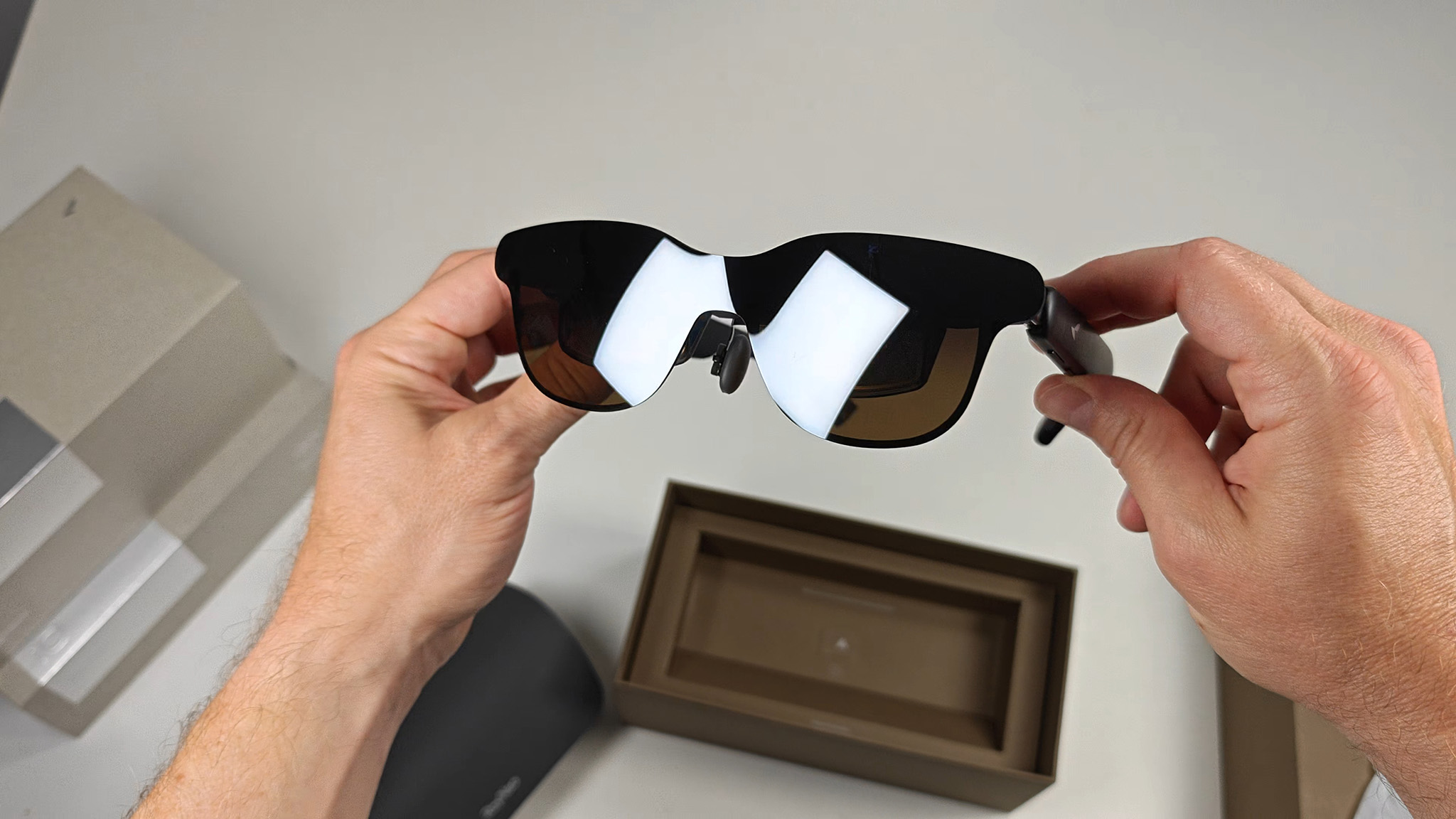
For users sensitive to screen flicker, the RayNeo GT introduces a 3840Hz PWM (Pulse Width Modulation) dimming rate. High-frequency PWM dimming is a critical feature for eye health, as it reduces the invisible flickering that can lead to headaches and eye fatigue during extended use. This puts the RayNeo GT at the top of its class for visual comfort, especially for users who plan to use the glasses as a primary monitor for work or long-haul travel.
The display also boasts software support for 12-bit Dolby Vision content. When paired with the RayNeo Pocket TV—a dedicated companion device that functions as a Google TV remote and streaming hub—the glasses can render incredibly deep color profiles and high-contrast scenes that rival high-end television sets.
Native 3DoF Tracking and Spatial Modes
The most significant internal upgrade is the inclusion of a new native 3DoF (Three Degrees of Freedom) spatial tracking chip. In previous generations of smart glasses, spatial tracking was often handled by a connected smartphone or an external processing unit, which could lead to latency or jitter. By integrating this capability directly into the glasses, RayNeo has provided a much smoother and more responsive experience.
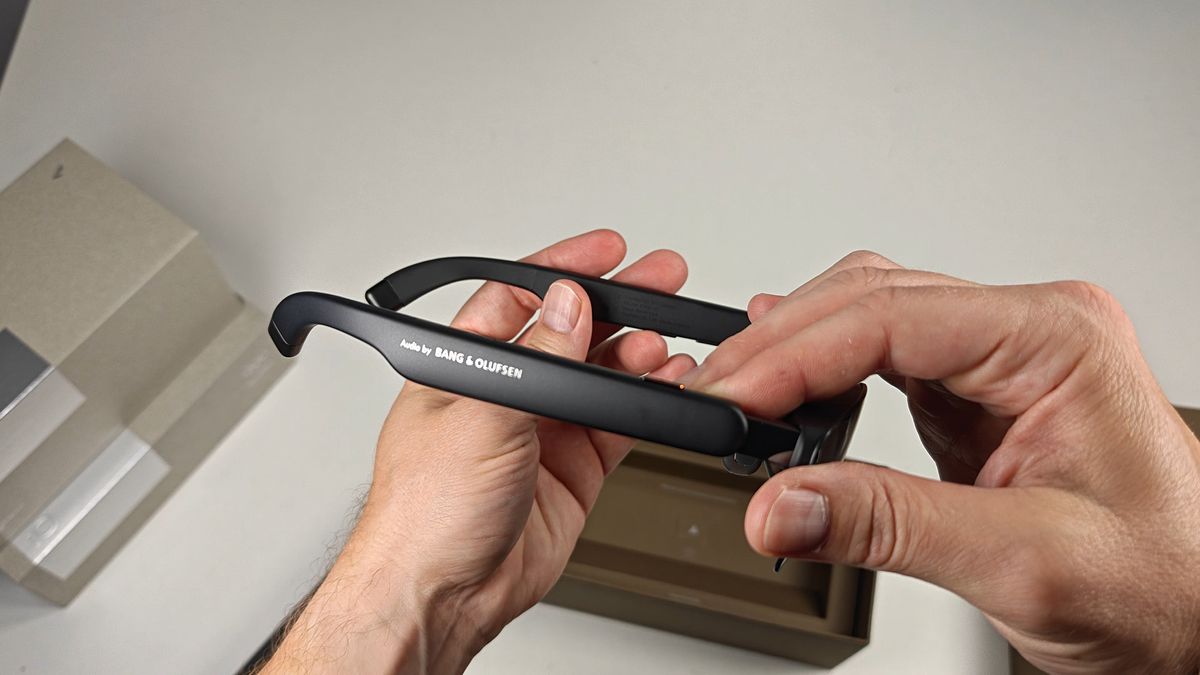
Users can toggle between three distinct tracking modes via a dedicated button located on the top of the right temple. The "Steady" mode keeps the virtual screen locked in front of the user’s gaze but filters out micro-movements of the head to prevent motion sickness. The "Anchor" mode allows the screen to be fixed at a specific point in virtual space, meaning the user can look away from the screen and back again as if it were a physical monitor sitting on a desk. Finally, the "Follow" (or 0DoF) mode allows the screen to move perfectly in sync with the user’s head movements.
While the 3DoF modes offer a more immersive "spatial" feel, they do introduce a technique known as black frame insertion (low-persistence flickering) to maintain image stability. For users who are particularly sensitive to flicker, the 0DoF Follow mode remains the best option for a completely flicker-free experience. The ability to switch between these modes on the fly gives the RayNeo GT a level of versatility that is essential for different use cases, such as watching a movie in a vibrating airplane cabin versus using the glasses as a stationary second monitor in a coffee shop.
A High-Fidelity Audio Partnership
Audio has often been an afterthought in the smart glasses category, with many devices offering thin, tinny sound that lacks bass. RayNeo has addressed this by partnering with Bang & Olufsen to tune the audio experience of the GT series. The glasses feature an open-ear, four-speaker design that directs sound toward the user’s ears while maintaining situational awareness of the surrounding environment.
Unlike the RayNeo Air 4 Pro, which shipped with detachable "sound tubes" to funnel audio more directly, the GT relies on the quality of its integrated drivers. The result is a surprisingly loud and clear soundstage that handles both dialogue and music with impressive fidelity. For those who prioritize privacy or deeper bass, the sound tubes remain available as a separate accessory, but the native performance of the four-speaker array is a notable step up for the brand.
Ecosystem Integration and Practical Limitations
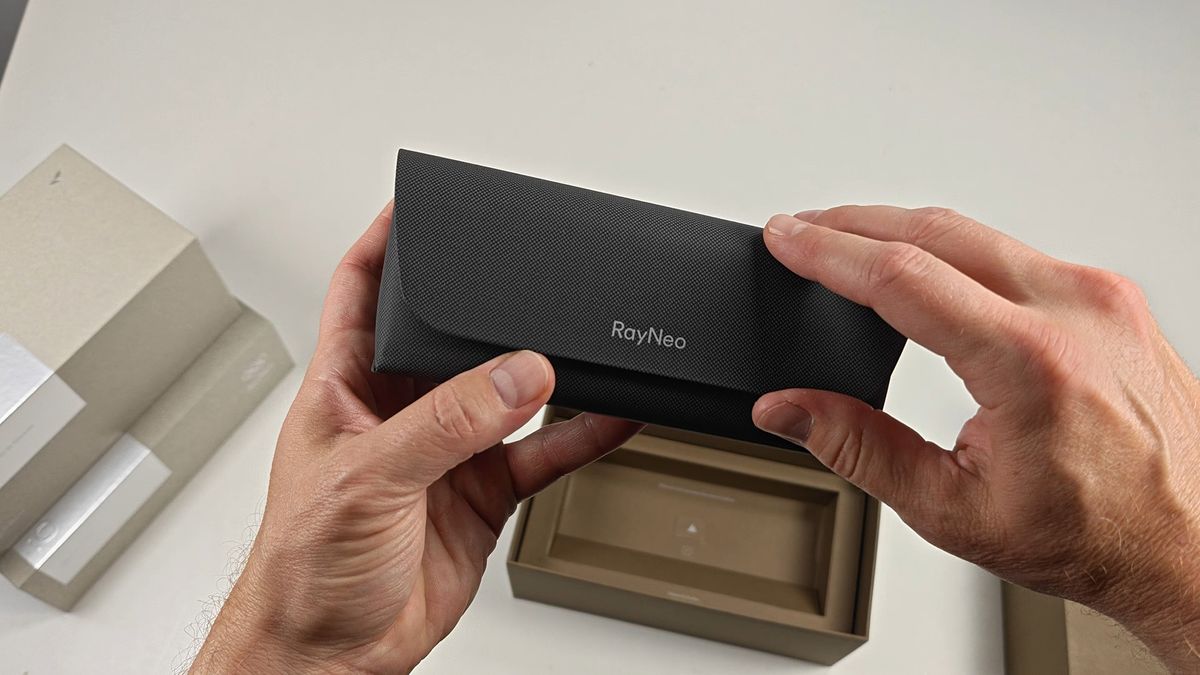
To unlock the full potential of the RayNeo GT, the company encourages the use of the Pocket TV. This device essentially turns the glasses into a portable smart TV, complete with a dedicated interface for apps like Netflix, YouTube, and Disney+. It solves the power-drain issue often associated with tethering glasses to a smartphone and provides a familiar navigation experience. However, the Pocket TV does have limitations regarding offline content downloads, meaning travelers may still find themselves relying on their smartphones or tablets for movies during flights without Wi-Fi.
Despite the numerous advancements, the RayNeo GT does face one significant hurdle: ambient light. The lenses on the GT lack built-in tinting or electrochromic dimming—a feature found on more expensive models that allows the lenses to darken at the touch of a button. Because the micro-OLEDs are transparent, bright environments can wash out the image. RayNeo recommends using a physical glasses cover for those who intend to use the device in brightly lit rooms or outdoors, a trade-off for keeping the price at the $299 mark.
Market Positioning and Conclusion
The RayNeo GT enters a market that is becoming increasingly crowded with high-quality options. It stands as a direct competitor to devices like the Xreal Air series, carving out its niche through superior IPD customization and a focus on eye comfort via high-frequency PWM dimming. While modular enthusiasts might still lean toward options like the Xreal XBX A01+ for its customizability, the RayNeo GT offers a highly polished, "out-of-the-box" experience for the general consumer.
By focusing on the fundamentals of fit and visual health while integrating high-end audio and native spatial tracking, RayNeo has produced a device that feels more like a mature consumer product than a niche tech experiment. For users looking to enter the world of wearable displays without breaking the $300 barrier, the RayNeo GT represents one of the most well-rounded and ergonomic packages currently available.
 Mobile Device Management (MDM) & Mobile OS
Samsung Reportedly Developing ‘Galaxy Studio’ Over-Ear Headphones to Challenge Apple and Sony
For nearly a decade, the premium over-ear headphone market has been defined...
 Mobile Device Management (MDM) & Mobile OS
Google to Replace Gemini Gems with Modular ‘Skills’ Starting in October
Google is preparing a significant evolution for its artificial intelligence ecosystem, announcing...
 Mobile Device Management (MDM) & Mobile OS
Meowdoku: How a Cat-Themed Logic Puzzle Became a Viral Sensation Despite an Exhausting Ad Experience
In the modern digital landscape, the mobile gaming market is increasingly saturated...







