
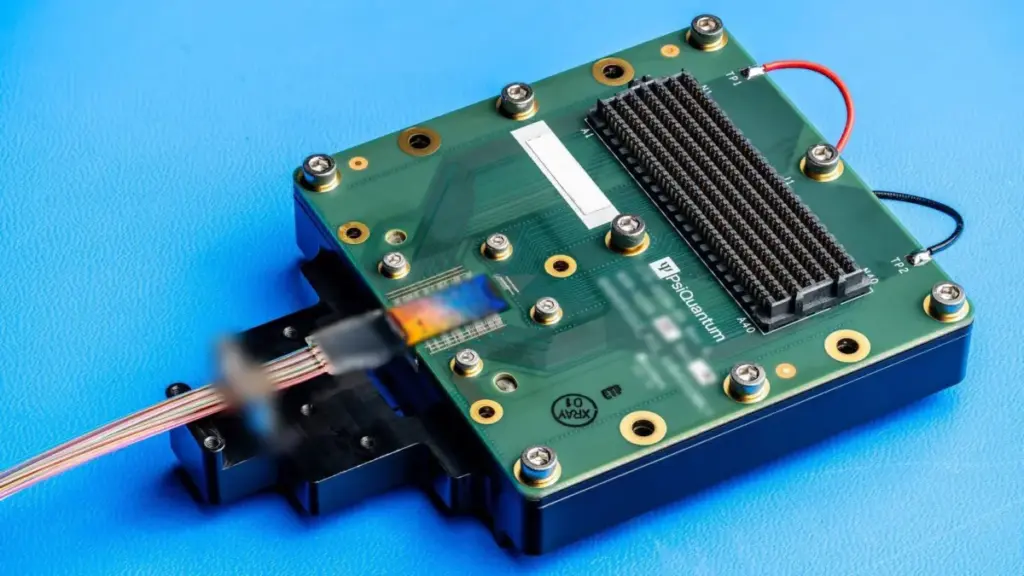
While this process allows for granular control over individual data packets, it comes with a heavy price. The conversion process consumes a massive amount of electricity and generates significant heat. Furthermore, each conversion adds "latency"—a tiny delay that, when multiplied across thousands of switches in a massive AI cluster, can noticeably slow down the training of a model.
An Optical Circuit Switch, by contrast, operates entirely in the optical domain. It passes light straight through from fiber to fiber without ever converting it into electricity. This "all-optical" approach eliminates the power consumption associated with EOE conversion and reduces latency to near-zero. Instead of processing individual packets on the fly, an OCS establishes a fixed light path—a dedicated "pipe"—between two points and maintains that path until the network architecture requires a reconfiguration.
Silicon Photonics vs. Moving Mirrors
The technical implementation of PsiQuantum’s switch also sets it apart from current market leaders. Existing OCS solutions, such as those deployed by Google in its "Apollo" fabric or manufactured by companies like Lumentum, typically rely on Micro-Electro-Mechanical Systems (MEMS). These systems use thousands of microscopic, steerable mirrors to physically reflect light from an input fiber to a specific output fiber.
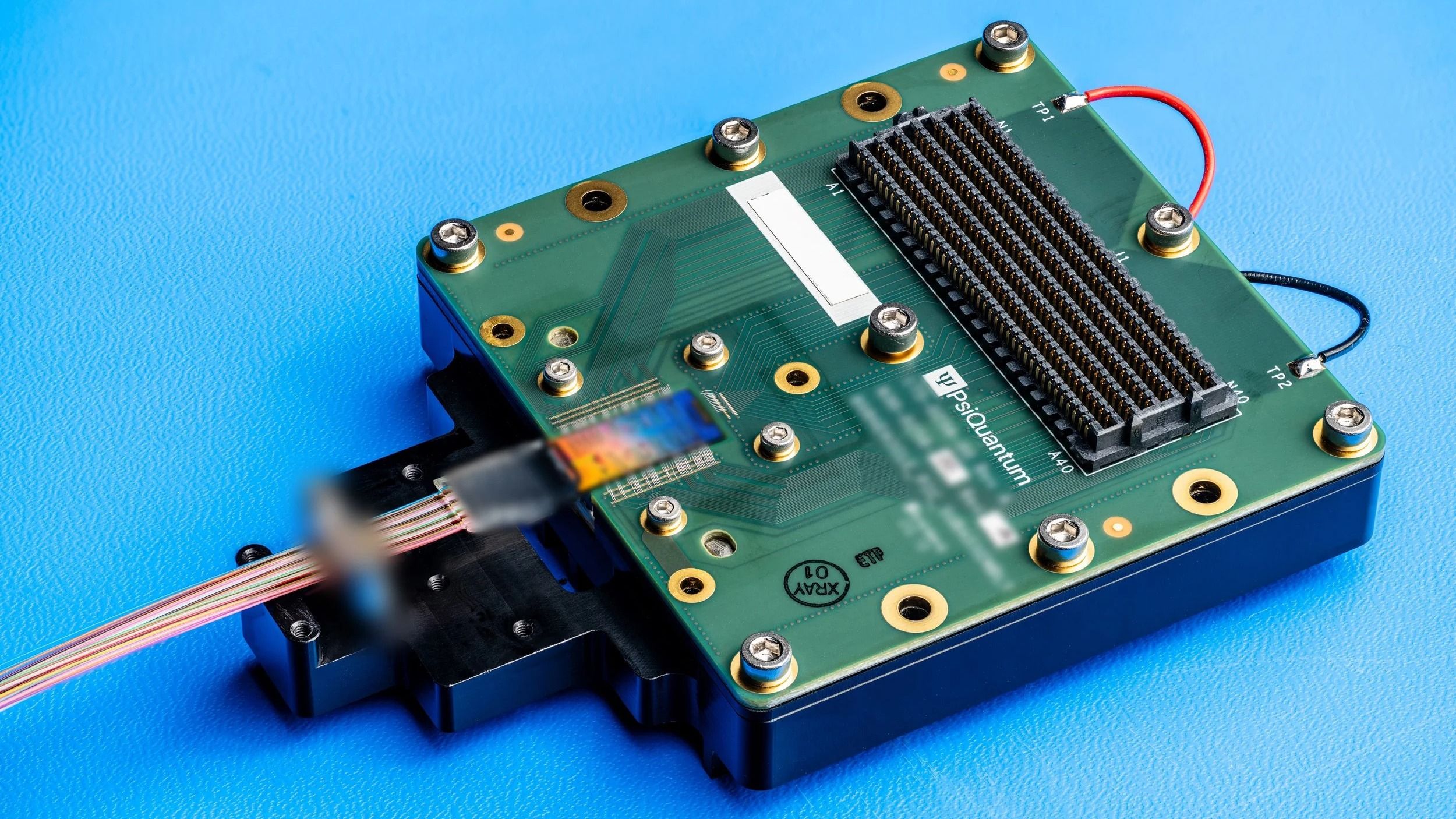
While MEMS technology is proven and effective, it involves moving parts, which can introduce complexities in terms of switching speed and long-term mechanical reliability. PsiQuantum’s approach utilizes a solid-state design. The switch consists of optical circuits etched directly onto a silicon chip using standard semiconductor manufacturing processes. Because there are no moving parts, the switch is potentially more robust and can be manufactured using the same high-volume fabrication techniques used for traditional computer chips.
The use of silicon photonics also allows for a higher degree of integration. By leveraging the existing infrastructure of the silicon chip industry, PsiQuantum can theoretically scale the production of these switches more rapidly than specialized MEMS-based hardware.
Scaling for the AI Era
Despite the impressive efficiency gains, PsiQuantum’s current prototype is relatively small in scale. The demo unit features an 8×8 configuration, meaning it has eight input ports and eight output ports. In the context of a modern data center, this is a modest beginning. Competitors in the space currently offer switches ranging from 32×32 to as many as 300×300 ports, which are necessary to manage the massive "spine" and "leaf" architectures of hyperscale facilities.
 Hardware Reviews & PC Building
Shareholder Lawsuit Alleges Top Supermicro Executive Had Full Knowledge of Massive $2.5 Billion AI Chip Smuggling Operation
The legal storm surrounding Supermicro has intensified as new details emerge from...
 Hardware Reviews & PC Building
Thieves Targeting High-Value AI Hardware Left with Tons of Sand After Hijacking Nvidia-Branded Trailers
In an era where artificial intelligence has become the primary driver of...
 Hardware Reviews & PC Building
Significant Shifts in Memory Market Pricing Highlighted by Rare Discount on SanDisk 512GB GamePlay microSD Express Card
The global semiconductor landscape has been defined in recent months by a...







