
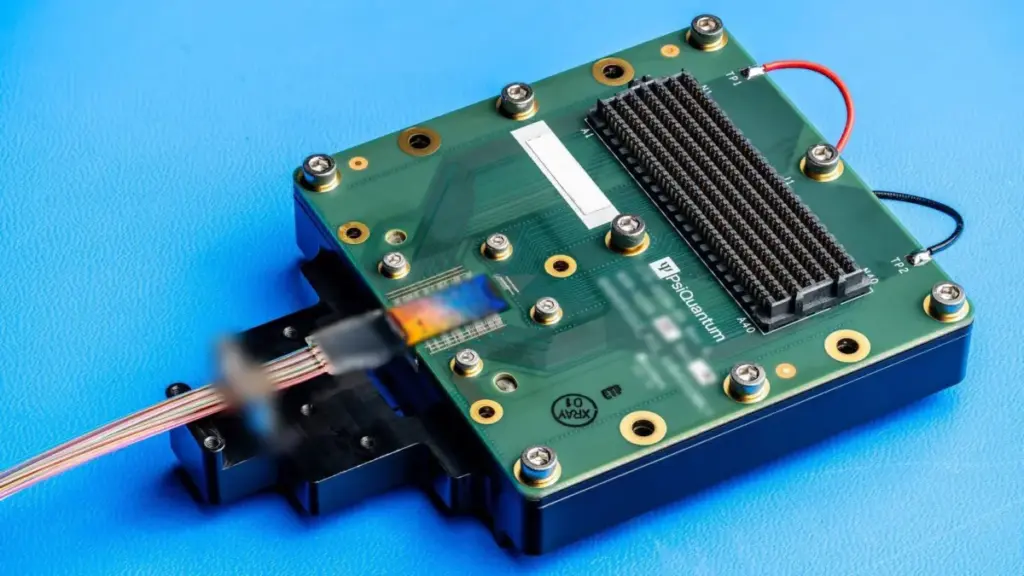
PsiQuantum has acknowledged this gap but remains optimistic about the future. The company stated that larger devices are already in active development. The transition from an 8×8 prototype to a high-port-count commercial product is a significant engineering hurdle, but PsiQuantum believes its silicon-based approach provides a clearer path to scaling than mechanical alternatives.
The intended use case for this technology is not to replace traditional packet switches entirely but to work alongside them. In a hybrid networking environment, the OCS handles the "heavy lifting"—the massive, sustained data flows between GPU clusters—while traditional packet switches handle the more complex, bursty traffic that requires individual packet routing. This division of labor can drastically reduce the total power envelope of a data center, a critical factor at a time when energy availability is becoming a primary constraint on AI expansion.
The Broader Impact on the Tech Industry
The move into the data center market represents a pragmatic diversification for PsiQuantum. While the quest for a functional quantum computer remains a long-term goal with high capital requirements, the demand for more efficient AI infrastructure is immediate and lucrative. By commercializing the "sub-components" of its quantum research, PsiQuantum is positioning itself as a vital player in the classical computing supply chain.
For data center operators, the promise of a 1.2 dB loss switch is a compelling proposition. Lower signal loss means that data centers can be designed with longer fiber runs or more complex topologies without the need for signal amplification. It also provides more "link budget"—the total amount of allowable signal loss in a connection—which gives engineers more flexibility when designing the physical layout of massive server farms.
As AI models continue to grow in size, the infrastructure supporting them must evolve. The transition from electrical to optical switching is increasingly seen not as an option, but as a necessity. PsiQuantum’s entry into this space, armed with technology honed in the unforgiving environment of quantum physics, suggests that the next generation of AI may well be powered by the very tools designed to unlock the quantum frontier.
The company has not yet provided a specific timeline for the commercial availability of its larger-scale switches, but the successful demonstration of the 8×8 low-loss prototype serves as a proof of concept that silicon photonics can meet the rigorous demands of the modern data center. As the industry watches closely, the focus now shifts to how quickly PsiQuantum can scale its etched-silicon designs to meet the massive port requirements of the world’s largest AI clusters.
 Hardware Reviews & PC Building
Amazon Prime Day 2026: Final 24 Hours of Big Deal Days Feature Massive Savings on RTX 5070 Systems, Ryzen 9800X3D, and Premium Gaming Peripherals
As the clock winds down on the 2026 iteration of Amazon’s Big...
 Hardware Reviews & PC Building
Tom’s Hardware Premium Explores Apple’s Long-Awaited Transition to OLED and Touch-Enabled MacBooks
In an era where hardware specifications often plateau, the deeper narrative behind...
 Hardware Reviews & PC Building
UPERFECT GR14BU Review: A High-Performance 3K OLED Contender Enters the Portable Monitor Market
The portable monitor industry has undergone a radical transformation over the last...







